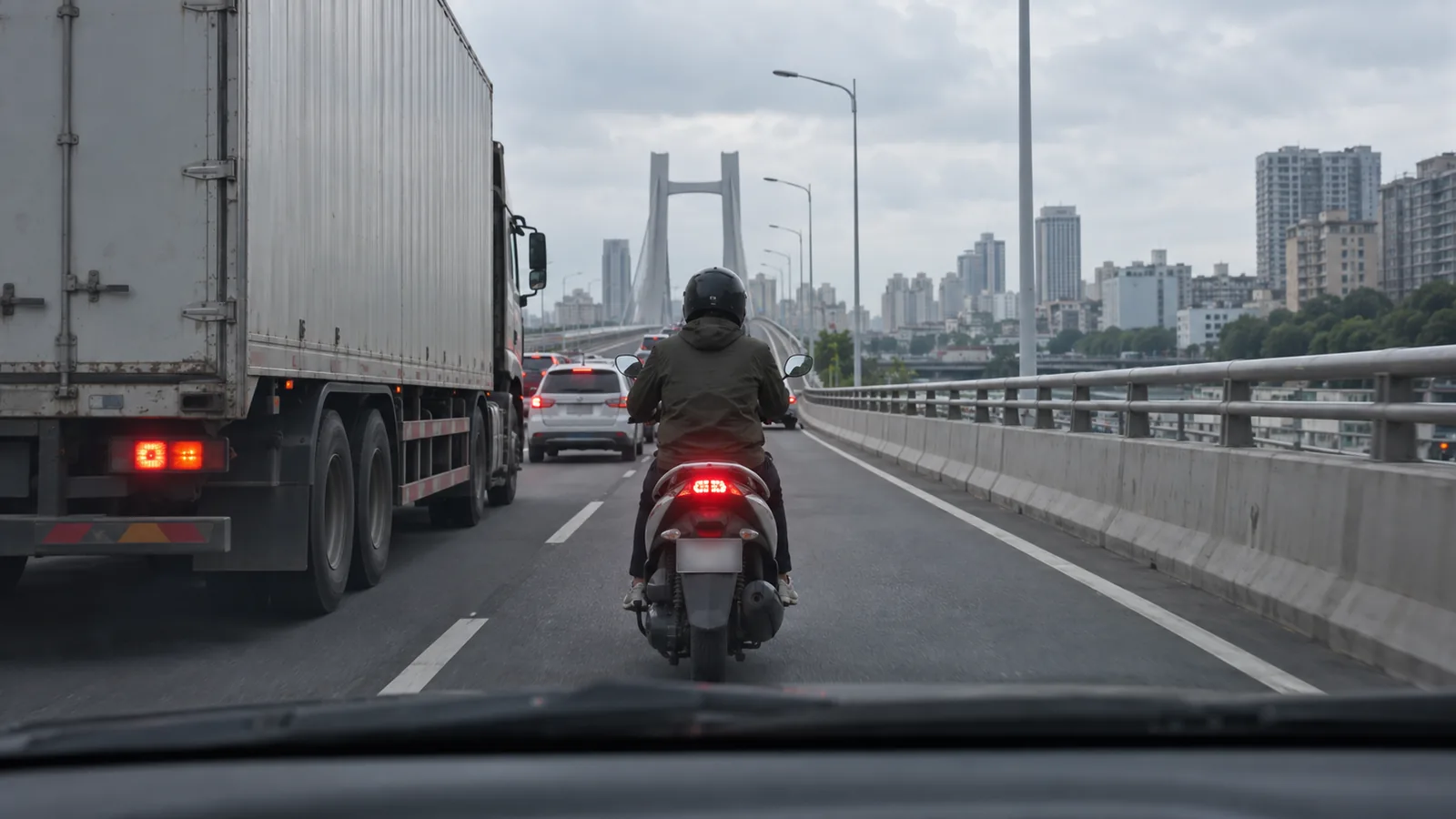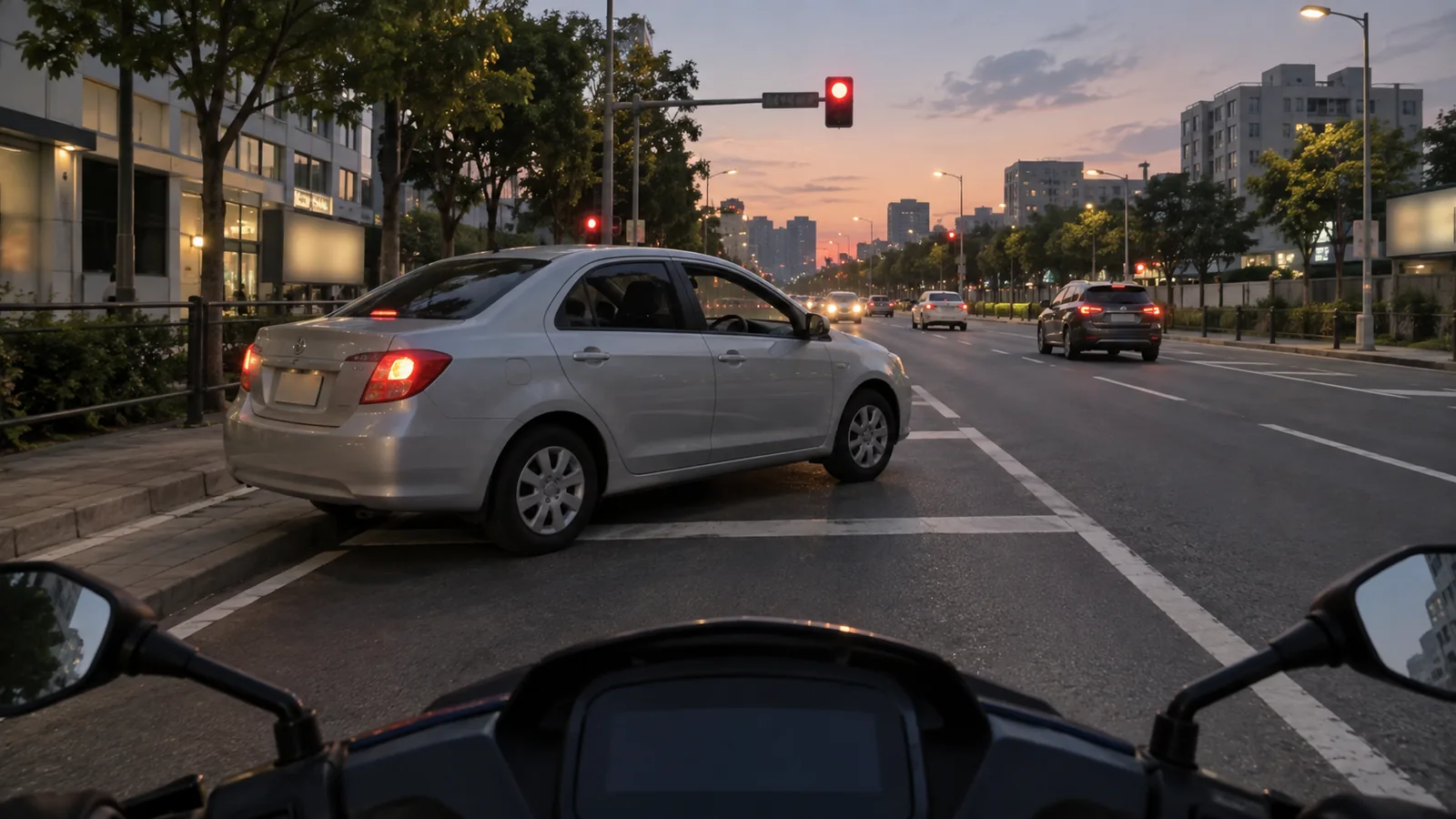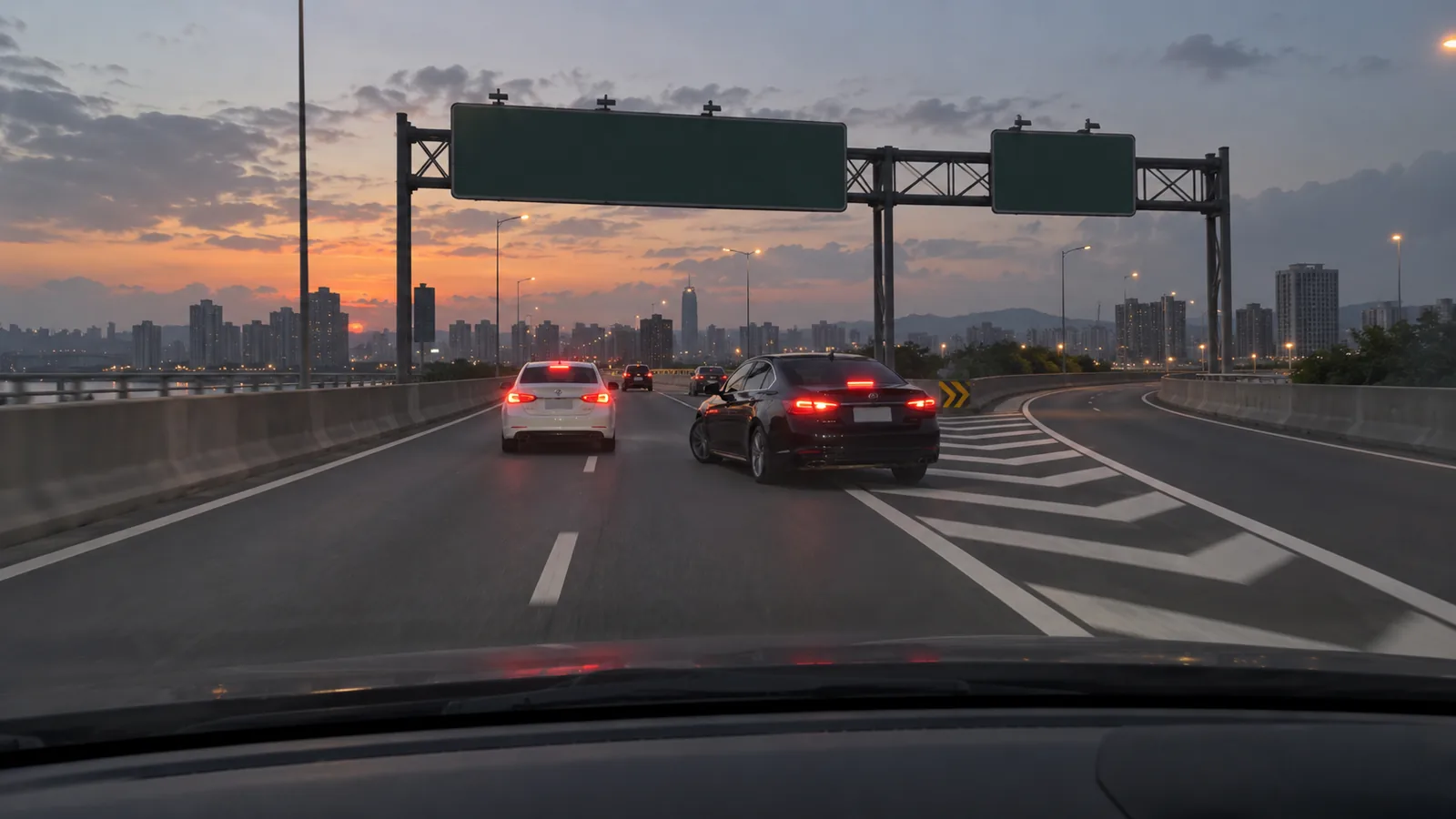
Overtaking can appear routine when a vehicle ahead is moving slowly, but it creates substantial risk. Before overtaking, a driver has to judge the location, the traffic in both directions, the vehicles ahead, and whether there is room to pass and return safely.
What Article 101 requires
Article 101 of Taiwan's Road Traffic Safety Regulations says when overtaking is prohibited and what drivers must do when overtaking in the same lane is allowed.

Article 101 prohibits overtaking on road sections with signs for bends, steep slopes, narrow bridges, tunnels, or intersections, and at railroad crossings or roadwork areas.
It also prohibits overtaking at places or road sections with school or hospital signs, with other no-overtaking signs or markings, when an oncoming vehicle is approaching, or when two or more vehicles are traveling in a line ahead.
When seeking to pass a vehicle in the same lane, the driver behind must first sound two short horn signals or flash the headlights once. The driver must not repeatedly sound the horn or flash the headlights to force the vehicle ahead to yield.
The driver behind may pass only after the vehicle ahead has slowed and moved aside, or has indicated by hand signal or right turn signal that it is yielding.
The passing driver must then signal left, pass on the left while keeping at least 0.5 meters from the vehicle being passed, establish a safe distance, signal right, and return safely to the original lane.
Following these steps for a same-lane pass does not allow overtaking at a prohibited place or under prohibited conditions. Drivers must assess every Article 101 requirement before starting the pass.
An anonymized case described in the original article
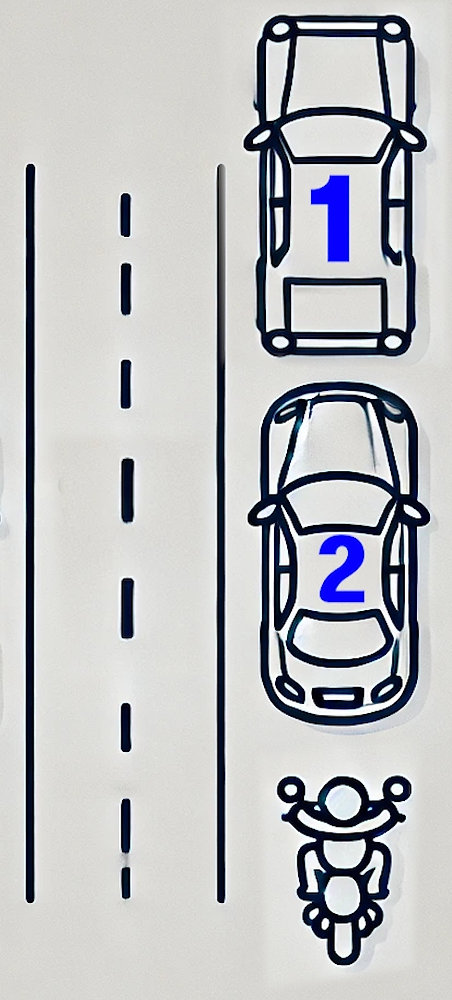
In the anonymized case described in the original article, motorcyclist A was carrying passenger B on a mountain road. Two passenger cars were ahead of them. The first car, Vehicle 1, was moving slowly, so Vehicle 2 and the motorcycle behind it were also moving slowly.
A attempted to pass both cars, entered the oncoming lane, and accelerated. Vehicle 2 was also preparing to overtake Vehicle 1 and entered the oncoming lane less than one second after switching on its turn signal. The motorcycle had too little time to brake and collided with Vehicle 2.
B suffered a severe head injury and died at the scene. A lost consciousness and was taken to the hospital.
The families of A and B initially believed that Vehicle 2's rapid lane change was the primary cause of the collision. The case went to court and involved multiple expert assessments of the accident.
According to the original case account, the assessments identified A as the primary cause of the collision. That conclusion was limited to the facts of this case.
This case-specific result does not mean that any single factor will always determine liability. Fault in an overtaking collision depends on where it happened, the lane layout, speed, vehicle movements, signals, timing, visibility, and any other evidence available.
Key factors in assessing accident liability
Before passing, the driver must check whether overtaking is prohibited at that location or under those traffic conditions. Where the same-lane procedure applies, the driver has to give the prescribed horn or headlight signal, without using it to force the vehicle ahead to yield, wait for a clear indication of yielding, and complete the passing sequence with adequate clearance and a safe return distance.
Following Article 101 does not, by itself, guarantee that a crash will be avoided or that a later expert assessment or lawsuit will produce any particular result. Drivers should still leave additional safety margins and respond to road conditions ahead.
The Illustrated guide to overtaking rules and steps walks through the rules. It is a secondary source, so the legal requirements should be checked in the current official regulations.
See also:
This article provides general legal information about Taiwan overtaking rules and how fault may be assessed after an overtaking collision. It is not legal advice for any specific matter and does not guarantee any liability outcome. Actual liability may vary with the location, vehicle movements, speed, signals, evidence, expert assessments, and the current regulations. Specific matters should be reviewed against the relevant materials.