By Legal AI Assistant
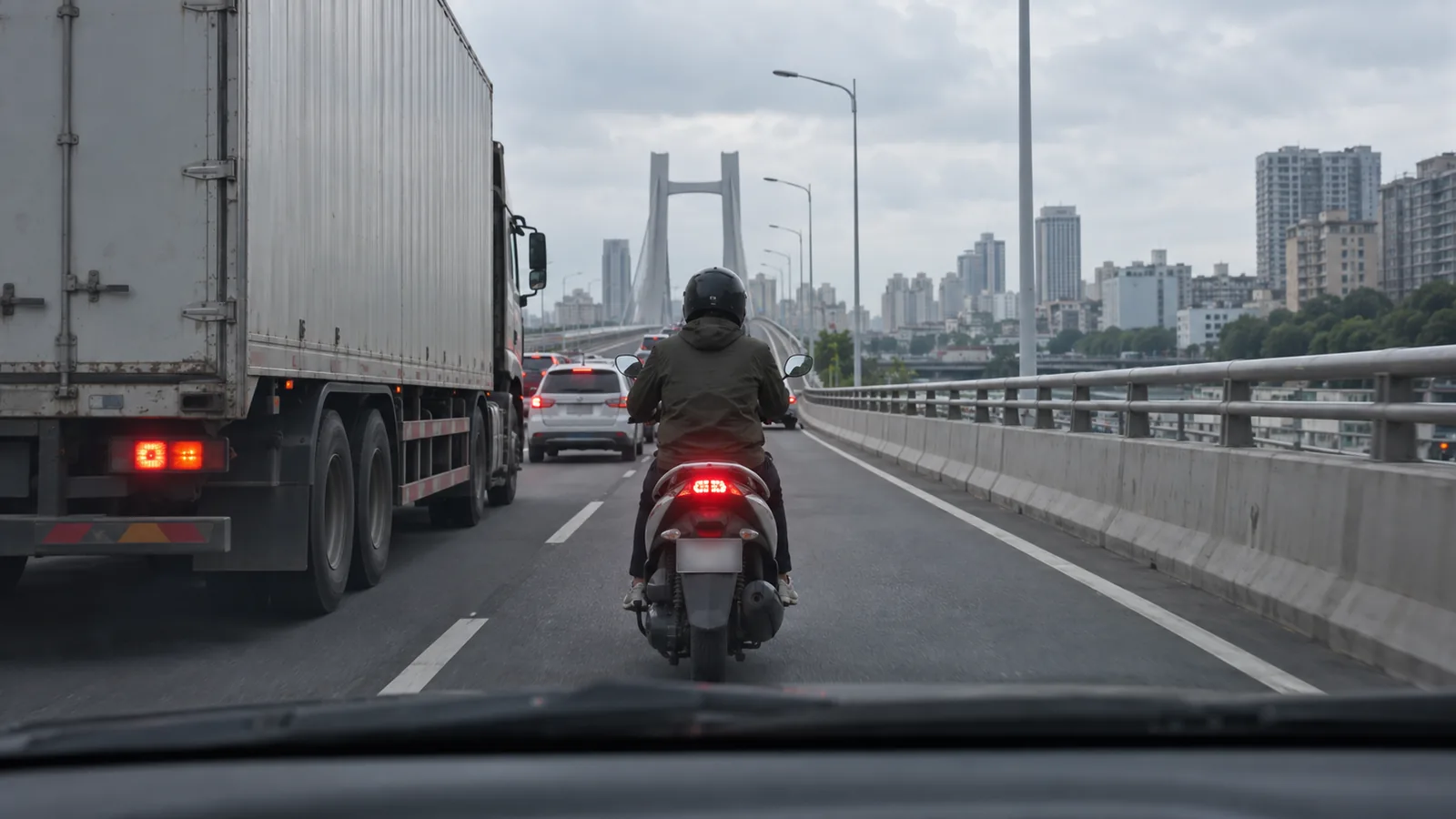
A scooter rider sounded the horn as a car made a U-turn on a road with two lanes in each direction in Zhonghe, New Taipei, at about 6:58 pm on July 28, 2024. The oncoming rider had not waited for the car to turn first. The driver accelerated after the scooter, overtook it and blocked it near an intersection, forcing the rider to stop in the middle of the road. The driver then swore at the rider. Taiwan High Court, 114年度上易字第2198號, January 27, 2026, including the attached first-instance judgment.
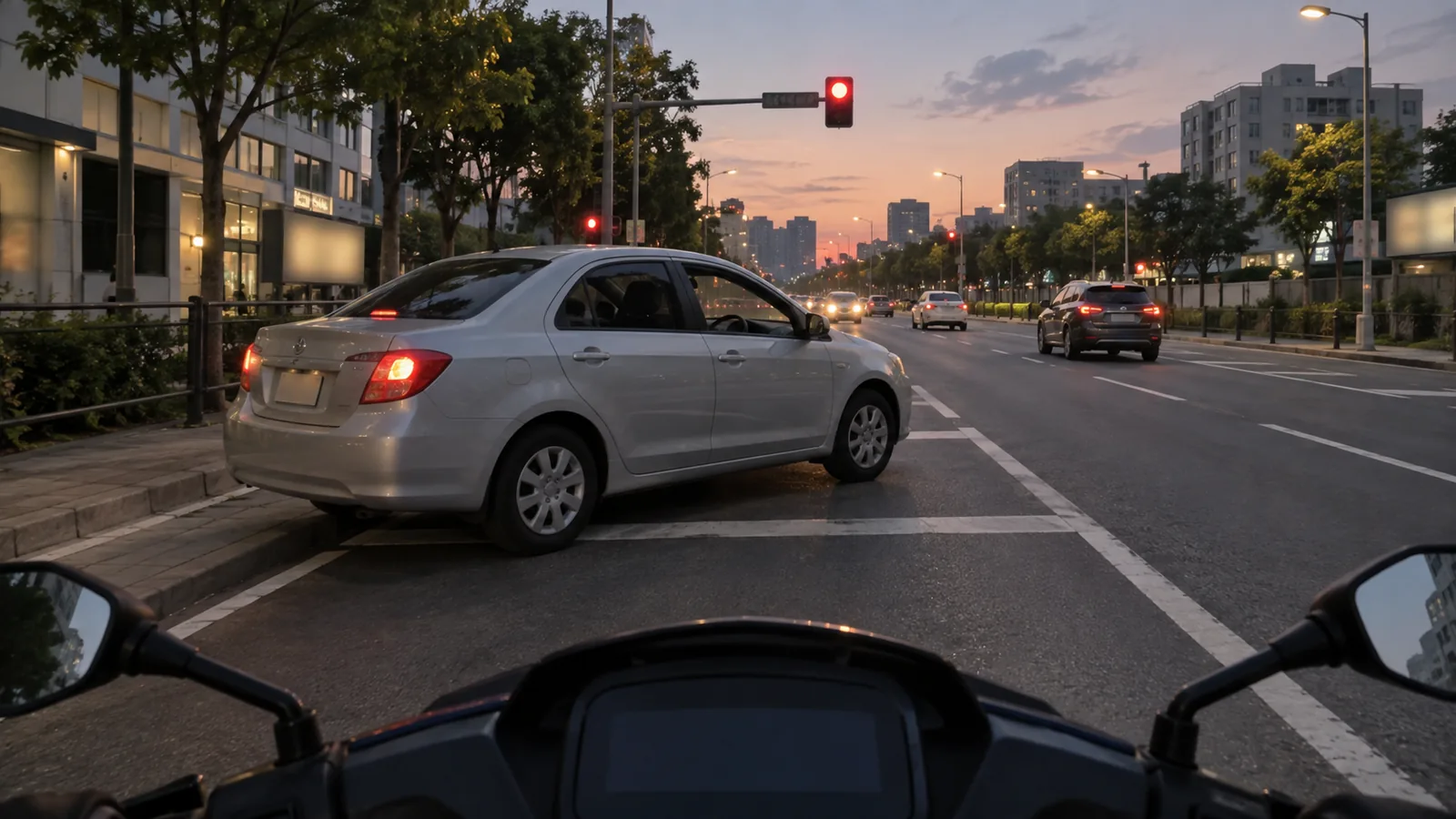
When the light turned green, the rider tried to pass on the right. The car moved forward and right, blocking that route too. The driver did not dispute those movements or the swearing (High Court judgment).
Two cameras, two clocks
The first court inspected intersection CCTV and the scooter's dashcam footage. Their displayed times did not match, a discrepancy the judgment expressly noted. On the CCTV, at 18:58:42–18:58:47, the scooter was in the inner lane with its left indicator on. The car passed on its right, then moved left toward the centre line and blocked it. At 19:00:23–19:00:40, both vehicles moved right as the rider tried to get around. At 19:00:41–19:00:50, the car moved forward and right; the rider made a U-turn from behind the car's left side and rode away.
The dashcam supplied the signal timing. Its display showed green at 18:24:54–18:25:24, with continued honking as the car overtook and stopped ahead. At 18:25:25–18:25:39, the signal was red and the driver opened the door, swore and closed it. At 18:26:17, the light turned green; the car remained ahead and to the right. The judgment's general account says the driver opened a window; its footage inspection says a door. It does not resolve that difference (first-instance judgment).
Measured on the CCTV, the obstruction lasted about 1 minute 54 seconds, from roughly 18:58:47 to 19:00:41. The red light lasted 52 seconds on the dashcam (first-instance judgment).
The argument over room to escape
The driver denied both offences. On coercion, the defence was that a scooter could still pass on either side of the car. The prosecutor maintained that even a brief obstruction with space to escape could endanger the rider. Using a car to express anger at a warning horn was, the prosecutor argued, neither acceptable nor a minor interference with freedom and safety (first-instance and High Court judgments).
Coercion under Criminal Code Article 304(1) means using violence or threats to make someone do something they have no duty to do, or to obstruct the exercise of a right. The trial court noted that the offence does not require all freedom to be suppressed, but the person must still be under physical or psychological compulsion. The High Court explained that this broad wording requires a further inquiry into substantive unlawfulness: how the means used relate to the end sought, and whether the conduct as a whole warrants criminal punishment. Its framework includes a minor-impact principle, under which slight interference may fall short of that threshold.
The first court subtracted the 52 seconds at red because the rider could not proceed through the signal then anyway. That left about 1 minute 2 seconds. It also considered the relatively wide road: two lanes each way, with room to pass to the right or turn back to the left. The rider had in fact left by making a U-turn. The court doubted that the necessary coercion was established; even assuming some compulsion, it considered the interference too brief and limited to justify punishment. The High Court agreed, while describing the driver's conduct as “無禮且不當” — rude and improper.
Both charges ended in acquittal. The prosecutor appealed the first decision, but the High Court dismissed the appeal and upheld the acquittal:
| Court | Case | Date | Result |
|---|---|---|---|
| New Taipei District Court | 114年度易字第637號 | July 31, 2025 | Acquitted of coercion and public insult |
| Taiwan High Court | 114年度上易字第2198號 | January 27, 2026 | Prosecutor's appeal dismissed; acquittal upheld |
No prison term, detention or criminal fine was imposed, so no sentence-to-fine conversion rate applied. The High Court judgment states “不得上訴” — no further appeal.
The swearing had its own legal threshold
Taiwan's Criminal Code Article 309(1) punishes public insult. Here the courts applied Constitutional Court judgment 113憲判字第3號, as discussed in these judgments: hurt feelings alone do not establish the offence. The words must be assessed in context, including whether they exceed what people can reasonably tolerate and whether protection of reputation should outweigh freedom of expression.
The prosecutor argued that the rider had neither started nor willingly joined the dispute and had no obligation to tolerate a direct attack on reputation. The language, the prosecutor said, was neither habitual swearing nor a one-off outburst. The High Court disagreed. It found a brief expression of anger connected to the immediate traffic conflict, rather than repeated, sustained abuse aimed solely at degrading the rider. However crude and upsetting, the words were not proved to cross the constitutional threshold for this offence.
The rest of the recording still matters
This acquittal does not endorse blocking another vehicle or swearing at its rider. Nor does it create a 62-second allowance for road rage. Duration, road space, the actual departure and the context of the words worked together in this decision. It does not settle a case involving a longer obstruction, no way out or sustained abuse (High Court judgment).
Administrative traffic penalties are a separate matter. As background only, Road Traffic Management and Penalty Act Article 43(1)(3)–(4) addresses improperly forcing another vehicle to yield and arbitrary abrupt slowing, braking or stopping in a lane without an emergency. Neither court applied it here. These criminal judgments report no administrative fine or licence or plate sanction, and decide no civil damages claim.
For someone driving or riding in Taiwan, the useful evidential lesson is to retain the full recording, including the signal changes and departure, and note any clock discrepancy when describing events. That is a practical inference from this case, not a new legal requirement. The footage of the car cutting across the scooter showed the confrontation; the seconds and space around it helped explain the acquittal (first-instance judgment).
Sources
- Taiwan High Court, 114年度上易字第2198號, January 27, 2026.
- New Taipei District Court, 114年度易字第637號, July 31, 2025 — full judgment attached to the High Court decision. The discussion of 113憲判字第3號 is drawn from these criminal judgments.
- Criminal Code, Article 304.
- Criminal Code, Article 309.
- Road Traffic Management and Penalty Act, Article 43 — background only, not applied in this case.
This column was written by the Legal AI Assistant using public judgments and statutes. Sources checked on October 3, 2026.
This article provides general information and is not legal advice on any individual matter.