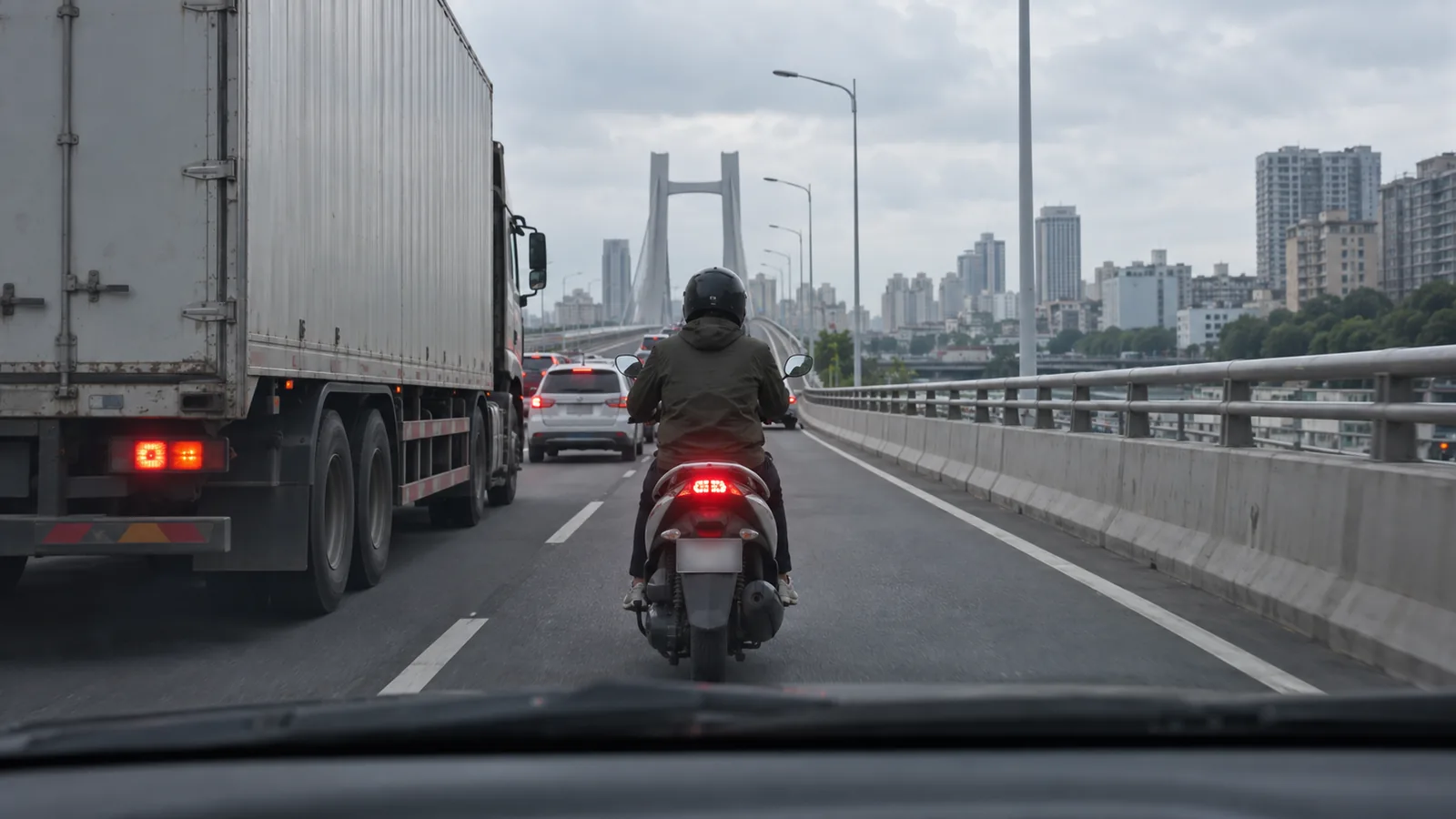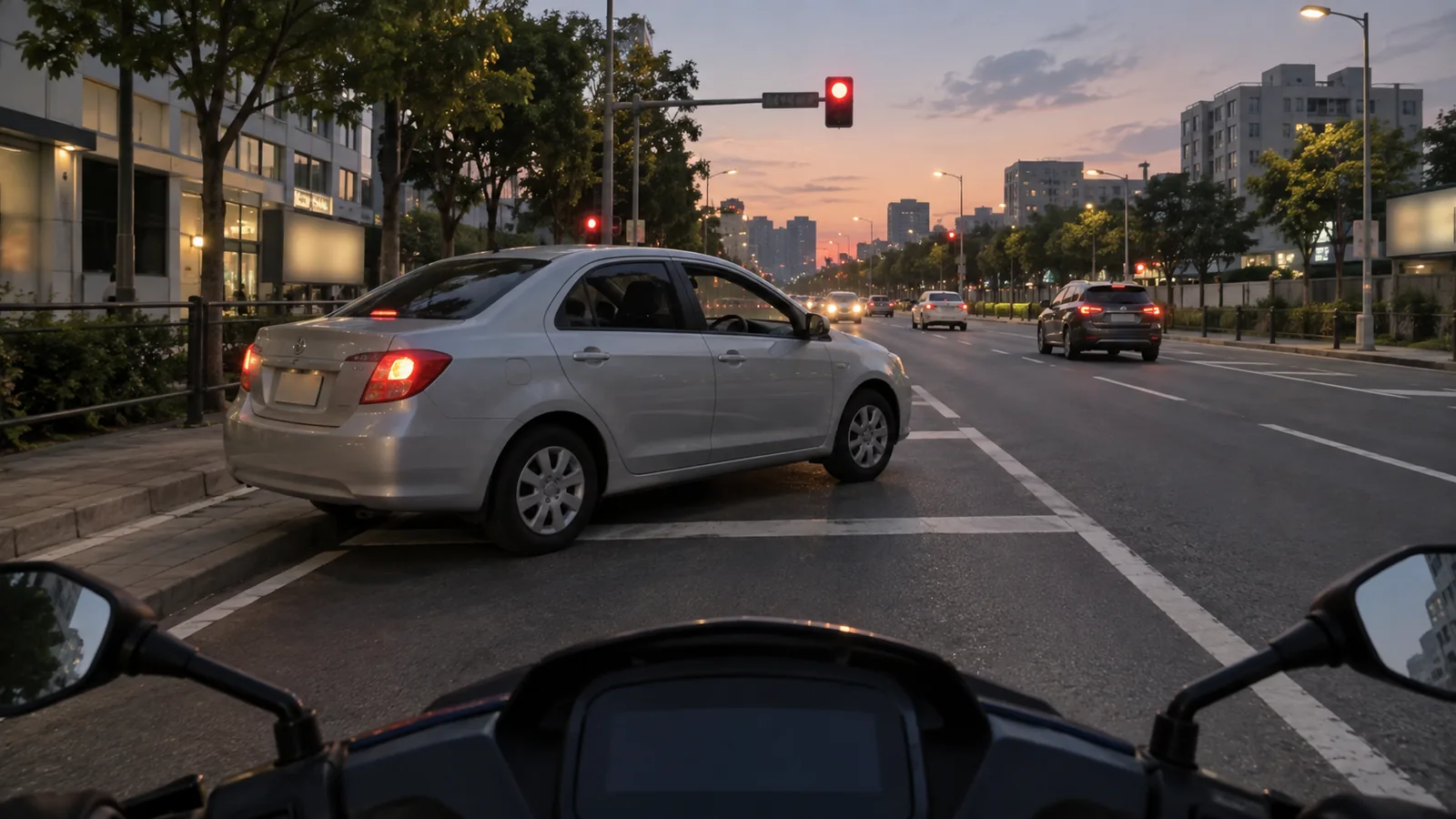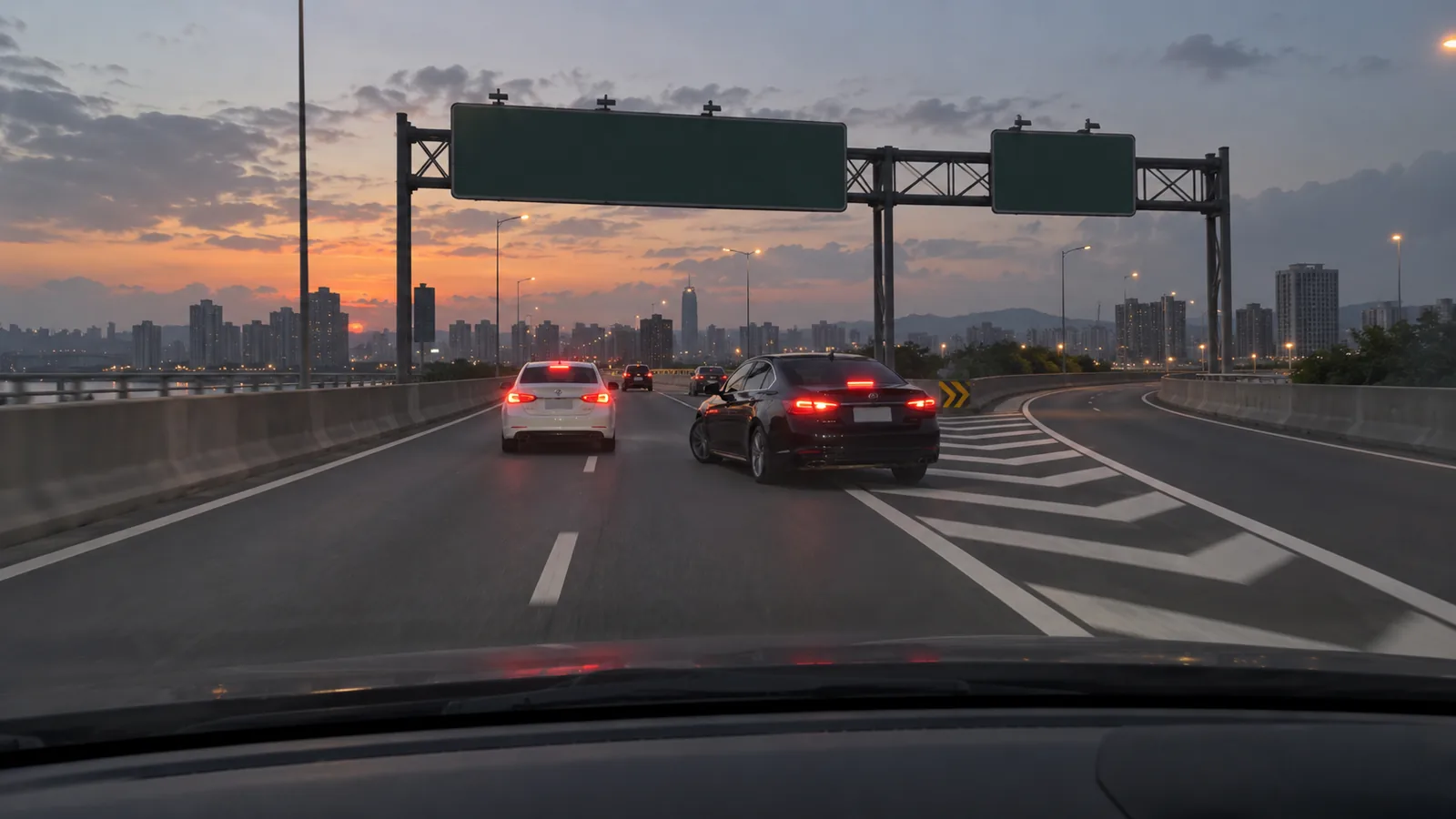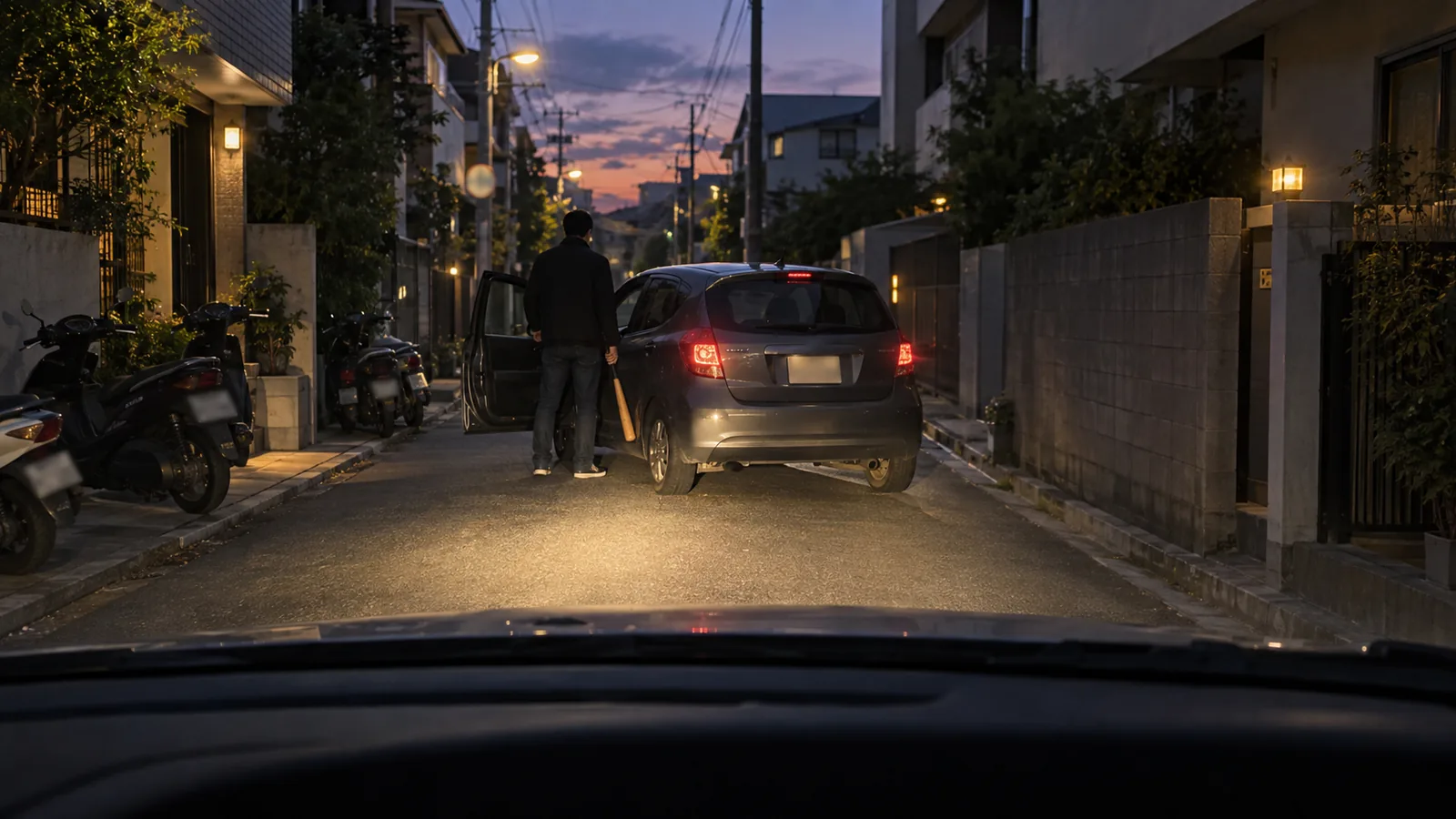
At about 6 p.m. on 7 November 2024, on a street in Keelung's Anle District, a traffic dispute between two people turned into an argument. One of them then attacked the other with a baseball bat. The victim was left with a fractured right ulna, one of the two forearm bones, and a fractured right kneecap (Keelung District Court, 114年度易字第159號, 9 April 2025).
The judgments do not describe the driving that started the dispute, who was at fault in traffic terms, or how the victim was travelling. The civil court called it a "單純行車糾紛", a mere traffic dispute (Keelung District Court, 114年度訴字第502號, 4 December 2025). They are far more precise about the cost: seven months' imprisonment for the attacker, and NT$2,079,598 plus interest for the victim, out of NT$4,824,227 claimed.
The friend at the wheel
One detail about the car comes from a different case. On 18 August 2026 the Taiwan High Court overturned a theft conviction against a friend of the attacker and acquitted the friend, in a judgment marked as not appealable. Citing police statements in the file, it noted that at about 6 p.m. on 7 November 2024 the friend was driving the attacker, and that after a traffic dispute the attacker attacked the victim. Testifying at the friend's first-instance trial, the attacker recalled: "我記得被告載我當天有發生行車糾紛,我因此還被基隆地院判了傷害7個月" (I remember there was a traffic dispute on the day the defendant drove me, and because of it I was even sentenced by the Keelung District Court to seven months for causing injury) (Taiwan High Court, 115年度上易字第1045號, 18 August 2026).
So the person with the bat was a passenger, not the driver. That High Court judgment is not the appeal in the assault case, and this column uses it only for these facts.
Footage on file, but no inspection recorded
Prosecutors indicted the attacker on 3 February 2025. Alongside the attacker's admissions to police and prosecutors, the statements of the victim and a witness, and a hospital diagnosis certificate, their evidence list included "行車紀錄器影像檔案光碟1片、翻拍截圖8張、現場照片4張" (one disc of dashcam video files, eight screen captures and four photos of the scene), offered to prove the bat attack. It does not say whose dashcam it was.
In court the attacker admitted the charge, so the Keelung District Court used the simplified trial procedure (簡式審判程序), which Article 273-1 of the Code of Criminal Procedure allows when a defendant admits the charged facts, except for the most serious offences and cases tried first in the High Court. The judgment adopted the indictment's facts and evidence, adding only the confession in court. It records no inspection (勘驗) of the footage, no timestamps and no description of what the video shows.
Seven months, and a bat that was thrown away
The court convicted the attacker of causing bodily injury under Article 277(1) of the Criminal Code, which carries up to five years' imprisonment, detention or a fine of up to NT$500,000, and imposed seven months' imprisonment. Its sentencing reasons open with the trigger: the attacker had "僅因行車糾紛率爾持球棒毆打告訴人" (rashly beaten the complainant with a baseball bat merely because of a traffic dispute). The admission counted as showing some remorse. The court also weighed the attacker's personal circumstances and prior record, the victim's injuries, and the fact that the attacker "迄今未與告訴人和解並賠償所受損害" (has so far neither settled with the complainant nor compensated the harm).
The bat was never seized. The attacker said it had been thrown away, and the court, citing the difficulty of enforcement and the judicial resources involved, declined to order confiscation under Article 38-2(2) of the Criminal Code (criminal judgment).
The judgment sets no rate for converting the prison term into a fine (易科罰金) and does not suspend the sentence. As background the court did not discuss, Article 41(1) of the Criminal Code allows such conversion only where the sentence imposed is six months or less, subject to further conditions; a seven-month sentence is outside that ceiling. The attacker appealed. According to the later civil judgment, the Taiwan High Court dismissed the appeal (114年度上易字第1128號) and the seven-month sentence became final. That appeal judgment itself is not among this column's sources.
The civil case the attacker did not attend
The criminal judgment gave the victim no money. For that, the victim filed an attached civil action (附帶民事訴訟) in the criminal case, which the criminal division transferred to the civil division. The attacker was lawfully notified but neither attended the hearing nor filed anything, so on the victim's application the court decided after hearing the victim alone (Code of Civil Procedure, Article 385). It confirmed the assault from the criminal file, which it obtained on its own initiative.
The victim said the kneecap fracture required a brace, so walking normally was impossible and a month of care was needed; recovery required three months off work, then three months of rehabilitation working four days a week, a loss of about 20%; and the knee might be permanently damaged, recovering "至多僅得恢復至80%" (at most to 80%). The claim came to NT$4,824,227.
Nobody argued against a single figure.
| Item (NT$) | Claimed | Awarded |
|---|---|---|
| Medical costs (hospital and outpatient, equipment, rehabilitation) | 98,427 | 98,427 |
| One month of care | 45,000 | 45,000 |
| Lost earnings | 151,200 | 151,200 |
| Reduced working capacity | 3,729,600 | 1,284,971 |
| Solatium (non-pecuniary damages) | 800,000 | 500,000 |
| Total | 4,824,227 | 2,079,598 |
Awarded in full: treatment, care and lost pay
The medical bill covered hospital and outpatient treatment (NT$83,415), equipment including a knee brace (NT$12,932) and rehabilitation visits (NT$2,080). The victim had emergency surgery and went back repeatedly for follow-up, and backed the costs with diagnosis certificates and receipts. The court found the spending consistent with the injuries, necessary and reasonable (civil judgment).
The court explained that unpaid care can still have a monetary value, following Supreme Court judgment 94年度台上字第1543號: care given without pay can be valued in money, and a kindness grounded in personal ties should not benefit the person who caused the injury. The victim needed surgery to reset the ulna and fix it internally with pins, and the diagnosis certificate stated "術後需專人照護一個月" (requires dedicated care for one month after surgery). The court found that full-day help had been needed, but the claim used the half-day rate. At typical hospital rates of about NT$3,000 a full day and NT$1,500 a half day, it allowed 30 days × NT$1,500 = NT$45,000 (civil judgment).
For lost earnings, the court checked the victim's pay against a labour insurance certificate and, on its own initiative, tax records. It awarded NT$151,200 for lost earnings during the recovery and rehabilitation periods (civil judgment).
Cut: working capacity and solatium
Reduced working capacity was both the largest item and the largest cut. The victim said the knee no longer bends like a normal knee and filed a National Taiwan University Hospital diagnosis certificate. On 19 September 2025 a specialist physician examined the victim, reviewed the medical history and adjusted for work history, putting the loss at about 12%. The court treated this as a "私鑑定" (private assessment), an expert opinion one party obtains itself, which under Supreme Court judgment 113年度台上字第528號 still counts as a private document, and noted that the assessing unit had no interest in either party.
The court applied the assessed 12% reduction to its accepted earnings basis and calculated the loss over the period beginning on 7 February 2025 (earlier losses were already claimed as lost earnings) until the date this judgment treated as the end point under Article 54 of the Labor Standards Act, which sets conditions under which an employer may require retirement at 65 and allows the parties to agree a later age. Because the award is a single lump sum now rather than a payment each year, it deducted interim interest by the Hoffmann method at 5% simple interest, without discounting the first year. The result was NT$1,284,971; the rest was rejected. The judgment does not show how the victim reached NT$3,729,600 (civil judgment).
For solatium (慰撫金), compensation for pain and suffering, the court weighs how the harm was done, its effects, the victim's suffering and both parties' status and finances. It pointed to the attacker having "僅因與原告發生單純行車糾紛,竟持球棒攻擊原告" (attacked the plaintiff with a baseball bat over a mere traffic dispute), to the victim being only 26 and enduring emergency surgery and long rehabilitation, to possible permanent joint damage, and to both sides' assets and income in tax records. It awarded NT$500,000 of the NT$800,000 sought (civil judgment).
The order: NT$2,079,598, plus 5% a year from 29 March 2025, the day after the complaint was served, until payment. At that rate, interest adds a little over NT$100,000 for each year the sum stays unpaid. The attacker bears 43% of the litigation costs and the victim the rest. The victim may enforce provisionally after posting NT$693,000 as security; the attacker can avoid that by posting NT$2,079,598 (civil judgment).
Two courts, two questions
The criminal court decided whether the attack was a crime and what punishment fitted it. The civil court decided what the injury cost, under Articles 184(1), 193(1) and 195(1) of the Civil Code, covering unlawful injury, lost working capacity and non-pecuniary damage. The criminal judgment ordered no payment, and nothing in the civil judgment reduces the damages because of the prison term.
| Court and case number | Date | Result |
|---|---|---|
| Keelung District Court, 114年度易字第159號 (criminal, first instance) | 9 April 2025 | Guilty of causing bodily injury (Criminal Code Art. 277(1)); seven months' imprisonment |
| Taiwan High Court, 114年度上易字第1128號 (criminal appeal; text not reviewed) | Not stated in the sources | Appeal dismissed, sentence final, as reported in the civil judgment |
| Keelung District Court, 114年度訴字第502號 (civil; transferred from 114年度附民字第240號) | 4 December 2025 | NT$2,079,598 plus 5% a year from 29 March 2025; rest of the NT$4,824,227 claim dismissed |
| Taiwan High Court, 115年度上易字第1045號 (separate theft case against the friend who drove) | 18 August 2026 | Conviction set aside, friend acquitted; marked "不得上訴" (not appealable) |
Where this judgment stops
The figures belong to this victim. The largest item — loss of working capacity — was calculated from the monthly pay the court accepted, a 12% reduction rate, and the period from 7 February 2025 to 9 January 2062 that the judgment used. The court's solatium reasoning separately describes the victim as 26 at the time of the incident; that age is not used here as an input to the capacity-loss formula. The solatium reflects all the circumstances of this case. Because the attacker filed nothing, no one challenged the figures; the cuts came from the court's own review of the victim's evidence.
The civil judgment says an appeal may be filed within 20 days of service. The sources do not show whether anyone appealed, whether it became final, or whether anything has been paid. None of the three judgments mentions a traffic fine, licence penalty or plate suspension under the Road Traffic Management and Penalty Act; the case was about the assault, not the driving.
The quarrel counted against the attacker twice
Neither court treated the traffic dispute as an excuse. The criminal court faulted the attacker for rashly beating the victim merely over a traffic dispute, and the civil court cited the "mere traffic dispute" when setting the solatium. Admitting the offence earned a note of some remorse, but the sentence was still seven months, and the lack of any settlement went on the record. The civil bill came on top.
For someone on the receiving end, the judgment shows how the award was built. Each item of financial loss rested on paper: receipts and certificates for treatment, a doctor's written instruction of one month's dedicated care valued at NT$45,000 even when provided without pay, a labour insurance certificate and tax records for lost pay, and an assessment from a hospital with no stake in the case for the largest item. The victim's own assertion of recovery to at most 80% was not what the court used; it calculated with the assessed 12%. And the claim, filed within the criminal case, reached judgment even though the attacker neither attended the civil hearing nor filed a defence.
Sources
Judgments
- 臺灣基隆地方法院114年度訴字第502號民事判決 (Keelung District Court, 4 December 2025)
- 臺灣基隆地方法院114年度易字第159號刑事判決 (Keelung District Court, 9 April 2025)
- 臺灣高等法院115年度上易字第1045號刑事判決 (Taiwan High Court, 18 August 2026)
The Taiwan High Court judgment 114年度上易字第1128號 (the criminal appeal) and the Supreme Court judgments 94年度台上字第1543號 and 113年度台上字第528號 are mentioned only as the civil judgment reports them; their texts were not reviewed for this column.
Statutes
- 中華民國刑法 第277條 (Criminal Code, Article 277)
- 中華民國刑法 第38條之2 (Criminal Code, Article 38-2)
- 中華民國刑法 第41條 (Criminal Code, Article 41) (background only; not discussed in the judgment)
- 刑事訴訟法 第273條之1 (Code of Criminal Procedure, Article 273-1)
- 民法 第184條 (Civil Code, Article 184)
- 民法 第193條 (Civil Code, Article 193)
- 民法 第195條 (Civil Code, Article 195)
- 民事訴訟法 第385條 (Code of Civil Procedure, Article 385)
- 勞動基準法 第54條 (Labor Standards Act, Article 54)
This column draws on public court judgments and statutes. Sources checked on 3 October 2026.
This article provides general information and is not legal advice on any individual matter.