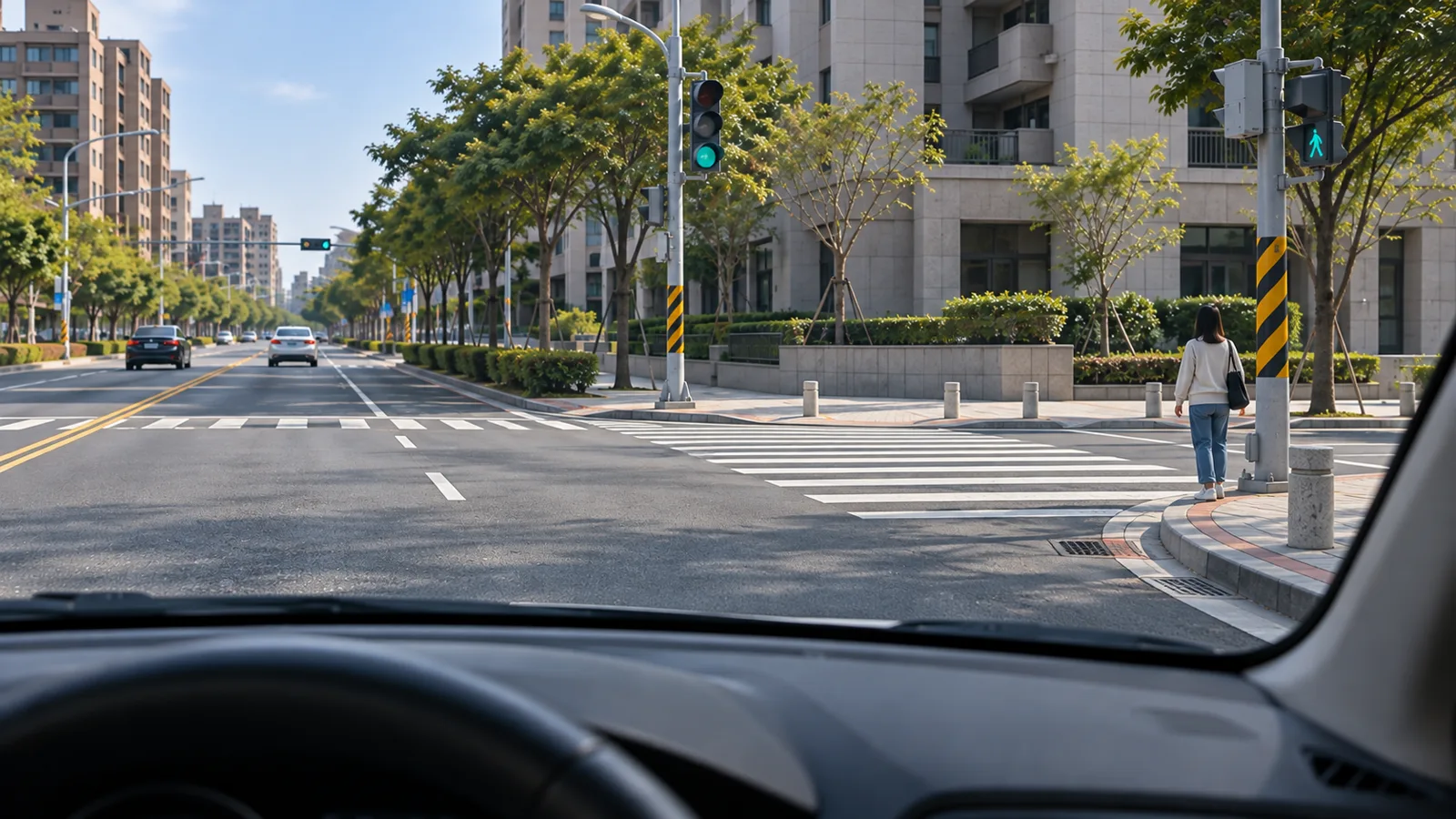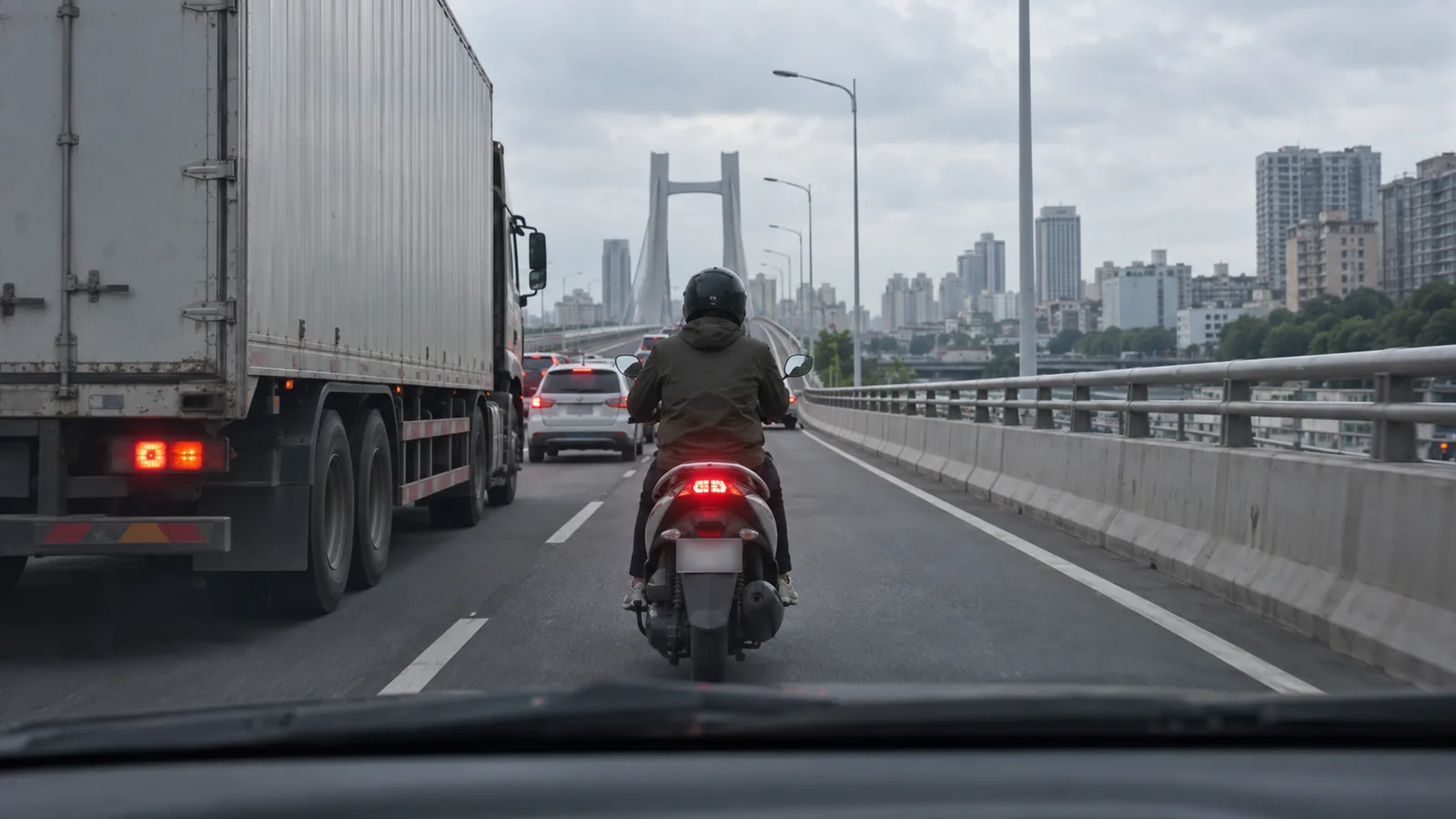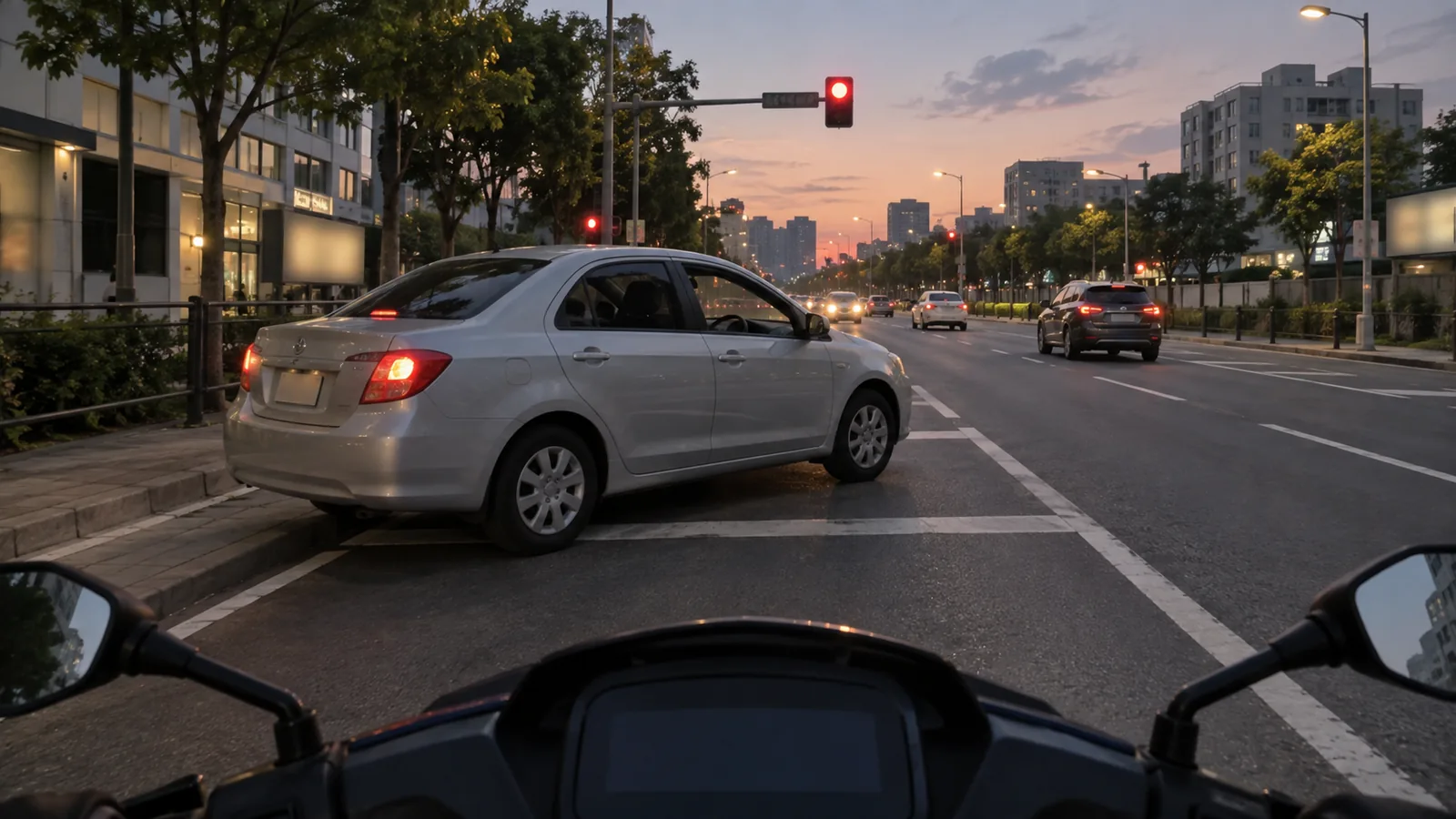
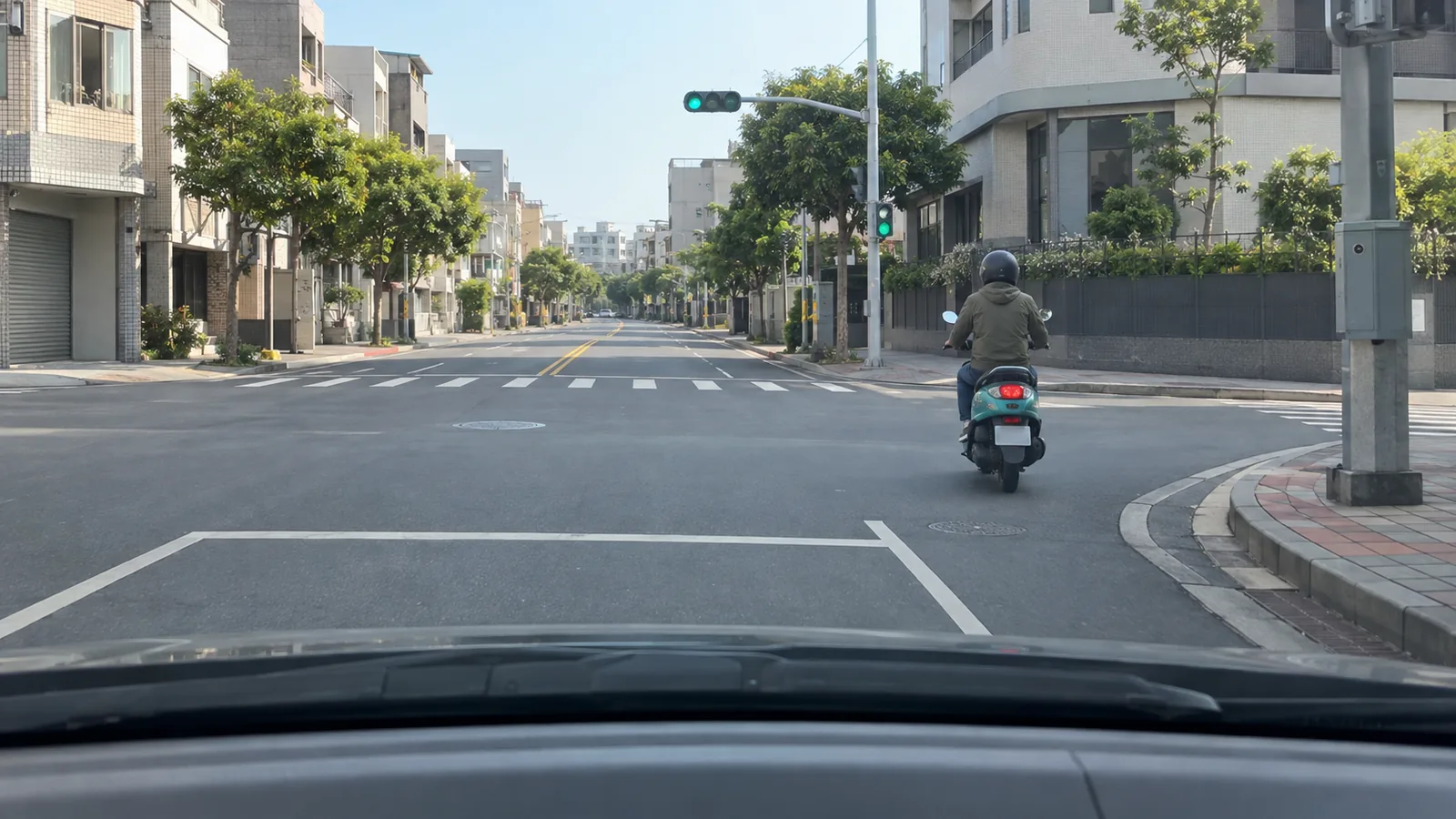
A teal scooter sits ahead and to the right in the car's forward view. It turns left. The car brakes. They touch. This is a scene invented for this article. The film and cover are fictional, with no connection to a real crash, person or judgment.
The image does not establish what kind of lane the scooter occupied. A turn arrow, a motorcycle restriction or a two-stage-turn sign could lie outside the frame.
Where was the rider permitted to turn?
Under Article 99 of the Road Traffic Safety Rules, a motorcycle follows the applicable signs and road markings for lane use and for turning at an intersection. When no signs or markings govern the turn, Article 102 and the specific two-stage-turn conditions in Article 99 must be considered. The apparent width of this invented road cannot prove that this rider was required to make a two-stage left turn.
There may also have been a lane change before the turn. Article 99(1)(3) requires a motorcycle changing lanes to yield to straight-moving traffic and keep a safe interval. A continuous recording can distinguish the first move across a lane from the later turn. A frame showing contact cannot.
Yielding does not erase the other driver's duties
Article 102(1)(7) requires a turning vehicle to yield to one going straight. Items 1 and 11 also make the signal and any special signs or markings at that junction relevant. In these Rules, “automobile” generally includes a motorcycle, subject to the definition's qualification where a provision separately addresses motorcycles (Article 2).
What could the straight-going driver see as the scooter began moving left? Article 94(3) requires attention to the road ahead and the interval between vehicles travelling abreast, and necessary safety measures. The onset of the rider's movement, any obstruction to sight and the driver's braking belong in the same sequence. A still image cannot show the available time to react.
A scrape shows contact, not its cause
Damage at the car's front and on a scooter can help locate where they touched, but it does not reveal who first changed course or which signal applied. In a real collision, unedited recordings from both vehicles, a full view of the junction and photographs of its markings would give the competing accounts a common reference. The generated film supplies no measured speed, distance or timing.
Civil Code Article 184(1) provides for damages when intentional or negligent unlawful conduct infringes another's rights. If an injured person's own fault contributes to causing or enlarging the loss, Article 217(1) permits the court to reduce or eliminate compensation. Neither provision supplies a fixed share of fault for this kind of contact.
In the invented scene, the scooter moves left and the car then brakes. An actual assessment would begin earlier, with the original recording and the intersection's real controls.
The official statutes were checked on October 15, 2026. Any change of camera angle in the film is a separately generated view of the same fictional setting, not synchronized footage with measured positions or times.
Sources
Frequently Asked Questions
- Is a scooter's left turn from the outside always unlawful?
- Its apparent position is not enough to decide. Article 99 of the Road Traffic Safety Rules makes signs, markings and road layout relevant to the permitted lane and turning method, including any two-stage turn requirement.
- Who is responsible when the turning scooter and a straight-going car touch?
- Article 102(1)(7) requires a turning vehicle to yield to straight traffic. Article 94(3) also requires the car driver to watch ahead and take necessary safety measures. Actual paths, visibility, causation and damage must be assessed; there is no preset fault percentage.
- Can the reenactment establish the actual speed or stopping distance?
- No. It is a fictional scene without measured speed, distance or reaction time. An actual case calls for original footage and scene records.
This article provides general information and is not legal advice on any individual matter.