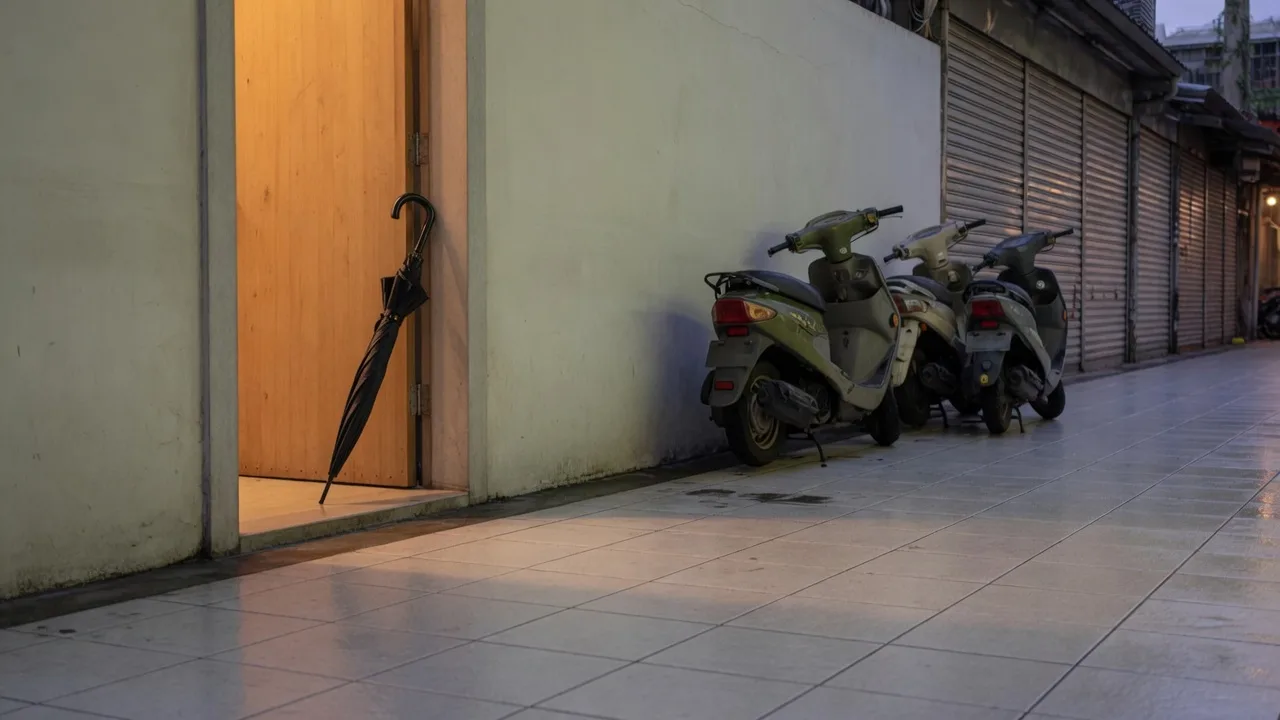
Suppose Dana, an American freelance designer in Taipei, chats twice with a man from a weekend hiking group and then tells him plainly that she is not interested. He begins sending dozens of messages a day, waits outside her co-working space at closing time, and leaves notes on her scooter.
Taiwan has a statute for this: the Stalking and Harassment Prevention Act (跟蹤騷擾防制法), promulgated on December 1, 2021 and in force six months later (Article 23). Dana can ask the police for a written warning, apply to a court for a protection order if he keeps going, and file a criminal complaint. The Act protects "a specific person" (特定人), and nothing in its text limits that by nationality or residence status.
What the Act counts as stalking
Article 3, paragraph 1 stacks several conditions. The conduct must target a specific person, go against that person's will, relate to sex or gender, and be repeated or continuing. It must frighten the person enough to affect daily life or social activities. The means do not matter: in person, by vehicle, by electronic communication or over the internet.
The paragraph lists eight kinds of conduct. Two concern presence: watching, following or tracking a person's whereabouts, and approaching their home, school, workplace or regular places by staking out, waiting or tailing. Three concern contact: warnings, threats, mockery, insults and discriminatory, hateful or belittling words or gestures; harassment by phone, electronic communication or the internet; and demands for dates or contact, or other pursuit. Three concern things and information: sending, leaving, displaying or broadcasting text, pictures, audio, video or objects; telling or showing the person material that harms their reputation; and misusing their data or ordering goods or services without consent.
Paragraph 2 reaches the people around the target. Repeating any of the listed acts against the will of the target's spouse, lineal relatives, relatives in the same household, or people closely tied to the target's social life, and frightening them enough to affect daily life, is stalking under the Act even when it has nothing to do with sex or gender.
One incident, or a dispute about money
Two of those conditions narrow the Act: "repeated or continuing" and "related to sex or gender." Being followed home once, or a run of angry calls from a business contact about an unpaid bill, may fall outside Article 3, paragraph 1.
You do not have to settle that question before going to the police. Once the police take a case they must begin investigating at once, make a written record, and tell the victim which rights and services are available (Article 4, paragraph 1). Whether conduct qualifies is decided case by case, on the background, the relationship between the parties, how each side understood the events, and how continuous the conduct was (Enforcement Rules, Article 6). A single threat to harm someone's life, body, freedom, reputation or property can also be an offense on its own under Article 305 of the Criminal Code.
Stalking and protective-order rules in the United States vary by state and are no guide to the steps below.
The police written warning
If the investigation shows that a stalking offense is suspected, the police must issue the actor a written warning (書面告誡), on their own authority or at the victim's request, and must take other protective measures where needed (Article 4, paragraph 2). The warning states the reason for it, the legal consequences of a violation and how to challenge it, and the police notify the victim in writing whether a warning was issued (Enforcement Rules, Article 9). A warning does not depend on the victim filing a criminal complaint (Article 10).
If the police decline to issue a warning, the victim has ten days from receiving that notice to object in writing, through the original police agency, to the agency above it (Article 4, paragraph 3; Enforcement Rules, Article 12). The person warned has the same ten days. Neither side can challenge the higher agency's decision further (paragraph 5).
The protection order comes from a court
The victim may apply for a protection order when the actor stalks again within two years after the written warning (Article 5, paragraph 1). The two years run from the day the warning was served on the actor and took effect (Enforcement Rules, Article 14). Where the victim is a minor, a person with a disability, or someone who has difficulty appointing an agent, a spouse, legal representative, or relative by blood or marriage within the third degree may apply on the victim's behalf. Prosecutors and the police may apply on their own authority, and when they do, no earlier written warning is required (Enforcement Rules, Article 15). No court fee is charged for applying, or for revoking, changing, extending or appealing an order (Article 5, paragraph 3).
The application is made in writing to the district court for the place where the victim or the respondent lives, or where the conduct or its result occurred (Article 6). It sets out the specific measures sought, the facts and the evidence, and it may give an address for service in place of the applicant's and the victim's home address (Article 7).
Under Article 12, the court issues an order when it finds that stalking occurred and an order is necessary. The order may prohibit the Article 3 conduct and require the respondent to keep a set distance from specified places. It may also bar the respondent from looking up the victim's household registration records, require a treatment program, and add other measures needed to prevent a repeat. The order may leave out the applicant's address and contact details (paragraph 3). It lasts up to two years from the time it is issued, and before it expires the court may extend it, by no more than two years each time (Article 13).
For stalking between family members as defined in the Domestic Violence Prevention Act, or between current or former intimate partners who do not live together, the applicant must seek a civil protection order under that Act, and the Stalking Act's protection-order rules do not apply (Article 5, paragraph 4). That route is described in A Taiwan protection order when you are a foreign spouse.
Criminal penalties and the six-month complaint period
| Conduct | Statutory penalty |
|---|---|
| Stalking (Article 18, paragraph 1) | Imprisonment up to 1 year, short-term detention, or a fine up to NT$100,000 |
| Stalking while carrying a weapon or other dangerous item (Article 18, paragraph 2) | Imprisonment up to 5 years, short-term detention, or a fine up to NT$500,000 |
| Violating a protection order made under Article 12, paragraph 1, items 1 to 3 (Article 19) | Imprisonment up to 3 years, short-term detention, or a fine up to NT$300,000 |
The fine may be imposed alone or together with imprisonment or detention. Amounts are as of October 6, 2026.
The basic offense in Article 18, paragraph 1 is prosecuted only on complaint (告訴乃論) under paragraph 3. The victim has to tell a prosecutor or the police that they want the offender prosecuted, and has six months to do so, counted from when the person entitled to complain learned who the offender was (Code of Criminal Procedure, Article 237). Where there is no complaint, or the period has passed, the court must dismiss the case (Article 303). Paragraph 3 makes a complaint a condition only for the paragraph 1 offense.
A complaint can be made in writing or orally, and an oral complaint is taken down in a record (Article 242). A written warning and a complaint are separate, so a victim who wants prosecution should make sure the record of the statement says so. A complaint may be withdrawn until oral argument closes in the court of first instance, and a person who withdraws cannot complain again (Article 238).
Keeping a record, and asking for an interpreter
The Act tests repetition and conduct against your will, so the record should show both. Keep the message in which you told the person to stop. Take screenshots that show the date, the time and the sender's account. Save call logs, photos of the person waiting, anything left for you, and the names of co-workers or building guards who saw it. Keep everything in date order. Cameras in buildings and shops are run by someone else, so tell the police early which dates, times and places may have been filmed. Article 18, paragraph 4 also exempts the paragraph 1 offense from the three-year sentence threshold that the Communication Security and Surveillance Act (通訊保障及監察法) sets for requests for communication records and user data.
If your Mandarin is not strong, say so before you give your statement and ask for an interpreter. Article 99 of the Code of Criminal Procedure requires an interpreter where the person being questioned does not understand the language. The record must be read to you or shown to you, you must be asked whether it is accurate, and a correction you ask for must be noted (Article 41; Article 242, paragraph 3). Sign after an interpreter has taken you through it. Summoned by Taiwan police or prosecutors as a foreigner covers the same rules for someone questioned as a suspect. If you are in danger now, call the police first and organize the record later.
To ask about your situation, email Hovering International Law Firm at wei@hoveringlaw.com.tw with a dated timeline. This column is general information; the result in any case depends on its facts and evidence.
Official sources
- Stalking and Harassment Prevention Act (跟蹤騷擾防制法, promulgated December 1, 2021), full text: Art. 3, Art. 4, Art. 5, Art. 6, Art. 7, Art. 12, Art. 13, Art. 18, Art. 19, Art. 23
- Enforcement Rules of the Stalking and Harassment Prevention Act (跟蹤騷擾防制法施行細則), Art. 6, Art. 9, Art. 10, Art. 12, Art. 14, Art. 15
- Code of Criminal Procedure (刑事訴訟法), Art. 41, Art. 99, Art. 237, Art. 238, Art. 242, Art. 303
- Criminal Code (中華民國刑法), Art. 305
- Official English translations used to check English titles and wording: Stalking and Harassment Prevention Act, The Communication Security and Surveillance Act
Checked: October 6, 2026
Frequently Asked Questions
- Someone followed me home once in Taiwan. Does the Stalking and Harassment Prevention Act apply?
- Article 3 requires conduct that is repeated or continuing, so a single incident may fall outside the Act. The police must still begin investigating and make a written record once they take a case under Article 4, and whether conduct qualifies is decided case by case under Article 6 of the Enforcement Rules. You do not have to reach a conclusion yourself before reporting.
- The person got a written warning and is still contacting me. What comes next?
- If the person stalks again within two years after the written warning was served, you may apply to the district court for a protection order under Article 5. There is no court fee. An order lasts up to two years and can be extended. Violating an order made under Article 12, paragraph 1, items 1 to 3 carries imprisonment of up to three years, short-term detention, or a fine of up to NT$300,000 under Article 19.
- How long do I have to file a criminal complaint?
- The basic offense in Article 18, paragraph 1 is prosecuted only on complaint. Under Article 237 of the Code of Criminal Procedure, the complaint must be filed within six months from when the person entitled to complain learned who the offender was. A written warning can be issued without a complaint, so asking for one is not the same as filing a complaint.
This article provides general information and is not legal advice on any individual matter.