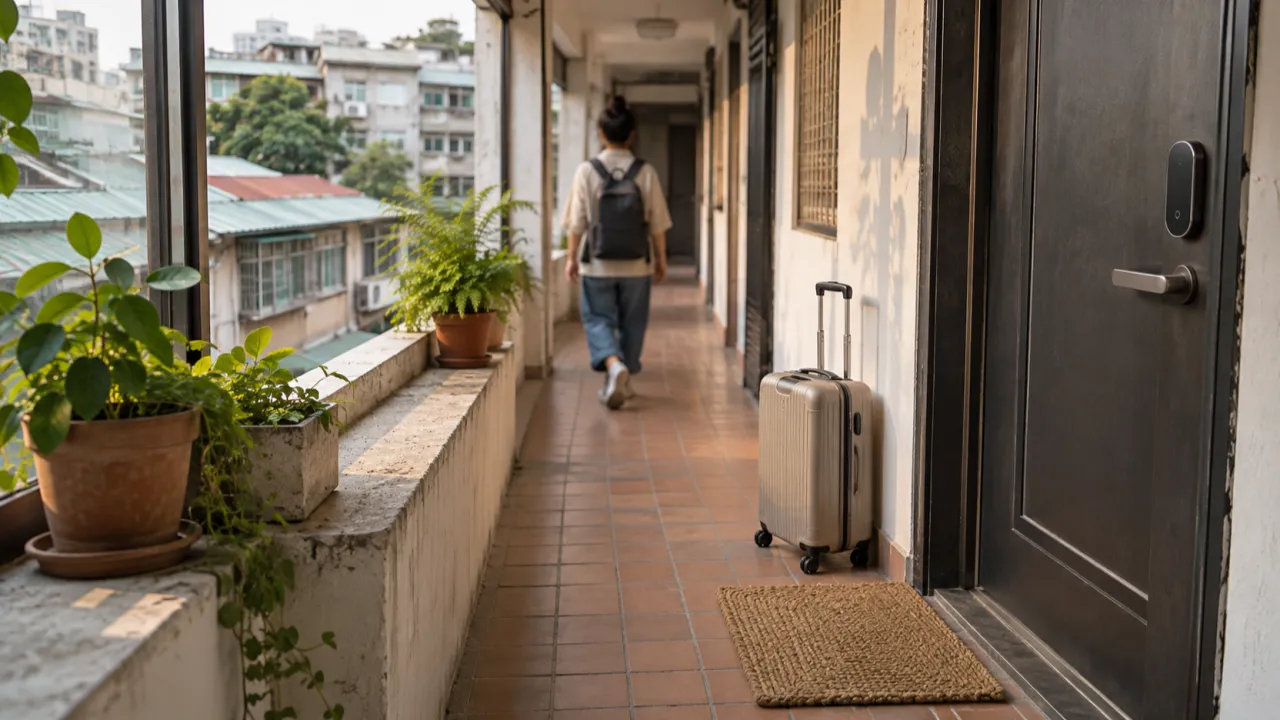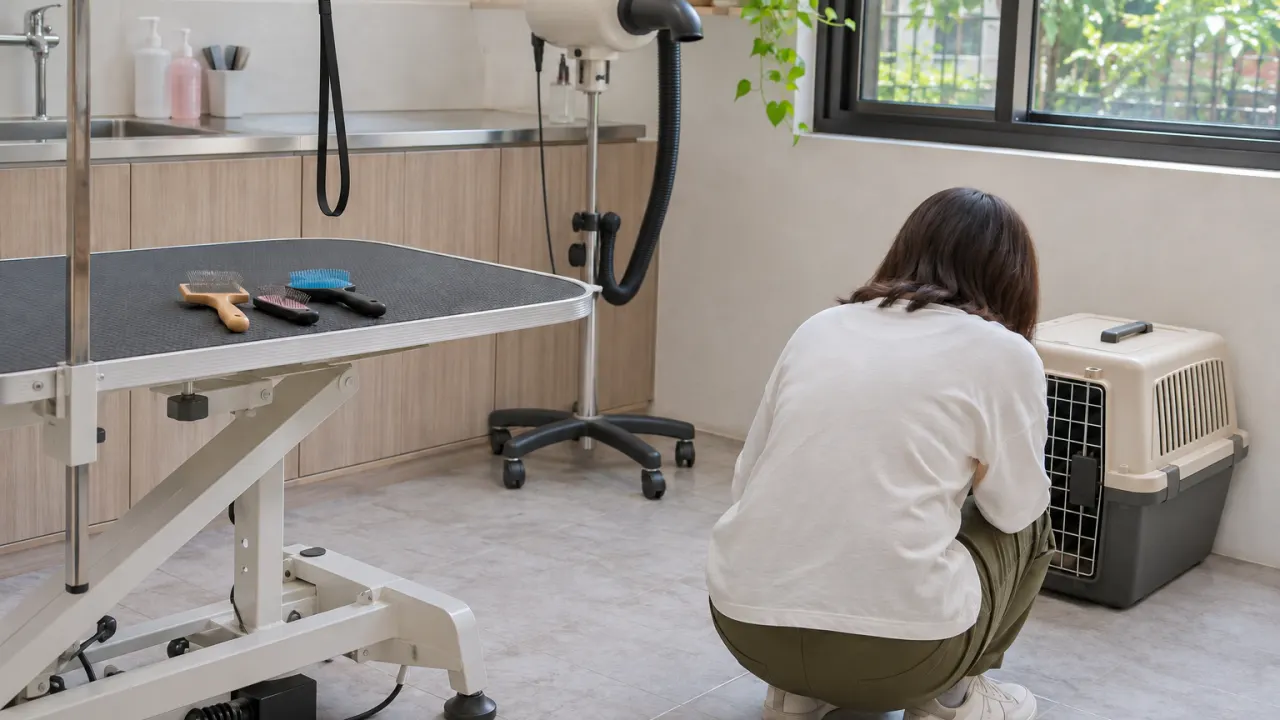
Three nights at a Taichung pet hotel for a Maltese, NT$1,200 a night. On the second evening the hotel calls: the lead slipped on a walk, the dog bolted toward a main road, and two staff have searched in vain (an invented example).
That week a groomer's scissors nicked a poodle's ear. The incidents look alike. The rules differ.
Boarding needs a licence; grooming has contract terms
Under Animal Protection Act art. 22(1), only operators licensed by the city or county authority may breed, sell or board specified pets, for terms of up to three years. The specified pets are dogs and cats (Regulations Governing Specified Pet Businesses art. 2). Grooming is not on the list, though the ministry's Q&A says some localities, such as Taichung, require groomers to hold a boarding licence as local policy.
Unlicensed dog or cat boarding draws fines of NT$100,000 to NT$3 million and an order to stop (art. 25-2(1)). Boarding operators must show their licence number in ads (art. 22-2(3)) and hang the licence where customers can see it (Regulations art. 10(1)(v)).
Licensed operators also keep records: a dedicated staff member (Regulations art. 4(1)) logs daily care and keeps the log for two years (art. 10(1)(i)).
Terms that enter every grooming contract
On May 12, 2025, the ministry announced mandatory and prohibited terms for dog and cat grooming contracts (犬、貓美容服務定型化契約應記載及不得記載事項), effective immediately, under Consumer Protection Act art. 17(1). Under art. 17(5), they bind even if the shop's form omits them. The ministry's practice guide says they cover oral bookings too.
Mandatory term 5 covers accidents. If a groomer notices a problem with the treated area or the animal's health, the shop must deal with it at once, then notify the owner or emergency contact. If the animal needs urgent care, the shop notifies the owner and takes it first to the owner's chosen vet, or else to a suitable nearby clinic. If it dies, the shop notifies the owner, preserves the body and reports to the animal protection authority. If the cause is attributable to the shop, it is liable for damages and under the Animal Protection Act.
Time is short for the body. Uncollected on the day of notice, it goes to the animal protection authority by the next day (term 5(3)). Decide on a post-mortem that day.
Two records matter. Before grooming, the shop asks about temperament, aggression, illness and history, checks the animal, and gives the owner a signed copy of the answers (term 4); the owner must answer truthfully. That form and the service record (term 3) are the first evidence.
A dog left overnight at a salon falls under term 10: after closing the shop must notify the owner or emergency contact and keep caring for the animal, may charge an agreed penalty of up to three times that visit's service fee per day, and after three days notifies the animal protection authority.
How far a waiver goes
As for no-liability forms, prohibited term 6 bars clauses excluding or limiting the shop's liability under the Consumer Protection Act, and term 2 bars clauses that breach mandatory law or are obviously unfair. A clause that breaches the announced terms is void (art. 17(4)). Liability for intent or gross negligence cannot be waived in advance anyway (Civil Code art. 222). A shop that ignores a correction order faces fines of NT$30,000 to NT$300,000, then NT$50,000 to NT$500,000, repeatable per violation (Consumer Protection Act art. 56-1).
Prepaid sessions left after a pet dies or falls too ill? Either side may end the contract (term 9(1)(ii)). Within three days the shop refunds what was paid, or after grooming has started, the balance less sessions used, with no handling fee (terms 6, 7, 9(2)).
Boarding has only a model contract
As of November 3, 2026, boarding has no equivalent mandatory-terms notice. Instead, by a letter of June 17, 2025 (農護字第1140072491號), the ministry circulated a model dog and cat boarding contract. It is a reference form the parties may change; it does not bind automatically.
Its accident clause (art. 6) mirrors grooming term 5. Article 1 bars taking the animal off the premises without consent, except in special emergencies or force majeure, and promises a full refund if that is proven; an unagreed walk may fall here. Under art. 5, an operator that was not negligent owes nothing if the owner hid an illness. Under art. 8, the owner may end the stay at any time (not stays under a day); within three days of termination the operator refunds the amount received minus boarding fees already earned and any agreed cancellation fee. Under art. 10, either side may end it for force majeure or the animal's death, illness, poor health or refusal that makes continued boarding impracticable, with no cancellation fee. Loss is not an art. 10 ground; a hotel at fault settles under art. 9 with no cancellation fee and pays further damages, alongside art. 14 and the Civil Code.
Deposit and the standard of care
A contract in which one party hands over a thing and the other agrees to keep it is a deposit (Civil Code art. 589(1)). A paid keeper must take the care of a good administrator (art. 590). The keeper must keep the thing itself unless the depositor agrees, custom allows or necessity requires (art. 592), and answers for the fault of its staff as its own (art. 224).
If the dog cannot be returned for reasons attributable to the hotel, the owner may claim damages (art. 226(1)). Grooming may be read as a contract for work (art. 490(1)), and defective performance attributable to the shop that causes further harm also supports a claim (art. 227(2)).
Deadlines are tight. Damages claims under a deposit contract lapse one year after the deposit relationship ends (art. 601-2). A tort claim (art. 184(1)) lapses two years after the victim knows of the damage and the liable party, and ten years after the act (art. 197(1)).
What can be claimed
Damages aim to restore the prior position, or pay what restoration costs (art. 213(1), (3)); where that is impossible, money is paid (art. 215). The measure is loss suffered and profit lost (art. 216(1)). For the poodle: stitches and follow-ups. Damaging another's property also supports a claim for lost value (art. 196).
Grief is harder. Article 195(1) provides non-pecuniary damages for injury to a person's body, health, reputation, liberty and similar interests. The wording of art. 195 does not settle whether a pet's death qualifies (as of November 3, 2026); build the claim on receipts.
If another boarder bit your dog, the animal's possessor is liable unless it shows proper restraint for the animal's kind and nature, or that harm would have occurred despite it (art. 190(1)). Who controlled the biter matters; see Bitten by someone else's dog in Taiwan.
Administrative exposure
The Animal Protection Act treats as an "owner" anyone who actually controls an animal (art. 3(7)). Owners must keep animals from harassment, abuse or injury and move them to safety, with a chance to escape, when danger looms (art. 5(2)(iv), (viii)), duties that can reach a shop during custody. Negligently injuring an animal so that it suffers severe limb damage, loss of a vital organ's function, or death carries fines of NT$15,000 to NT$75,000 (art. 30(1)(i)). The ministry's Q&A leaves that call to the animal protection authority; a report can run alongside a civil claim.
A lost pet: five days to report
The owner or boarding operator must report a lost pet, with its registration certificate, to the registration agency within five days (Regulations on Pet Registration art. 7(1)). A pet not found within a year of the report is deemed dead and deregistered (art. 7(2)). If the hotel did not report, do so yourself. Keep vet reports, receipts, photos, messages, copies of the intake form or care log, and flyer costs.
Small claims
Money claims of NT$100,000 or less go through the small claims procedure (Code of Civil Procedure art. 436-8(1)). A consumer suit may be brought where the consumer relationship arose (Consumer Protection Act art. 47), and prohibited grooming term 4 bars contracts from excluding that rule or the small-claims venue rules. See small claims in Taiwan.
What a Taiwan lawyer can do
A Taiwan lawyer can obtain licence details and care records, test waiver and refund clauses, send a damages demand, act in mediation or small claims, and report to the animal protection authority. Consultations on civil disputes are available at wei@hoveringlaw.com.tw. Hovering International Law Firm (昊鼎國際法律事務所), Taipei: 7F-2, No. 35, Sec. 1, Chengde Rd., Datong Dist., Taipei City 103. Taichung: 6F-1, No. 19, Guanqian Rd., North Dist., Taichung City 40453.
The Maltese's owner has two clocks running: five days from the loss to report it, and one year from the end of the stay for a deposit claim.
Sources
Checked November 3, 2026. Taiwan rules are quoted from the Chinese originals.
- Ministry of Agriculture announcement 農護字第1140072281號 (May 12, 2025), mandatory and prohibited terms for dog and cat grooming contracts — Executive Yuan Gazette
- Ministry of Agriculture, model dog and cat grooming contract, 2nd ed. (April 29, 2026) — Executive Yuan website
- Ministry of Agriculture, practice guide on the grooming contract terms (December 31, 2025)
- Ministry of Agriculture, Q&A on the grooming contract terms — Animal Protection Information Network
- Miaoli County Animal Protection and Disease Control Office: Ministry of Agriculture letter 農護字第1140072491號 (June 17, 2025), model dog and cat boarding contract
- Animal Protection Act, art. 3
- Animal Protection Act, art. 5
- Animal Protection Act, art. 22
- Animal Protection Act, art. 22-2
- Animal Protection Act, art. 25-2
- Animal Protection Act, art. 30
- Regulations Governing Specified Pet Businesses (特定寵物業管理辦法), art. 2
- Regulations Governing Specified Pet Businesses, art. 4
- Regulations Governing Specified Pet Businesses, art. 10
- Regulations on Pet Registration (寵物登記管理辦法), art. 7
- Consumer Protection Act, art. 17
- Consumer Protection Act, art. 47
- Consumer Protection Act, art. 56-1
- Civil Code, art. 184
- Civil Code, art. 190
- Civil Code, art. 195
- Civil Code, art. 196
- Civil Code, art. 197
- Civil Code, art. 213
- Civil Code, art. 215
- Civil Code, art. 216
- Civil Code, art. 222
- Civil Code, art. 224
- Civil Code, art. 226
- Civil Code, art. 227
- Civil Code, art. 490
- Civil Code, art. 589
- Civil Code, art. 590
- Civil Code, art. 592
- Civil Code, art. 601-2
- Code of Civil Procedure, art. 436-8
Frequently Asked Questions
- The grooming form says the shop accepts no liability for accidents. Does that hold?
- The Ministry of Agriculture's mandatory and prohibited terms for dog and cat grooming contracts bar any clause that excludes or limits the shop's liability under the Consumer Protection Act (prohibited term 6), and a standard-form clause that breaches the announced terms is void (Consumer Protection Act art. 17(4)). Civil Code art. 222 adds that liability for intent or gross negligence cannot be waived in advance. The mandatory terms bind even if the shop's form leaves them out (art. 17(5)).
- A pet hotel lost my dog. How long do I have to claim?
- If boarding is treated as a deposit under the Civil Code, damages claims under the deposit contract lapse one year after the deposit relationship ends (art. 601-2). A tort claim lapses two years after you learn of the damage and the liable party, and ten years after the act (art. 197(1)). The loss itself must be reported to the registration agency within five days by the owner or the boarding operator (Regulations on Pet Registration art. 7(1)).
- Can I claim damages for grief if my pet died?
- Civil Code art. 195(1) awards non-pecuniary damages for injury to a person's body, health, reputation and similar personal interests. Whether the death of a pet supports such a claim is not settled by the wording of art. 195 (as of November 3, 2026), so start from proven losses such as vet bills (arts. 213, 216).
This article provides general information and is not legal advice on any individual matter.