
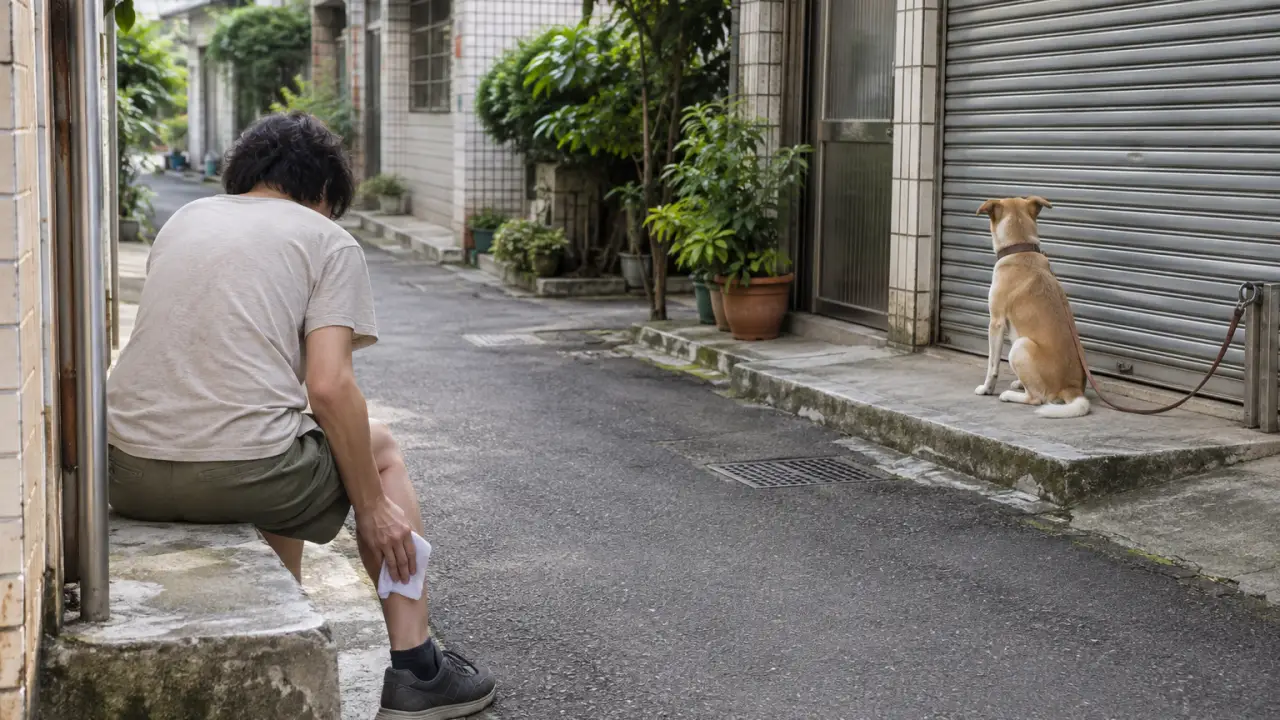
Seven a.m., a lane beside a Taichung park. An American teacher jogs past a breakfast shop, and the shop's dog, off its chain, bolts out and bites her left calf. A staff member drags the dog inside and calls over his shoulder: "He never bites." The emergency room closes two wounds with stitches (an invented example).
Who pays the hospital bill? Under Taiwan's Civil Code, the animal's possessor (占有人). Often that is the owner. Not always.
Who had the dog that morning
Civil Code article 190(1) makes the possessor of an animal liable for harm the animal causes to others. Article 940 defines a possessor as whoever has factual control over a thing.
Shop and factory dogs raise one more rule. When an employee, apprentice or family member controls a thing on someone else's instructions, only that someone else is the possessor (art. 942). If the staff member was minding the dog for the shop owner, the article 190 claim may point at the owner's side. Control is the test: who feeds the dog, who lets it loose in the daytime, who has the say over tying it up.
It gets harder when a friend walks someone else's dog. Victims lose little by recording the shop's name and address, the staff member's name, what the dog looks like, photos of the scene, and where nearby cameras point.
"He never bites" and the proviso
Article 190(1) has a proviso. The possessor is not liable if the animal was already kept with reasonable care suited to its kind and nature, or if the harm would have happened even with such care. Those are the only two exits.
Who has to prove them? In Taiwan's civil courts, a party asserting a fact in its favour bears the burden of proving it (Code of Civil Procedure art. 277). So the possessor must show the chain, the closed gate, or the muzzle a dog of that type needed. A calm history is one piece of evidence at most. The victim, for her part, proves the bite, the injury and the amount of loss.
Paragraph 2 covers provocation. If a third person or another animal provoked the dog, the possessor may seek reimbursement from that person or that animal's possessor. The paragraph gives the possessor a right of recourse; it contains no words barring the victim's own claim. A victim who teased the dog stands differently. Where the victim's own fault contributed to the harm, a court may reduce or cancel the award (Civil Code art. 217(1)).
No bite, just a fall
A scooter rider swerves to avoid a dog charging out of an alley, falls, and breaks a wrist (an invented example). Can article 190 apply without a bite?
Article 190 speaks of an animal causing harm to another. It does not mention biting. The fight moves to causation, which the rider must prove, so dashcam or helmet-camera footage and witness contacts can matter more than photos of the injury. Road conditions and speed may feed a contributory-fault argument under article 217. Damage to the scooter itself is claimed as the drop in its value (art. 196).
From medical certificate to damages
Compensation covers losses suffered and profits lost (art. 216(1)), which takes in medical bills and transport to follow-up visits. Article 193(1) adds liability for lost or reduced capacity to work and for increased living needs. Non-pecuniary damages for pain and distress rest on article 195(1), which asks only for a "reasonable amount" and sets no scale.
Get the hospital's medical certificate (診斷證明書) first. It should state the injured area, the stitches and the recommended rest period. Keep leave records and payslips too.
On rabies, Taiwan CDC's rabies Q&A says to wash the wound at once with soap and plenty of water for 15 minutes, disinfect it and see a doctor. Because Taiwan's dogs and cats carry an extremely low rabies risk, it says people bitten by them are, for now, not given the vaccine. The animal is observed for ten days, and the vaccine is given if suspected rabies symptoms appear and animal health authorities strongly suspect it. Knowing whose dog it was helps there too.
Negligent injury: six months and two years
Careless dog handling that injures someone can be a crime. Under Criminal Code article 284, negligent injury carries up to one year's imprisonment, short-term detention or a fine of up to NT$100,000; serious injury carries up to three years' imprisonment, short-term detention or a fine of up to NT$300,000. Fines in the Criminal Code's specific provisions are in New Taiwan dollars (Enforcement Law of the Criminal Code art. 1-1(1)).
Prosecution needs a complaint (art. 287). The window is six months from when the victim learns who the offender is (Code of Criminal Procedure art. 237(1)), and the complaint may be made in writing or orally to a prosecutor or judicial police officer (art. 242(1)). Criminal fault is personal, so the staff member who is not the civil possessor can still be the person complained against. After a settlement, the complaint may be withdrawn before the first-instance hearing closes, but not refiled (art. 238); our piece on withdrawing an injury complaint after settlement covers the paperwork.
Civil claims run on a separate clock. A damages claim lapses two years after the victim learns of the damage and of the person liable, and ten years after the act in any event (Civil Code art. 197(1)). Once charges are filed, the victim may also bring an incidental civil action inside the criminal case against the defendant and anyone liable under the Civil Code (Code of Criminal Procedure art. 487(1)), up to the close of second-instance argument but not between the end of first-instance argument and the filing of an appeal (art. 488).
Duties under the Animal Protection Act
The Animal Protection Act defines a keeper (飼主) as the owner or whoever actually controls the animal (art. 3(7)). An owner is a keeper even when someone else held the lead. Article 7 requires keepers to stop their animals from harming others' life, body, freedom or property without cause.
Pets in public places or places open to the public must be accompanied by someone aged seven or older (art. 20(1)); breach brings a fine of NT$3,000 to NT$15,000 (art. 31(1)(9)). Aggressive pets need an adult escort and proper protective measures (art. 20(2)), with the central authority announcing which pets count and which measures apply (art. 20(3)). Taking one out without an adult, or without those measures, costs NT$30,000 to NT$150,000 (art. 29(1)(5)). Article 20(1) itself never mentions a leash.
Breaching article 7 carries no fine of its own. An animal that, in breach of article 7, injured a person without cause may instead be confiscated by the municipal or county authority (art. 32(1)(3)). Neither pays the victim's bills.
A dog with no known keeper
A stray fits article 190 poorly, since the article assumes a possessor. Whether a person who regularly feeds a dog outside a shop has factual control may be argued; no provision says feeding alone makes someone a possessor.
Mediation, then leaving Taiwan
Township, town and city offices run mediation committees for civil disputes and complaint-only criminal matters (Township and County-Administered City Mediation Act art. 1), and district committees in municipalities and cities apply the same Act (art. 35(2)). Apart from inspection costs, mediation is free (art. 23). A court-approved civil mediation has the force of a final civil judgment, and the parties cannot sue or complain again over the same matter (art. 27). If a victim with the right to complain applies and mediation fails, the office can, on request, send the case to the prosecutor, and the complaint counts as filed on the day mediation was requested (art. 31).
Leaving Taiwan neither pauses nor shortens the article 197 period. Interruption comes from statutory events such as a demand, an acknowledgement or a lawsuit (Civil Code art. 129(1)), and a demand counts only if suit follows within six months (art. 130). A letter alone does not restart two years.
What a Taiwan lawyer can do
A Taiwan lawyer can ask the shop and neighbours in writing to preserve camera footage, identify the article 190 possessor, price the article 193 and 195 claims, draft the criminal complaint, attend the police interview and mediation, and represent a victim who has left Taiwan. Consultations on civil claims are available at wei@hoveringlaw.com.tw. Hovering International Law Firm (昊鼎國際法律事務所), Taipei: 7F-2, No. 35, Sec. 1, Chengde Rd., Datong Dist., Taipei City 103. Taichung: 6F-1, No. 19, Guanqian Rd., North Dist., Taichung City 40453.
Back in that lane, the teacher's criminal complaint is due six months after she learns who the offender is. The civil claim runs two years from knowing the damage and the person liable, and ten years from the bite at most. The certificate lists two stitched wounds.
Sources
Checked November 3, 2026. Taiwan statutes are cited from the Chinese text in the Laws & Regulations Database.
- Civil Code, art. 129
- Civil Code, art. 130
- Civil Code, art. 190
- Civil Code, art. 193
- Civil Code, art. 195
- Civil Code, art. 196
- Civil Code, art. 197
- Civil Code, art. 216
- Civil Code, art. 217
- Civil Code, art. 940
- Civil Code, art. 942
- Code of Civil Procedure, art. 277
- Criminal Code, art. 284
- Criminal Code, art. 287
- Enforcement Law of the Criminal Code, art. 1-1
- Code of Criminal Procedure, art. 237
- Code of Criminal Procedure, art. 238
- Code of Criminal Procedure, art. 242
- Code of Criminal Procedure, art. 487
- Code of Criminal Procedure, art. 488
- Animal Protection Act, full text
- Animal Protection Act, art. 3
- Animal Protection Act, art. 7
- Animal Protection Act, art. 20
- Animal Protection Act, art. 29
- Animal Protection Act, art. 31
- Animal Protection Act, art. 32
- Township and County-Administered City Mediation Act (鄉鎮市調解條例), art. 1
- Mediation Act, art. 23
- Mediation Act, art. 27
- Mediation Act, art. 31
- Mediation Act, art. 35
- Taiwan Centers for Disease Control, Rabies Q&A (狂犬病Q&A)
Frequently Asked Questions
- The owner says the dog has never bitten anyone, so they are not responsible. Is that a defence?
- Under the proviso to Civil Code article 190(1), the possessor escapes liability only by showing that the animal was kept with reasonable care suited to its kind and nature, or that the harm would have happened even with such care. A party asserting a fact in its favour must prove it (Code of Civil Procedure art. 277), so the possessor carries that burden. A calm track record is at most one piece of evidence.
- What are the deadlines for a criminal complaint and a damages claim?
- Negligent injury (Criminal Code art. 284) is prosecuted only on complaint (art. 287), and the complaint must be filed within six months of learning who the offender is (Code of Criminal Procedure art. 237(1)). A tort damages claim lapses two years after the victim learns of the damage and of the person liable, and in any event ten years after the act (Civil Code art. 197(1)).
- Will I need a rabies shot after a dog bite in Taiwan?
- Taiwan CDC's rabies Q&A says the risk of rabies in Taiwan's dogs and cats is extremely low, so people bitten by pet or stray dogs and cats are, for now, not given the vaccine. The animal is observed for ten days, and the vaccine is given if suspected rabies symptoms appear and animal health authorities strongly suspect it. Wash the wound at once with soap and plenty of water for 15 minutes, disinfect it and see a doctor.
This article provides general information and is not legal advice on any individual matter.


