NT$1.35 million had already gone to the family, the employer said. Why, then, was another NT$2 million-plus now due? The Taichung District Court rejected that defence on August 17, 2017, and ordered the employer and the employee jointly and severally to pay the Special Compensation Fund NT$2,007,760 plus interest (Taichung District Court civil judgment 104 Su No. 622).
This was a first-instance ruling. It allowed an appeal within 20 days of service, and whether anyone appealed cannot be confirmed from the public copy.
From a customer's yard onto the road
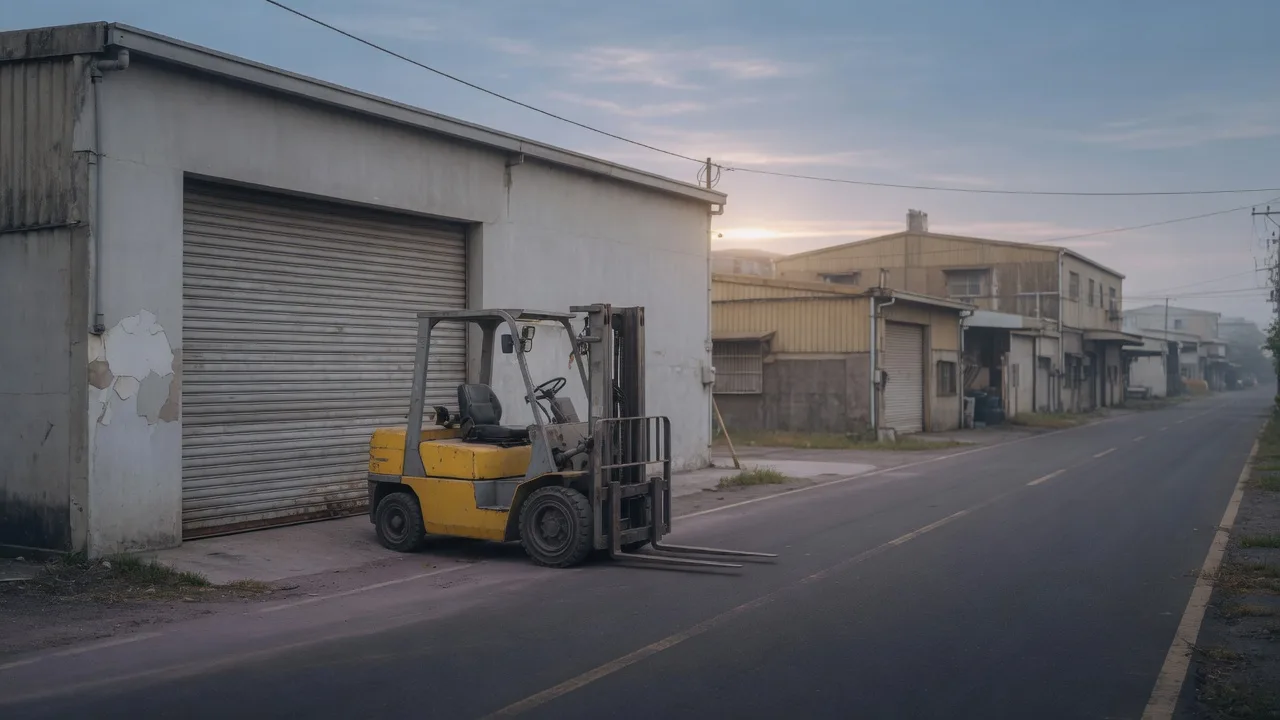
At about 5:30 p.m. on December 5, 2013, an employee went with the employer to collect timber from a customer. After unloading with the customer's forklift, the employee drove it across the road; on the way back to the customer's plant, the employee failed to watch for traffic from the left. The forklift's tines struck a motorcycle travelling along an industrial-zone road. The rider suffered a torn liver and internal bleeding and died in hospital.
The employee had neither the special safety training for forklift operation nor a licence for it. The court found the employer negligent too. According to the judgment, an employer must assign forklifts rated at one tonne or more to trained operators and must plan and mark transport routes; instead, the employer let an untrained employee drive and choose the route. The judgment also noted that powered machinery such as a forklift needs a temporary road permit from the motor vehicles authority before it may run on public roads. A criminal conviction for negligent homicide in the course of business had become final.
NT$2,007,760 paid first
This forklift was a vehicle for which no compulsory insurance policy was required. In that situation the claimants can still ask the Special Compensation Fund to pay, within the statutory insurance amounts (Compulsory Automobile Liability Insurance Act, Article 40(1)(iv)). On January 30, 2014, the Fund paid the rider's parents a NT$2 million death benefit and NT$7,760 in medical costs, split equally between them.
In the parents' own civil suit, the court had already deducted that NT$2 million from their damages.
Employer and employee, jointly and severally
Article 188(1) of the Civil Code makes an employer jointly and severally liable with an employee who unlawfully injures someone while performing their duties. Hauling timber was the employee's job that day. Here the court also found that the employer's own negligence was causally linked to the death. It applied joint tort liability under Article 185(1), first sentence, together with Article 188(1), and held both jointly and severally liable to the parents.
Why the settlement did not bind the Fund
Timing decided it. Once the Fund pays, the claimant's damages claim against the liable party passes to the Fund by law, up to the amount paid (Article 42(2)). Here the payment came before the settlement. The Fund said it had told the employer about the payment before then, and the employer admitted discussing the family's NT$2 million-plus compensation during the settlement talks. By the time of the settlement, the family no longer held that part of the claim. The settlement therefore had no effect on the Fund.
Running a workshop or warehouse in Taiwan
Businesses that use forklifts or small construction machinery bring road traffic law with them the moment a machine leaves the yard. Operator training and qualifications, road permits and whether insurance is required are all worth settling in advance. When negotiating with a family after an accident, ask whether they have already received money from the Fund or an insurer, and write into the agreement whether the settlement covers that amount.
Not one dollar of the NT$1.35 million the employer said was paid to the family came off the Fund's NT$2,007,760. Interest ran from October 1, 2014, the day after mediation with the Fund failed.
Sources
- Taichung District Court civil judgment 104 Su No. 622 (August 17, 2017; copy of the Judicial Yuan law database text published by the Special Compensation Fund)
- Compulsory Automobile Liability Insurance Act, Articles 40 and 42 (current text as amended June 15, 2022; checked November 3, 2026)
- Civil Code, Articles 185 and 188
Frequently Asked Questions
- If an employee causes a crash while working, is the employer liable in Taiwan?
- Under Article 188(1) of the Civil Code, when an employee unlawfully injures another person while performing their duties, the employer and the employee are jointly and severally liable. The employer escapes liability only by proving reasonable care in choosing and supervising the employee, or that the harm would have happened even with that care. In the case below the employer was also found negligent personally, so joint tort liability under Article 185 applied as well.
- We settled with the family. Can the compensation fund still come after us?
- In the case below, yes. Once the Special Compensation Fund pays, the claimant's damages claim passes to the Fund by law, up to the amount paid (Compulsory Automobile Liability Insurance Act, Article 42(2)). The court held that a settlement the employer said had been reached with the family afterwards had no effect on the Fund.
- Does a forklift need compulsory insurance?
- In this case the Fund treated the forklift as a vehicle for which no compulsory policy was required, and paid under Article 40(1)(iv). Whether a given machine must be insured depends on what it is and whether it runs on public roads. If it will go on the road, check with the motor vehicles office first.
This article provides general information and is not legal advice on any individual matter.