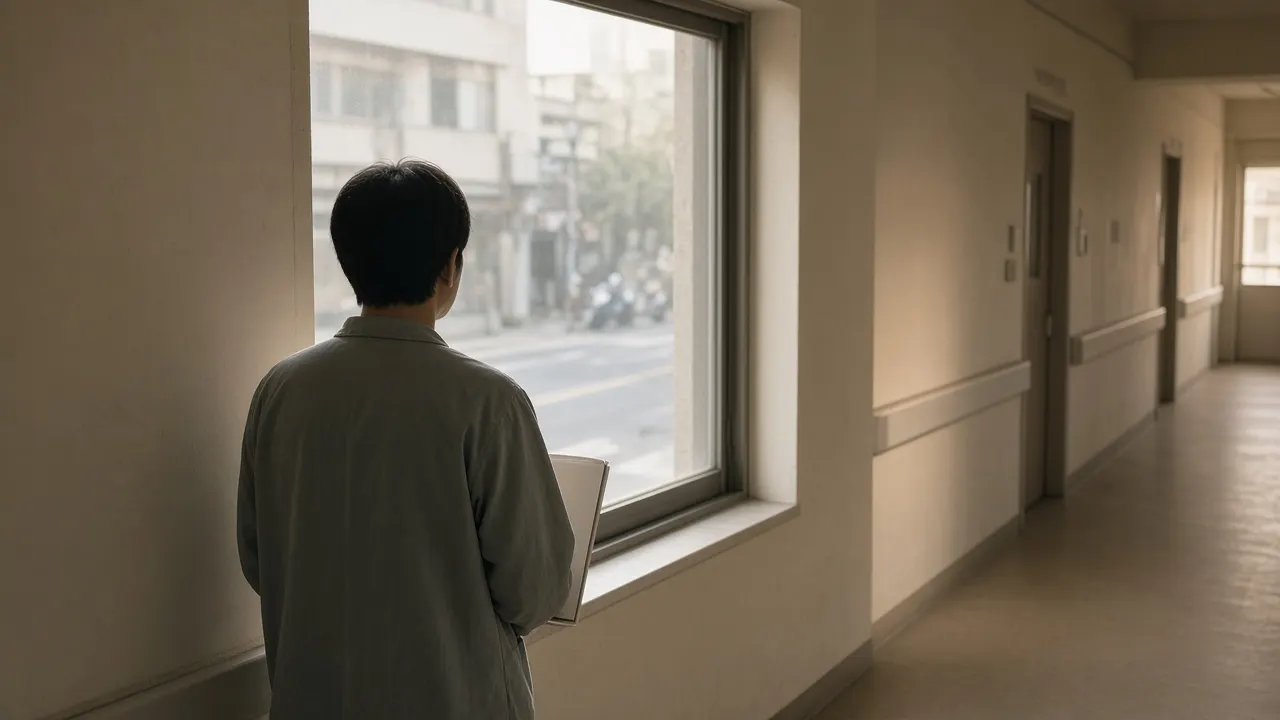
A pedestrian who crossed an intersection diagonally had their negligent injury conviction upheld, even though the court found the scooter rider to be the main cause of the accident. Taiwan High Court's Taichung Branch dismissed the pedestrian's appeal on September 25, 2024, in 113年度交上易字第110號. It treated the rider's greater responsibility as a matter for apportioning fault in a civil claim for damages.
Elsewhere, a pedestrian walking in an outer lane at night in Taichung City received the same sentence as the rider after both were found to have caused the accident. In Hsinchu County, a pedestrian lying in the roadway received a five-month prison sentence at first instance in October 2026.
All three accidents involved a vehicle striking a pedestrian. None involved a rider falling while swerving to avoid someone without making contact. Whether a driver could have avoided a pedestrian crossing outside a crosswalk concerns the driver's own negligence.
Pedestrians must keep to the side where there is no sidewalk
Article 133 of the Road Traffic Safety Regulations specifies where pedestrians must walk: 「行人應在劃設之人行道行走,在未劃設人行道之道路,應靠邊行走」. They must use a designated sidewalk where one exists and keep to the side of the road where none exists. Pedestrian priority zones have an exception: 「於行人優先區行走時,可於道路全寬通行。」 Pedestrians may use the full width of the road within those zones. This exception took effect on October 1, 2024. It was absent from the provision in force when each of the three accidents occurred.
Sitting or lying in the road and obstructing traffic is addressed in what is now paragraph 2 of the same article: 「行人不得在道路上任意奔跑、追逐、嬉戲或坐、臥、蹲、立,阻礙交通。」 The prohibition covers arbitrarily running, chasing, playing, sitting, lying, squatting or standing in the road in a way that obstructs traffic. At the time of the accidents, this sentence directly followed the rule on walking along the road's edge. The first-instance court in the Hsinchu County case found a breach of this duty. The Nantou County and Taichung City cases concerned crossing and walking along the road, respectively.
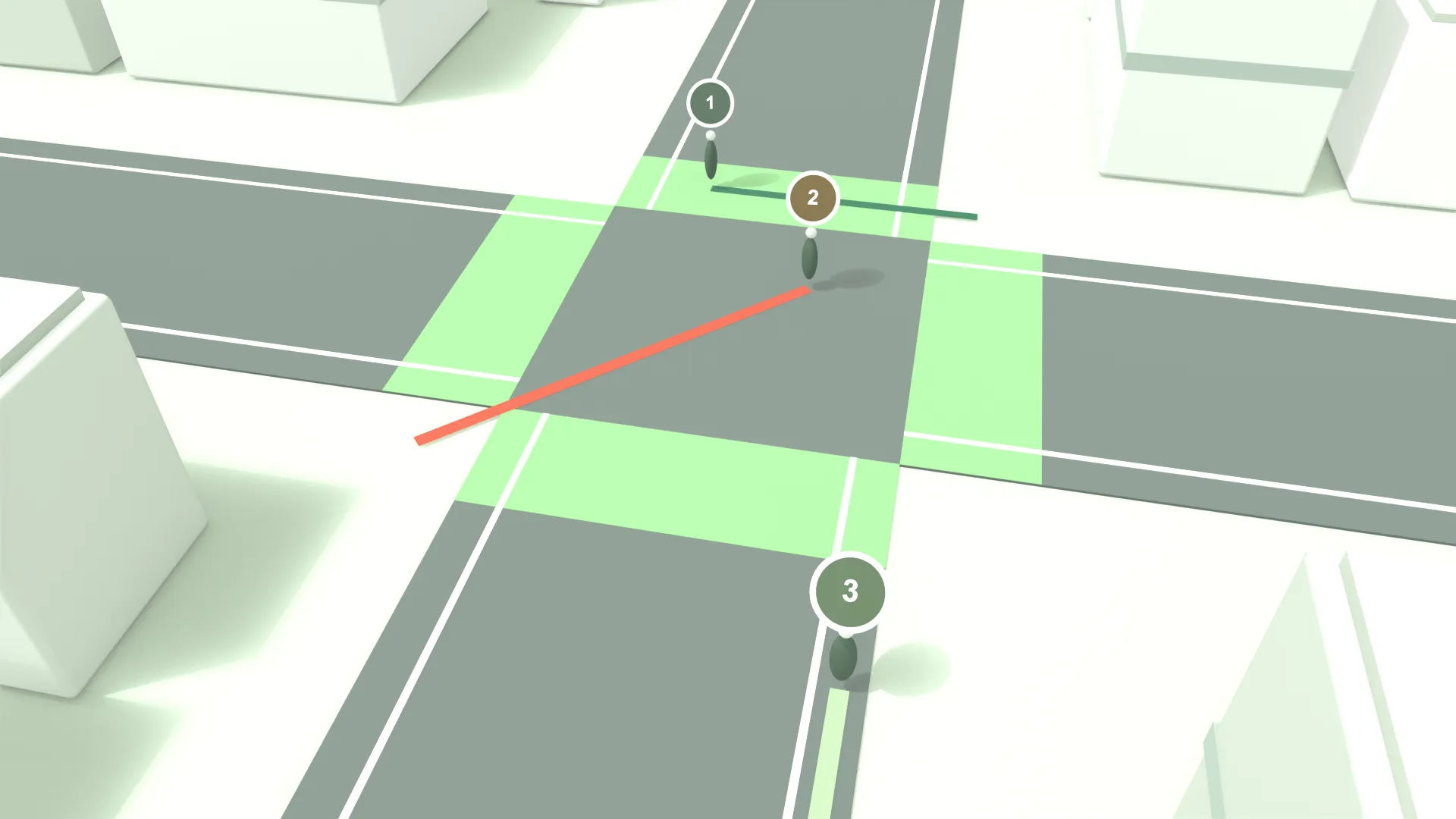
Even an intersection without pedestrian facilities has a prescribed place to cross. Under subparagraph 2 of Article 134, where there is neither a sidewalk nor a stop line, pedestrians must cross within three meters measured from the extended curb line toward the road segment: 「應於路緣延伸線往路段起算三公尺以內」. For a road segment with no crossing facilities and no prohibition on crossing, subparagraph 6 requires pedestrians to check that no vehicles are approaching from either side before crossing carefully and quickly: 「應注意左右無來車,始可小心迅速穿越」. These passages in subparagraphs 2 and 6 are unchanged from those in force at the time of the accidents.
An administrative fine also applies under Article 78 of the Road Traffic Management and Penalty Act, independently of criminal liability. Paragraph 1 sets a fine of NT$500: 「處新臺幣五百元罰鍰」. Subparagraph 2 covers failing to use a designated sidewalk or, without a legitimate reason, failing to keep to the side of a road that has no sidewalk: 「不在劃設之人行道通行,或無正當理由,在未劃設人行道之道路不靠邊通行」.
Mobility aid users have a specific exception. Under paragraph 2, no penalty applies if an obstruction on the sidewalk causes such a person to violate subparagraph 2: 「使用行動輔具者,因人行道有障礙物致違反前項第二款規定者,不予處罰。」 Subparagraph 3 covers crossing the roadway contrary to the rules: 「不依規定,擅自穿越車道」. Subparagraph 4 concerns running, chasing, playing, sitting, lying, squatting or standing on a busy road or near a railway crossing in a way capable of obstructing traffic. All three criminal cases used Article 133 to establish the pedestrian's duty of care; the Nantou County case also relied on Article 134. These judgments did not address the administrative fine.
Does lying in the roadway alone constitute negligent injury? Someone must be injured by the negligence. The offense requires that causal connection.
Negligence is defined in paragraph 1 of Article 14 of the Criminal Code: 「行為人雖非故意,但按其情節應注意,並能注意,而不注意者,為過失。」 Even without an intent to cause a collision, a person is negligent if the circumstances required care, the person was capable of exercising it, and they failed to do so. Courts in the Nantou County and Taichung City cases pointed to clear weather, lighting at night and unobstructed sight lines when finding that the pedestrians could have exercised care. Although the Hsinchu County intersection had no lighting, the court reached the same conclusion based on clear weather and good visibility.
Why could the Nantou County pedestrian be liable when the rider was the main cause?
At 10:31 p.m. on April 9, 2023, a pedestrian crossed an intersection diagonally, outside the prescribed three-meter area. There was neither a sidewalk nor a stop line. After passing the center of the intersection, the pedestrian had their back to the approaching vehicle, as the appellate court recorded: 「已背對來車」.
Riding without a license, the scooter rider exceeded the speed limit and failed to slow down at an intersection with a flashing yellow light. The judgment gives no speed figure. The scooter struck the pedestrian, leaving the rider with a head injury and concussion, abrasions to the left elbow and wrist, and bruising to the chest and left hand. The pedestrian also sustained injuries, including a head injury, a mild concussion, facial abrasions and a lower-leg laceration.
Would the rider's greater fault require an acquittal? It did not in this case. On appeal, the pedestrian argued that there was no crosswalk within 100 meters on either side of the intersection and that they had checked both directions before crossing quickly. They also claimed they could neither foresee nor avoid an unlicensed, speeding scooter. The court rejected those arguments.
Using CCTV stills and the accident scene diagram, the trial court found that the pedestrian had not crossed quickly. It also cited the Nantou County Area Vehicle Accident Appraisal Committee of the Taichung Motor Vehicles Office, Directorate General of Highways, Ministry of Transportation and Communications. The committee's opinion, sent with an official letter dated October 12, 2023, agreed that the pedestrian had breached the crossing rules: 「亦同此認定」. For sentencing, the trial court treated the pedestrian as a secondary cause, 「肇事次因」, and the rider as the main cause.
On the rider's responsibility, the appellate court stated: 「雖為本案肇事之主因,然被告與告訴人對於事故之發生,均有過失,此僅為民事賠償之過失相抵問題,尚不能因此解免本案被告應負之過失責任」. Both parties were negligent. The rider's role as the main cause was relevant to apportioning fault for civil damages, but it did not relieve the pedestrian of liability for their own negligence.
Nantou District Court's first-instance judgment, 113年度交易字第10號, was delivered on May 14, 2024. It imposed 「處拘役參拾日,如易科罰金,以新臺幣壹仟元折算壹日」: 30 days of detention (拘役), commutable to a fine at a rate of NT$1,000 for each day of detention. The pedestrian denied the offense, and neither mediation nor settlement with the complainant succeeded. On appeal, the sentence was left intact and the appeal dismissed. The appellate judgment ends with 「不得上訴」, stating that no further appeal is permitted.
Proceedings against the rider were separate. According to the trial judgment, the rider's negligent injury case was still before the same court's juvenile division at that time. The rider's age was redacted. That case's outcome does not appear in this judgment.
Being a pedestrian does not itself justify a lighter sentence
Around 7:40 p.m. on April 26, 2020, a pedestrian was walking inside the outer lane of a road without a sidewalk in Taichung City. To the right of the lane's edge line, the appellate court found approximately 1.2 meters of road space: 「路寬仍有約1.2公尺」. No ditch or parked vehicle prevented walking there.
Traveling in the same direction, a scooter rider failed to watch the road ahead and struck the pedestrian from behind. Rider and scooter fell. The rider suffered a forehead laceration and bruises to both knees, both hands and the upper lip. The pedestrian sustained fractures to the neck of the right humerus, the tibia and the fibula. The asphalt was dry, with no obstacles blocking visibility.
Taichung City's Vehicle Accident Appraisal Committee issued its opinion on August 4, 2020: 「夜間未靠邊逕於外側車道行走,雙方同為肇事原因」. It attributed the accident both to the pedestrian's walking in the outer lane at night without keeping to the edge and to the rider's failure to watch ahead. While recognizing the rider's negligence, the appellate court held that 「然被告尚無從解免自己之過失責任」. The pedestrian remained responsible for their own negligence.
In 110年度交易字第2號, Taichung District Court dealt with both the rider and the pedestrian in a single first-instance judgment on March 18, 2021. Each was a defendant and the complainant against the other. The pedestrian's sentence was 「處拘役肆拾伍日,如易科罰金,以新臺幣壹仟元折算壹日」. The rider received the same punishment: 45 days of detention, commutable to a fine at a rate of NT$1,000 for each day of detention.
No appeal was filed by the rider, so that part of the judgment became final. The pedestrian did appeal. Taiwan High Court's Taichung Branch dismissed that appeal on August 24, 2021, in 110年度交上易字第556號. This judgment also ends with 「不得上訴」, meaning that no further appeal is permitted.
During the appeal, the pedestrian argued that receiving the same sentence as the rider was unfair because they were merely a pedestrian and less at fault. The appellate court responded that pedestrians, too, have responsibilities as participants in traffic: 「行人既屬交通往來結構之一份子,亦有其責」. It also rejected a special sentencing standard that routinely favors pedestrians over drivers: 「自不得就行人之科刑量處,動輒有較於汽、機車駕駛人優惠或寬囿之特殊標準」. Both parties' negligence had caused the accident, and neither could be said to bear greater fault. Equal sentences were therefore not unfair.
When police attended the hospital, the pedestrian identified themselves as a party to the accident before investigators had identified them as an offender. Article 62 of the Criminal Code provides: 「對於未發覺之罪自首而受裁判者,得減輕其刑」. For a person who voluntarily surrenders for an undiscovered offense and submits to adjudication, the court may reduce the sentence. Reduction is discretionary. Here, the court applied the first part of Article 62 and reduced the sentence. In the Nantou County and Hsinchu County cases, the pedestrians likewise received reductions under that provision after identifying themselves to police at the scene as parties to the accidents.
Neither settlement nor mediation succeeded. The rider's insurer had already paid the pedestrian NT$70,000 under compulsory automobile liability insurance. The appellate judgment stated: 「目前本案之刑事附帶民事訴訟仍在原審法院民事庭審理中」. At that time, the civil claim attached to the criminal proceedings remained pending in the trial court's civil division. The NT$70,000 was not a fine.
How did the first-instance court assess the pedestrian lying in an unlit Hsinchu County intersection?
At 2:19 a.m. on July 19, 2024, a pedestrian was lying in the outer lane of an unlit intersection with flashing traffic signals in Hsinchu County. A scooter traveling straight ahead could not avoid the pedestrian and ran over them. The rider fell and fractured the right collarbone and bones in the left foot.
Initial accident appraisal addressed responsibility only on the basis that the pedestrian was already lying in the road. It treated lying at an unlit intersection with flashing signals at night as the main cause. The rider, whose license had been canceled and who entered without slowing down, was considered a secondary cause. The review opinion (覆議) reached the same conclusion on the condition that the pedestrian's conduct was not intentional. Noting that both bodies had found negligence by the rider, the court nevertheless stated 「惟仍無解於被告罪責之成立」. That negligence did not prevent the pedestrian's conduct from constituting negligent injury.
Claiming an inability to exercise care, the pedestrian argued that anemia might have caused them to faint and lose consciousness. The court relied on CCTV footage examined by the prosecutor. It showed the pedestrian squatting in the roadway, lying face down, standing and leaving the frame, then lying face down toward the road again as another vehicle approached before turning onto their back. The court found those movements inconsistent with a complete loss of consciousness. It also noted that the pedestrian's initial account when filing a complaint over their own injuries had made no mention of anemia.
Hsinchu District Court delivered 115年度交易字第213號 on October 2, 2026, imposing 「處有期徒刑伍月,如易科罰金,以新臺幣壹仟元折算壹日」. The sentence was five months' imprisonment, commutable to a fine at a rate of NT$1,000 for each day of imprisonment. A reduction for voluntary surrender was applied. Sentencing considerations included the pedestrian's own serious injuries and the fact that 「被告並非本案肇事之唯一原因」: the defendant was not the sole cause of the accident. According to the judgment, the rider's case for negligently causing serious bodily injury was still being heard separately in the same court.
This was a first-instance judgment. Its notice permits an appeal within 20 days after service. As of the verification date, no judgment from a higher instance had been found, and it had not been confirmed whether the judgment had become final.
Negligent injury requires a complaint, and mediation can affect the filing date
Article 284 of the Criminal Code begins: 「因過失傷害人者,處一年以下有期徒刑、拘役或十萬元以下罰金」. Negligent injury carries up to one year's imprisonment, detention or a fine of up to NT$100,000. Where the negligence causes serious bodily injury, the maximums are three years' imprisonment or a fine of NT$300,000, with detention also available. Courts applied the first part of the provision to the pedestrians in all three cases. They did not apply the serious bodily injury provision.
Under Article 287, 「第二百七十七條第一項、第二百八十一條及第二百八十四條之罪,須告訴乃論」. Negligent injury under Article 284 is a complaint-required offense: prosecution requires a criminal complaint. The proviso in Article 287 removes that requirement only for an offense under Article 277, paragraph 1, committed by a public official in the course of official duties. It does not create an exception for negligent injury.
Time limits matter here. Paragraph 1 of Article 237 of the Code of Criminal Procedure requires a person entitled to complain to do so within six months of learning the offender's identity: 「於六個月內為之」. Article 31 of the Township and County-Administered City Mediation Act sets out the procedure that applies when a person entitled to complain applies to a township or city mediation committee in a complaint-required criminal case. After mediation fails, if that person asks the committee to refer the matter to the competent prosecutor, the township or city office makes the transfer on that application. In this procedure the complaint is deemed filed when mediation was first requested: 「視為於聲請調解時已經告訴」.
Both the Taichung City and Hsinchu County prosecutions proceeded on the basis of complaints deemed filed under that provision. In the Hsinchu County case, the pedestrian disputed whether the complaint was in time. The court found that the injured rider had applied for mediation on January 8, 2025, a little over five months after the accident. Treating the complaint as filed on that date brought it within the filing period.
Death changes the offense. Article 276 provides: 「因過失致人於死者,處五年以下有期徒刑、拘役或五十萬元以下罰金」. Negligent homicide carries up to five years' imprisonment, detention or a fine of up to NT$500,000. It is not among the complaint-required offenses listed in Article 287. No one died in these three accidents.
Withdrawal is governed by Article 238 of the Code of Criminal Procedure: 「告訴人於第一審辯論終結前,得撤回其告訴」. A complainant may withdraw the complaint before the conclusion of oral argument at first instance. The next rule is 「撤回告訴之人,不得再行告訴」: a person who withdraws may not file the complaint again. None of these three cases ended through withdrawal of the complaint, and the parties did not reach a settlement or mediated agreement.
These criminal judgments leave compensation undecided
Civil liability starts with the first part of paragraph 1 of Article 184 of the Civil Code: 「因故意或過失,不法侵害他人之權利者,負損害賠償責任。」 A person who unlawfully infringes another person's rights, intentionally or negligently, is liable for damages. Paragraph 1 of Article 217 adds: 「損害之發生或擴大,被害人與有過失者,法院得減輕賠償金額,或免除之」. Where the injured party's own negligence contributes to the occurrence or increase of the damage, the court may reduce or eliminate compensation. It is not required to reduce it.
For the Nantou County accident, the criminal court described the rider's role as the main cause as an issue of comparative fault for civil damages. It set no percentage or compensation amount.
As for the NT$70,000 mentioned in the Taichung City criminal appeal, it was compulsory insurance money paid by the rider's insurer to the pedestrian defendant. It was neither a court-apportioned damages award nor a fine paid in lieu of detention. The attached civil claim had yet to be decided when that judgment was issued.
Pedestrians facing a complaint after a scooter rider was injured while they were crossing or occupying the roadway, and riders injured in such accidents, may send an account of the accident to 昊鼎國際法律事務所 for consultation. The discussion would include when the complaint or mediation application was filed, whether oral argument at first instance has ended, and whom the accident appraisal identified as the main cause.
- Email: wei@hoveringlaw.com.tw
- Taipei address: 103 臺北市大同區承德路一段35號7樓之2
- Taichung address: 40453 臺中市北區館前路19號6樓之1
This explanation draws on legislation and public judgments concerning three accidents; it is general information, not legal advice on an individual case.
Back to the traffic accidents section
Sources
- Criminal Code (中華民國刑法), Article 14
- Criminal Code (中華民國刑法), Article 62
- Criminal Code (中華民國刑法), Article 276
- Criminal Code (中華民國刑法), Article 284
- Criminal Code (中華民國刑法), Article 287
- Code of Criminal Procedure (刑事訴訟法), Article 237
- Code of Criminal Procedure (刑事訴訟法), Article 238
- Township and County-Administered City Mediation Act (鄉鎮市調解條例), Article 31
- Road Traffic Safety Regulations (道路交通安全規則), Article 133
- Road Traffic Safety Regulations (道路交通安全規則), Article 134
- Road Traffic Management and Penalty Act (道路交通管理處罰條例), Article 78
- Civil Code (民法), Article 184
- Civil Code (民法), Article 217
- Taiwan High Court, Taichung Branch, criminal judgment 113年度交上易字第110號 (September 25, 2024)
- Nantou District Court, criminal judgment 113年度交易字第10號 (May 14, 2024)
- Taiwan High Court, Taichung Branch, criminal judgment 110年度交上易字第556號 (August 24, 2021)
- Taichung District Court, criminal judgment 110年度交易字第2號 (March 18, 2021)
- Hsinchu District Court, criminal judgment 115年度交易字第213號 (October 2, 2026)
Verification date: November 11, 2026
This article provides general information and is not legal advice on any individual matter.