
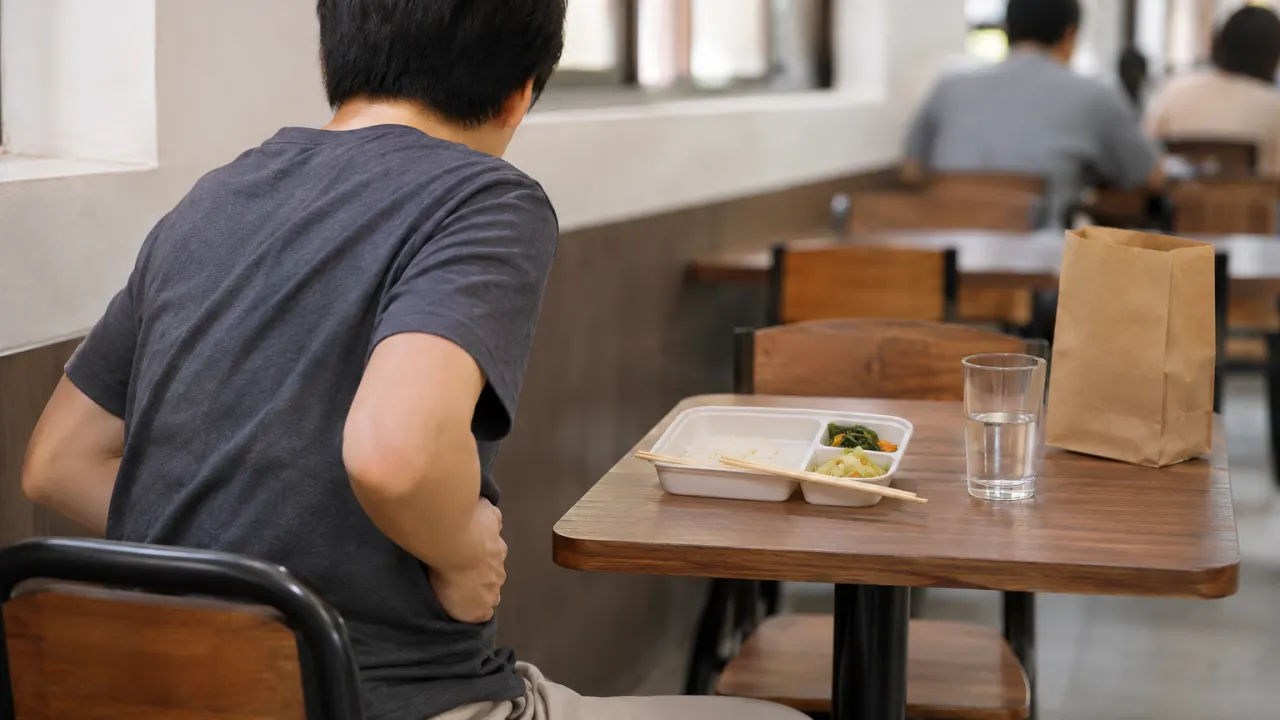
After a night in the emergency room, can you send the hospital bill and your lost wages to the restaurant? Taiwan offers three routes: the Act Governing Food Safety and Sanitation (Food Safety Act), the Consumer Protection Act and the Civil Code. Which fits depends on what contaminated the food.
The gap in Food Safety Act article 56
Article 56(1) makes a food business liable when it breaches article 15(1)(iii), (vii) or (x), or article 16(i), and a consumer is harmed: food that is toxic or contains harmful substances or foreign matter, adulterated or counterfeit food, unapproved additives, and toxic utensils, containers, packaging or food-use detergents (art. 15, art. 16).
Pathogens are missing. Food "contaminated with pathogenic organisms, or identified by epidemiological investigation as the cause of food poisoning" is article 15(1)(iv), which article 56 omits. Spoilage, item (i), is absent too. Does article 56 reach salmonella or norovirus? Whether a bacterial toxin is "toxic" under item (iii), the text does not say.
Where article 56 applies, the business escapes only by proving the harm did not come from its manufacturing, processing, preparation, packaging, transport, storage, sale, import or export, or that it took reasonable care to prevent it (proviso to paragraph 1). Non-pecuniary harm is compensable (paragraph 2). If actual loss is difficult or impossible to prove, the court may be asked to set damages by the seriousness of the harm at NT$500 to NT$300,000 per person per incident (paragraph 3); the court picks the figure within that range.
Paragraph 2 also lets consumers sue applying Consumer Protection Act articles 47 to 55 mutatis mutandis, a range that includes article 51 on punitive damages.
Bacterial cases: Consumer Protection Act article 7
Restaurants can be "business operators" (art. 2(2)). Article 7 requires goods and services to meet the safety reasonably expected under the technology or professional standards of the time they enter the market or are provided; if they fall short and cause harm, business operators are jointly and severally liable.
"We weren't negligent" does little. Proof of no fault only lets the court reduce liability (art. 7(3), proviso). An operator claiming its food met that standard bears the burden of proving it (art. 7-1(1)), and order terms cannot limit or exclude this liability in advance (art. 10-1).
Convenience-store lunch boxes may add a second defendant: a distributor is jointly liable with the maker unless it took reasonable care, or the harm would have happened even with that care (art. 8(1)).
Punitive damages, claimed in a suit under this Act, are capped by Article 51 at five times the loss for intent, three times for gross negligence and up to the amount of the loss for negligence. It sets no multiple for no-fault cases.
Are tourists covered? Article 2(1) defines a consumer by purpose, not nationality. A consumer suit may be filed where the consumer relationship arose (art. 47).
Civil Code heads of loss and the two-year clock
Contract and tort both work. Food making you ill for reasons attributable to the restaurant is incomplete performance, and resulting losses are recoverable (Civil Code art. 227(2)). Because health is a personality right, art. 227-1 applies tort articles 192 to 195 and 197 to that contract claim.
In tort, whoever intentionally or negligently injures another's rights pays, and whoever breaches a law protecting others must prove no fault (art. 184). Employers answer jointly for kitchen staff unless they prove due care in hiring and supervision, or that care would not have helped; even then the court, on the victim's application, may order compensation in view of both sides' finances (art. 188(1)–(2)). Producers face art. 191-1 unless they prove no defect, no causal link or reasonable care, and a store whose label holds it out as producer, manufacturer or processor is deemed the manufacturer (art. 191-1(2)).
Medical bills and lost pay count as losses suffered and profits lost (art. 216). Reduced capacity to work or increased living needs fall under art. 193(1), and solatium for injury to body or health under art. 195(1).
Left the delivery bag on the counter for hours? A court may reduce or cancel damages for the victim's contributory fault (art. 217(1)). Tort claims expire two years after the victim learns of the damage and the liable party, or ten years after the act (art. 197(1)).
Ordering through an app
The Delivery Workers' Rights Protection and Delivery Platform Management Act, promulgated January 21, 2026, took effect six months later (art. 28). Article 18 requires platforms to keep for at least two years the order time and contents, how defective or damaged goods were handled, and customer-service and complaint records; authorities that request them cannot be refused. Food hygiene in delivery falls to the health authority (art. 2(3)(iv)), and platforms must give new couriers food-hygiene training (art. 22(1)).
Liability is another matter: no article makes platforms pay for harm caused by food, and the statutes do not settle whether a platform is a distributor under Consumer Protection Act article 8 or a "food business" under Food Safety Act art. 3(vii). The restaurant remains the main target; platform records prove which restaurant and which dish.
Reporting to the health bureau
Taiwan's Food and Drug Administration advises prompt medical care, sealing leftovers and keeping them refrigerated but not frozen, and quickly notifying health authorities (food poisoning FAQ, Q10); complaints go to the local health bureau (Q11).
Hospitals must report suspected food poisoning to the local authority within 24 hours (Food Safety Act art. 6(2)). The authority may then order improvements or at least four hours of food-poisoning prevention training, and during the investigation may halt operations and sales, order disinfection and seal products (art. 41(1)(v)).
Products found on inspection to breach article 15(1) are confiscated and destroyed, and the authority publishes the name, address, responsible person, product and violation of each business that made, processed, prepared, packaged, transported, sold, imported or exported them (art. 52(1)(i), (4)). Breaches can draw fines of NT$60,000 to NT$200 million (art. 44(1)(ii)), but those are administrative; compensation is a separate claim.
When dozens fall ill
Of forty catered lunch boxes at a company event, thirty-two eaters end up in clinics (an invented example). When a local government receives complaints that one cause harmed 20 or more consumers, it must help them proceed under Consumer Protection Act article 50 (Food Safety Act art. 56(4)).
Under article 50, a consumer protection group takes assignments of claims from at least 20 consumers and sues in its own name. Consumers may withdraw, notifying the court, before oral argument closes, and falling below 20 does not end the suit. Assigned claims include non-pecuniary damages under Civil Code articles 194 and 195(1); limitation runs separately for each consumer; the group passes on the award minus litigation costs and necessary lawyer expenses, and charges no fee.
Only groups licensed for two years or more, with consumer protection staff and an Executive Yuan excellence rating, may sue, through a lawyer (art. 49), and Food Safety Act art. 56(5) lets that lawyer claim a fee. Court fees on the part of an article 50 claim above NT$600,000 are waived (art. 52). Victims can also appoint representatives to sue; with their consent the court may publish notice letting others join within at least ten days (art. 54). Food Safety Act art. 56-1 allows a food safety protection fund that may subsidize such groups' lawyer and litigation costs.
Complaint, mediation, small claims
One victim can start with a complaint to the business, a consumer group or a consumer service center; the business must handle it properly within 15 days of the complaint (art. 43). Next come the local consumer ombudsman and a consumer dispute mediation committee (art. 44). Money claims of NT$100,000 or less go through small claims procedure (Code of Civil Procedure art. 436-8(1)); see our small claims guide.
What a Taiwan lawyer can do
A Taiwan lawyer can obtain the health bureau's findings, assess article 56, assemble medical and payroll evidence, ask the platform to preserve records, and handle settlement, mediation or suit. Consultations on civil disputes are available at wei@hoveringlaw.com.tw. Hovering International Law Firm (昊鼎國際法律事務所), Taipei: 7F-2, No. 35, Sec. 1, Chengde Rd., Datong Dist., Taipei City 103. Taichung: 6F-1, No. 19, Guanqian Rd., North Dist., Taichung City 40453.
Keep the leftovers chilled, not frozen. Whether the lab finds a pathogen, or a toxic substance or foreign matter, bears on whether article 56 is open to you.
Sources
Checked November 3, 2026; Chinese originals.
- Food Safety Act arts. 3, 6, 15, 16, 41, 44, 52, 56, 56-1
- Consumer Protection Act arts. 2, 7, 7-1, 8, 10-1, 43, 44, 47, 49, 50, 51, 52, 54
- Civil Code arts. 184, 188, 191-1, 193, 195, 197, 216, 217, 227, 227-1
- Code of Civil Procedure art. 436-8
- Delivery Workers' Rights Protection and Delivery Platform Management Act arts. 2, 18, 22, 28
- Taiwan Food and Drug Administration, food poisoning FAQ (食品中毒常見問與答), maintained Aug. 18, 2025
Frequently Asked Questions
- Can a tourist sue under Taiwan's Consumer Protection Act?
- Article 2(1) defines a consumer as anyone who transacts, uses goods or receives services for consumption, with no nationality test. A consumer suit may be brought in the court where the consumer relationship arose (art. 47).
- What if I cannot prove exactly how much I lost?
- Where Food Safety Act art. 56 applies, a consumer who finds it difficult or impossible to prove actual loss may ask the court to set damages by the seriousness of the harm at NT$500 to NT$300,000 per person per incident (art. 56(3)). Article 56 covers only breaches of art. 15(1)(iii), (vii), (x) and art. 16(i); contamination by pathogenic organisms, art. 15(1)(iv), is not on that list.
- Is the delivery platform liable too?
- The Delivery Workers' Rights Protection and Delivery Platform Management Act has no article making a platform pay for harm caused by food, and the statutes do not settle whether a platform is a distributor under Consumer Protection Act art. 8. Under art. 18 of that Act, platforms must keep order times, contents and complaint records for at least two years, which helps identify the restaurant and the dish.
This article provides general information and is not legal advice on any individual matter.


