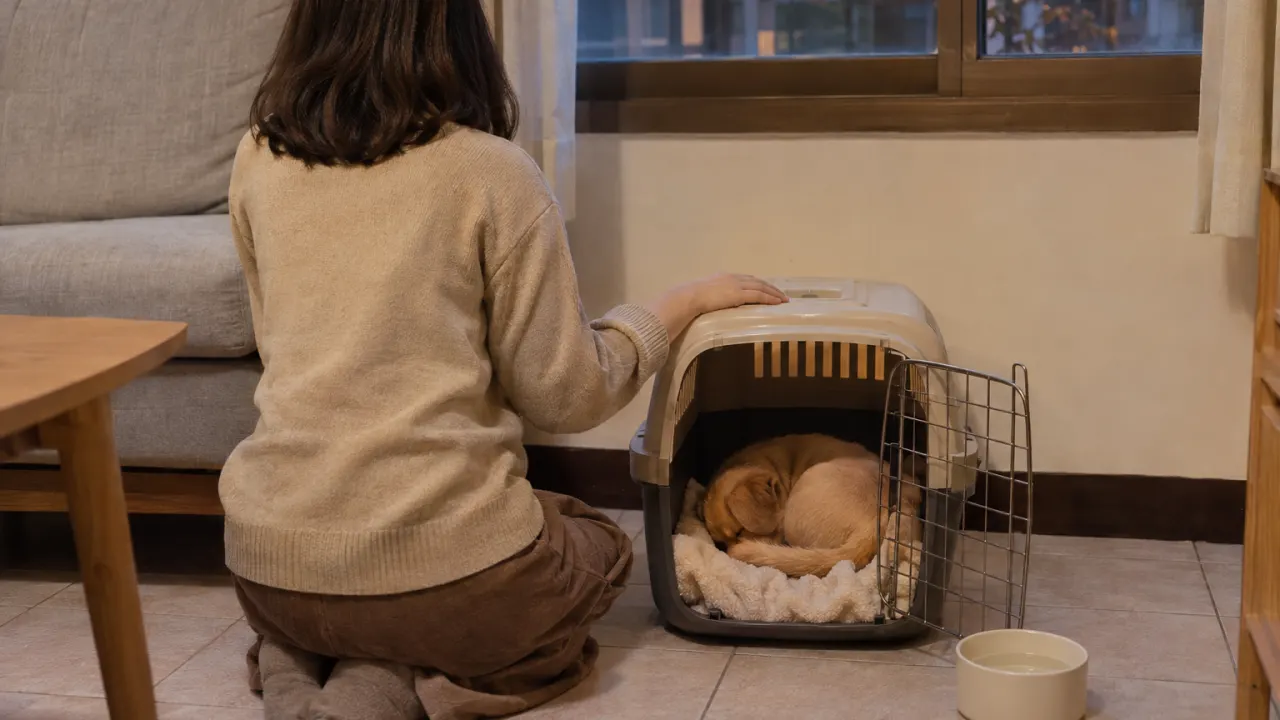
"Live animals can't be refunded once you take them home." Taiwan's Civil Code contains no such exception. Under Civil Code art. 354(1), a seller warrants that, when the risk passes, the thing sold has no defect that destroys or reduces its value, its ordinary utility or the utility the contract assumed. The Code even assigns feed costs for a leased animal to the tenant (art. 428).
A NT$38,000 puppy from a Taipei shop starts vomiting on day four and dies on day nine, leaving NT$12,000 in clinic bills (an invented example). Can the buyer recover anything? One fact decides most of it.
Was the illness already there at handover?
Absent contrary terms, benefit and risk pass to the buyer on delivery (art. 373). An illness caught at home is generally the buyer's loss. One the animal carried out of the shop falls under the seller's warranty.
Trivial reductions do not count as defects (art. 354(1), proviso), so a quickly cured complaint invites argument. If the shop promised "guaranteed healthy" or "no hereditary disease," art. 354(2) on promised qualities also applies.
Onset is a veterinary question, answered by clinic records, a vet's opinion and, after a death, a necropsy. Decide on a necropsy before cremation.
Four documents the seller must hand over
Dogs and cats are "specific pets" (Regulations Governing Specific Pet Businesses art. 2); cat businesses were brought in by the October 16, 2017 amendment (art. 16(2)). Breeders and dealers must give buyers documents on the animal (Animal Protection Act art. 22-2(2)), listed in art. 13 of the Regulations:
- the pet registration certificate;
- care and management instructions;
- a veterinary diagnosis or test certificate issued within the last three months;
- the microchip number of the mother.
Shops must also display their permit and post outside each cage the breed, sex, birth date, chip number and source business, among other details, and keep sales records for three years (art. 10(1)(5), (7), (8)).
Art. 12 bans dealers from selling animals that are unweaned or too young, judged by a vet to be in poor health, sick with a statutory infectious animal disease, or found to have an announced congenital or hereditary disease.
Refusing the documents costs NT$15,000 to NT$75,000 (Animal Protection Act art. 30(1)(9)), and breaching art. 12 or 13 lets the local government revoke the permit (Regulations art. 14(2)). No article says a breach by itself creates a refund right. The papers still matter as evidence of the animal's condition at delivery.
Rescission, price cut, replacement, damages
A liable seller faces rescission or a price reduction, but only the latter if rescission would be obviously unfair (art. 359).
| Claim | Article | Conditions and limits |
|---|---|---|
| Rescission or price reduction | Civil Code 359 | Defect at handover; only a price cut if rescission is obviously unfair |
| Defect-free replacement | Civil Code 364 | Sale specified by kind only; seller warrants the replacement too |
| Damages for non-performance | Civil Code 360 | Promised quality missing, or defect deliberately concealed |
| Vet bills and other losses | Civil Code 227 | Defective performance attributable to the seller |
Must the buyer accept a swap for another puppy of the same breed? Art. 364 gives the buyer, in a sale specified only by kind, the option of demanding a defect-free replacement. The choice is the buyer's. Picking one puppy from a cage is hard to call a sale by kind; reserving "a female poodle from the next litter" fits better.
Clinic bills fall under art. 360, which needs a missing promised quality or deliberate concealment, or art. 227(2), which needs fault on the seller's side.
Dead animals cannot be returned, but art. 262 ends the right to rescind only where the rescinding party is to blame, and death from the defect is not the buyer's doing. After rescission the seller repays the price with interest from receipt (art. 259(2)); item 6 (value of what cannot be returned) may surface in the settlement.
Six months from notice
Buyers must inspect promptly in the ordinary way and notify the seller at once of a defect. Otherwise the goods are deemed accepted, except for defects ordinary inspection could not reveal, which must be reported when found (art. 356). None of this applies if the seller deliberately concealed the defect (art. 357).
For a pet, prompt inspection means an early vet check. A clean check followed by illness days later documents a defect ordinary inspection could not catch.
Rescission and price-reduction rights lapse if unused for six months after notice, or five years after delivery; the six-month limit does not protect a seller who concealed the defect (art. 365). Send notice in a dated form: a chat message with the diagnosis, then a certified letter (存證信函).
"No refunds" and the missing model contract
Consumer Protection Act art. 17(5) makes announced mandatory terms part of a standard-form contract even when left out. Pet sales have none. On November 3, 2026, the Executive Yuan's list of mandatory and prohibited terms (88 items) and list of model contracts (96 items) covered dogs and cats only for grooming: the mandatory terms announced May 12, 2025 (Nong-Hu No. 1140072281) and a model contract last amended April 29, 2026.
So general rules test a "no refunds" or "exchange only" clause. Excluding or limiting the defect warranty is void if the seller deliberately concealed the defect (Civil Code art. 366). A business's pre-drafted terms are void if they breach good faith and are obviously unfair to consumers (Consumer Protection Act art. 12), with unfairness presumed where a term defeats the contract's main purpose or clearly contradicts the default rule it excludes.
What about a receipt reading "7-day health guarantee"? As a promise to answer for illness within seven days, it is a promised quality under art. 354(2). As a bar on any claim after day seven, it limits the warranty and faces arts. 366 and 12. Unclear wording in a business's standard terms is read in the consumer's favour (Consumer Protection Act art. 11(2)).
Chips, registration and the death report
Dealers may sell only microchipped animals from licensed sources (Animal Protection Act art. 22-2(1)), on pain of NT$40,000 to NT$200,000 and an order to fix the breach (art. 28). Buyers have deadlines too: change the registration within one month of acquiring a registered pet (Pet Registration Regulations art. 6) and cancel it within one month of its death (art. 8), or face NT$3,000 to NT$15,000 (Animal Protection Act art. 31(1)(8)).
Unlicensed breeders and private sellers
Animal Protection Act art. 22(1) bars anyone from selling specific pets except businesses holding a local-government permit, valid for up to three years. Operating without one draws NT$100,000 to NT$3,000,000 and an order to stop (art. 25-2). Ads in any medium must show the permit number (art. 22-2(3)), or face NT$15,000 to NT$75,000 (art. 30(1)(10)).
Art. 354's wording does not ask about permits. Whether an unlicensed sale is void under Civil Code art. 71, which voids acts breaching mandatory or prohibitive rules, is not settled by the text, and no published judgment on the point was found as of November 3, 2026. If valid, the warranty applies; if void, the issue becomes returning what was paid. The Consumer Protection Act is narrower: a "business operator" designs, produces, manufactures, imports or distributes goods, or provides services, as a business (art. 2(2)), and someone rehoming one litter may not qualify. Whether product-safety liability under art. 7, with goods defined as movable or immovable property (Enforcement Rules art. 4), reaches live animals or breeders, the text does not say, nor does any judgment found as of that date.
Complaint, mediation, small claims
Consumers may complain to the business, a consumer group or a consumer service centre, and the business must respond properly within 15 days (Consumer Protection Act art. 43); if it does not, the consumer may go to the local consumer ombudsman (art. 43(3)) or apply for mediation, with no set order (art. 44) (see our consumer dispute guide). Money claims of NT$100,000 or less use the small claims procedure (Code of Civil Procedure art. 436-8), covered in our small claims article.
What a Taiwan lawyer can do
Lawyers can set vet records against the handover date, test any disclaimer against arts. 366 and 12, draft the notice and rescission letter, and handle mediation or small claims. Consultations on civil disputes are available at wei@hoveringlaw.com.tw. Hovering International Law Firm (昊鼎國際法律事務所), Taipei: 7F-2, No. 35, Sec. 1, Chengde Rd., Datong Dist., Taipei City 103. Taichung: 6F-1, No. 19, Guanqian Rd., North Dist., Taichung City 40453.
For the puppy that died on day nine, two dates now matter: one month from the death to cancel its registration, and six months from the notice to the shop to rescind.
Sources
Checked November 3, 2026. Taiwan laws and announcements are cited from the Chinese originals.
- Animal Protection Act, arts. 22, 22-2, 25-2, 28, 30, 31
- Regulations Governing Specific Pet Businesses (特定寵物業管理辦法), arts. 2, 10, 12, 13, 14, 16
- Pet Registration Regulations (寵物登記管理辦法), arts. 6, 8
- Civil Code, arts. 71, 227, 259, 262, 354, 356, 357, 359, 360, 364, 365, 366, 373, 428
- Consumer Protection Act, arts. 2, 7, 11, 12, 17, 43, 44; Enforcement Rules, art. 4
- Code of Civil Procedure, art. 436-8
- Executive Yuan, mandatory and prohibited terms list; model contracts list; dog and cat grooming mandatory terms, May 12, 2025; dog and cat grooming model contract, amended Apr. 29, 2026
Frequently Asked Questions
- The shop's sign says live animals cannot be returned. Can I still get my money back?
- The seller's warranty against defects in Civil Code art. 354 applies to animals like any other goods. If an illness present at handover reduced the pet's value or ordinary utility, the buyer may rescind or seek a price reduction (art. 359). A clause excluding or limiting that warranty is void if the seller deliberately concealed the defect (art. 366), and a business's pre-drafted standard term that breaches good faith and is obviously unfair to the consumer is void (Consumer Protection Act art. 12).
- Is there a government model contract for buying a dog or cat in Taiwan?
- No. On November 3, 2026, the Executive Yuan's consumer protection lists held 88 sets of mandatory and prohibited terms and 96 model contracts; the only dog and cat items covered grooming services. So the rule in Consumer Protection Act art. 17(5), under which announced mandatory terms become part of a contract even if left out, does not reach pet sales.
- The pet shop never gave me a vet certificate. Is that allowed?
- No. Article 13 of the Regulations Governing Specific Pet Businesses requires the seller to give the buyer the pet registration certificate, care instructions, a veterinary diagnosis or test certificate issued within the last three months, and the mother's microchip number. A breeder or dealer who refuses to provide these documents faces an administrative fine of NT$15,000 to NT$75,000 (Animal Protection Act art. 30(1)(9)).
This article provides general information and is not legal advice on any individual matter.