
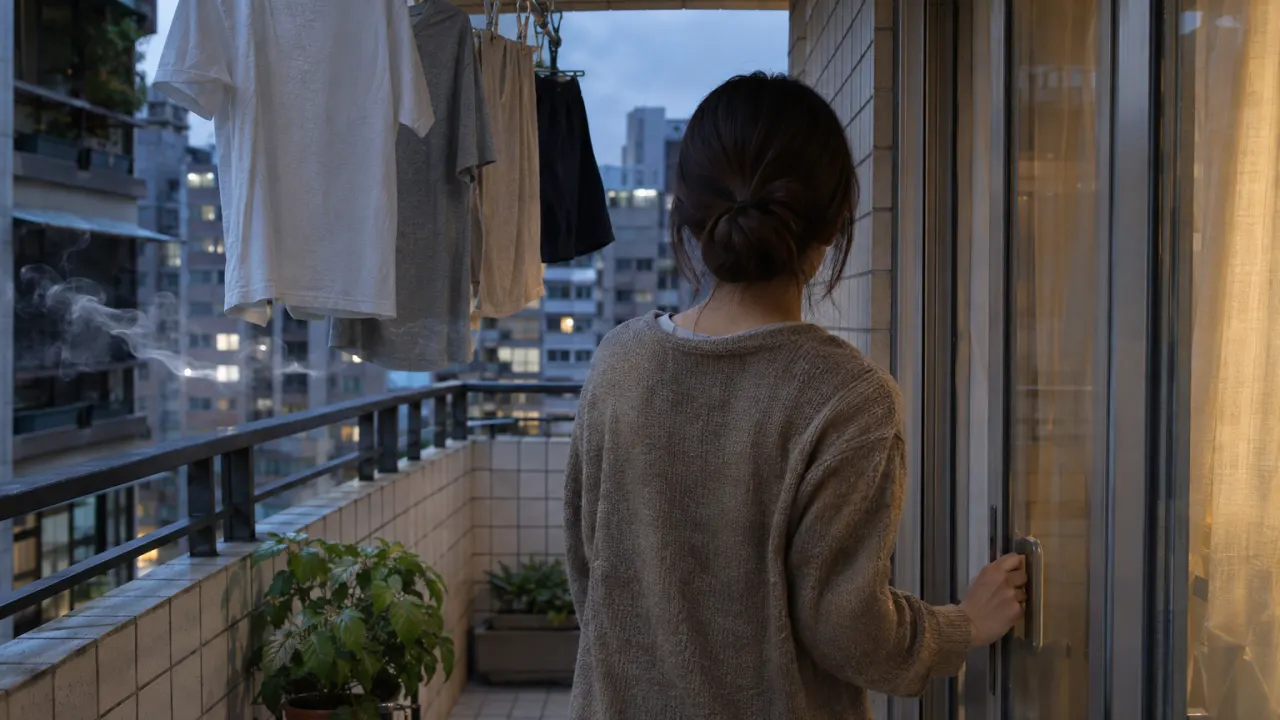
Can Taiwan law stop the cigarette smoke that drifts up from the balcony below every night? It depends on where the smoke starts. The Tobacco Hazards Prevention Act names elevator cars as smoke-free. A neighbor's living room and balcony are not on its list.
| Where the smoke starts | Rule to check first | Sanction or claim |
|---|---|---|
| Elevator car | Tobacco Hazards Prevention Act art. 18(1)(9) | Smoker fined NT$2,000–10,000 (art. 40(2)) |
| Stairwells, corridors, other indoor common areas | Art. 18(1)(13); art. 20(1); building rules | Fined as above if an art. 18 place; no fine for an art. 20 designation alone |
| Neighbor's flat or balcony | Condominium Administration Act arts. 16(1), 6(1)(1); Civil Code art. 793 | If smoke is an art. 16(1) pollutant or malodorous substance, NT$3,000–15,000 after the committee steps in (Condominium Act art. 47). Injunction and damages (Civil Code art. 793 etc.). |
| E-cigarettes and other imitation tobacco products | Tobacco Hazards Prevention Act art. 15(2) | NT$2,000–10,000 wherever used (art. 40(3)) |
Elevators are named
The current Act was promulgated in full on February 15, 2023, and most of it took effect on March 22, 2023 (amendment history). Article 18(1) lists thirteen categories of completely smoke-free places. Item 9 puts "inside elevator cars" next to classrooms and conference rooms. Nothing limits it to commercial buildings.
Holding a lit cigarette is enough: carrying a lit or activated tobacco product counts as smoking (art. 3(2)). The fine is NT$2,000 to NT$10,000 (art. 40(2)), imposed by the municipal or county (city) competent authority (art. 44). Anyone present may ask the smoker to stop (art. 21).
Smoke-free places must also post clear no-smoking signs at every entrance and supply no smoking-related items (art. 18(2)). Failing that costs the person in charge NT$10,000 to NT$50,000 (art. 40(1)(1)), meaning whoever actually manages the place (Enforcement Rules art. 11). In a condominium, the manager or management committee maintains the common areas (Condominium Administration Act, art. 10(2)).
Stairwells are not named
Stairwells, corridors, basement car parks and lobbies appear nowhere in article 18(1). What remains is item 13: "other indoor places for public use" and places designated by announcement of a competent authority. Whether a residents-only stairwell is "for public use" is not settled by the wording. If the local authority has designated such places by announcement, they become completely smoke-free.
Another route is article 20(1): no smoking where the owner, person in charge or manager has designated a place smoke-free, with signs at every entrance (Enforcement Rules art. 9). Here is the gap. Article 40(2) fines smoking only in article 18(1) and 19(1) places. A committee's sign creates a ban, yet the Act attaches no fine to breaking it.
E-cigarettes, anywhere
"Imitation tobacco products", under article 3(1)(2), are nicotine or non-nicotine delivery systems, electronic or not, made from non-tobacco materials or physically altered tobacco materials to imitate tobacco use. Under article 15(2) no one may use them, on pain of a NT$2,000 to NT$10,000 fine (art. 40(3)). There is no location requirement. A neighbor's own balcony is covered.
Designated tobacco products that have not passed the central authority's health risk assessment are barred too (art. 15(1)(3), (2)); its announcements say which.
Smoking inside the neighbor's flat
Private homes are not smoke-free places under the Act. Article 20(2) bans smoking in indoor places where a pregnant woman or a child under three is present, and it carries no fine. Its wording addresses the room where the smoking happens, not smoke drifting into a family's home next door.
That leaves the Condominium Administration Act and the Civil Code. Article 16(1) forbids residents to "discharge pollutants or malodorous substances". Tobacco is not mentioned, so whether smoke qualifies may be disputed. The committee must stop a breach or act under the building's rules, and may refer defiance to the local authority (art. 16(5)). The authority may impose NT$3,000 to NT$15,000 and order improvement (art. 47(2)). The larger fines in article 49 reach article 16(2) and (3), not 16(1).
Article 6(1)(1) also requires residents, when maintaining or repairing an exclusive unit or agreed exclusive-use area, or when exercising their rights, not to impair others' peace, safety or hygiene. If consultation fails, a resident or the committee may ask the authority or a court to act (art. 6(3)), and ignoring the authority's deadline brings an article 47(3) fine.
Committees carry duties too: stopping residents' violations and supplying related records, and consulting with residents who breach article 6(1) (art. 36(5), (6)). A manager, chair or committee member who fails without good reason to perform these duties, where that clearly affects residents' interests, faces NT$1,000 to NT$5,000 (art. 48(4)). Reporting to the authority directly is covered in our column on neighbor noise. Fines pay no damages. Nor do they necessarily stop the smoke. An injunction or compensation needs a civil claim.
Writing a ban into the building rules
Building rules may govern the use of the building and relations among residents unless law provides otherwise (art. 23(1)). Special arrangements on residents' use of common areas, and the handling of breaches, take effect only if written into the rules (art. 23(2)(2), (4)). Rules are adopted by the owners' meeting, and tenants count as residents (art. 3(8), (12)). Article 23 does not say whether rules may ban smoking inside units. Whether a balcony is exclusive or common area starts with the rules themselves (art. 23(2)); see also our column on management committees.
Article 793 names smoke
Civil Code article 793 lets a landowner prohibit gas, steam, odor, smoke, heat, ash, noise, vibration and similar intrusions from another's land or building. The proviso: no prohibition if the intrusion is slight or reasonable given the land's situation or local custom. How often is more than slight? The article gives no number.
Tenants can sue in their own name, because article 800-1 extends articles 774 to 800 to lessees and other building users. Owners may also seek removal or prevention of interference under article 767(1), and anyone whose personality rights are infringed or threatened may invoke article 18(1).
For money, article 184(1) imposes liability for intentional or negligent wrongful infringement. Under article 195(1), injury to body or health allows a claim for a reasonable sum even for non-pecuniary loss. "Other personality interests" require a serious infringement, so a claim resting only on disturbed peace at home must clear that bar.
What the records must show
A party asserting a favorable fact must prove it (Code of Civil Procedure art. 277). Under article 793, that means showing smoke gets in and comes from the defendant's flat. Expect the "slight" defense. A log of dates, times and durations answers it, and a certified letter records when the neighbor was told.
Three weeks of smoke through the bathroom vent, mostly between 11 p.m. and midnight, twenty minutes a time: one New Taipei tenant's log (an invented example). With same-hour video and dated complaints to the committee, it says far more than "it smells every day". Shared ducts mean the source may not be the flat directly below. Home air-quality monitors show the air changed, not where the smoke came from, so pair their readings with video or the log. Health claims under article 195 need medical records.
Court mediation first
Disputes between neighboring property users, and between unit owners or users over managing the building or its common parts, go to court mediation before any lawsuit unless an article 406(1) ground applies (art. 403(1)(1), (4)). If mediation has already failed before another statutory mediation body, the court may dismiss the application (art. 406(1)(2)). District office mediation is explained in the noise column linked above.
Working with a lawyer in Taiwan
For the affected resident, a Taiwan lawyer can organize the log, video and complaints around articles 793 and 195, check the rules for a common-area ban, draft the certified letter and mediation application, and litigate. For a committee, the work is drafting a ban and breach procedure for the rules. Consultations on civil matters are available at wei@hoveringlaw.com.tw. Hovering International Law Firm (昊鼎國際法律事務所), Taipei: 7F-2, No. 35, Sec. 1, Chengde Rd., Datong Dist., Taipei City 103. Taichung: 6F-1, No. 19, Guanqian Rd., North Dist., Taichung City 40453.
Damages claims expire two years after the claimant learns of the damage and the liable person, and in any event ten years after the act (Civil Code art. 197(1)).
Sources
Checked November 3, 2026, against the Chinese originals.
- Tobacco Hazards Prevention Act, amendment history
- Tobacco Hazards Prevention Act, arts. 3, 15, 18, 20, 21, 40, 44
- Enforcement Rules of the Tobacco Hazards Prevention Act, arts. 9, 11
- Condominium Administration Act, arts. 3, 6, 10, 16, 23, 36, 47, 48, 49
- Civil Code, arts. 18, 184, 195, 197, 767, 793, 800-1
- Code of Civil Procedure, arts. 277, 403, 406
Frequently Asked Questions
- Is smoking in my building's elevator a finable offence?
- Yes. Article 18(1)(9) of the Tobacco Hazards Prevention Act makes elevator cars completely smoke-free, and a person who smokes there faces a fine of NT$2,000 to NT$10,000 (art. 40(2)), imposed by the municipal or county (city) competent authority (art. 44). Carrying a lit cigarette counts as smoking (art. 3(2)).
- Our committee posted no-smoking signs in the stairwell. Can a resident who ignores them be fined under the Act?
- Article 20(1) bars smoking in places the owner, person in charge or manager designates as smoke-free, but the fines in article 40 cover smoking only in article 18(1) and 19(1) places. If the stairwell counts as an 'other indoor place for public use' under article 18(1)(13), or the authority has designated it by announcement, article 40(2) applies. Otherwise the building's rules and the committee's intervention are the route (Condominium Administration Act art. 23(2)(4)).
- Can a tenant sue a neighbor to stop smoke coming in?
- Civil Code article 793 lets a landowner prohibit smoke, odors and similar intrusions from another's building, and article 800-1 extends this to lessees and other users of a building. The intrusion cannot be prohibited if it is slight or reasonable given the land's situation or local custom (art. 793 proviso). Court mediation normally comes before a lawsuit (Code of Civil Procedure art. 403(1)(1)).
This article provides general information and is not legal advice on any individual matter.


