
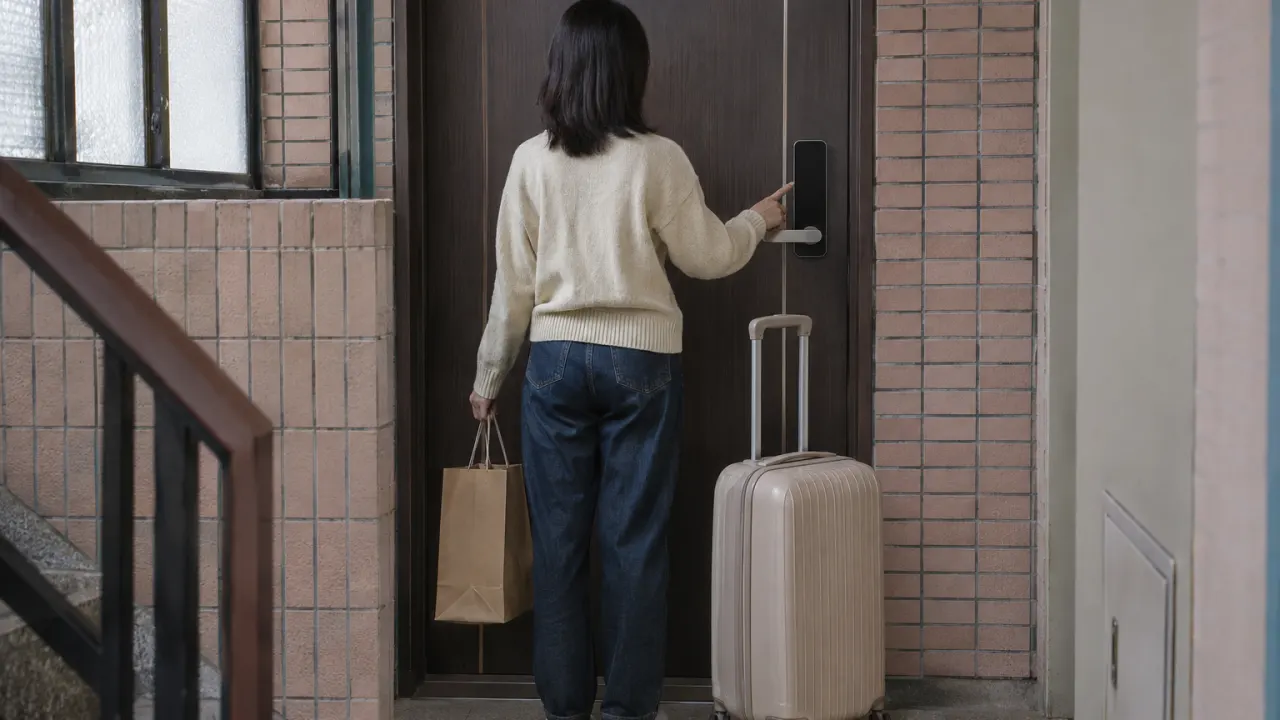
A tenant whose landlord changes the locks over unpaid rent can still demand the home back under Article 962 of Taiwan's Civil Code. The deadline is one year from the taking. Nothing in that article asks whether the rent was paid.
The keypad code no longer works, taped boxes sit in the corridor, and a message says the door opens once the money arrives (an invented example). The tenant owes money. Still, the law first asks who locked the door.
What the tenant holds
The landlord must hand over the property fit for the agreed use and keep it so during the lease (Civil Code art. 423; for homes, art. 8, para. 1 of the Rental Housing Market Development and Regulation Act, the Rental Housing Act). With the keys, you become the possessor, the person in actual control (art. 940). The landlord still owns the flat but is only an indirect possessor (art. 941).
Article 962 gives a possessor claims for return of what was taken, removal of interference and prevention of threatened interference. They lapse if unused for one year after the taking, interference or danger arises (art. 963).
Article 960 lets a possessor resist by their own force and, where real property has been taken, oust the wrongdoer and retake it "immediately". Forcing the lock days later hardly fits that word, and a doorstep fight can expose the tenant to criminal risk. Calling the police leaves a record.
When a landlord may come in
Only repairs are addressed directly: under art. 8(4) of the Rental Housing Act, a tenant may not refuse acts needed for them; point 9(3) of the interior ministry's mandatory terms for residential leases adds notice a reasonable time ahead, with refusal only for a proper reason. See our article on repair visits. The mandatory terms, as amended to April 18, 2025, contain no point allowing entry to inspect. Other visits start with the tenant's consent.
Which leases do these rules cover? Article 4 of the Act excludes leisure or tourism rentals, housing run by government, a dedicated body it set up or a cooperative, and leases under 30 days. Otherwise, art. 5(1) deems the relationship a consumer one, and announced mandatory terms bind a standard-form contract even if omitted from it (Consumer Protection Act art. 17, para. 5). A two-week studio rental falls outside the Act; the Civil Code and contract decide.
"It's my own flat"
Criminal Code art. 306(1) punishes entering another person's dwelling, building or attached enclosed land without justification (無故) with up to one year's imprisonment, short-term detention or a fine of up to NT$9,000. Paragraph 2 covers hiding inside or staying after being asked to leave. Fines are in NT$ under art. 1-1 of the Criminal Code Enforcement Act.
Owners are not exempted. The question is whether entering a tenant's home was without justification, and a notified repair visit differs sharply from a spare key used while the tenant is at work.
Trespass needs a complaint (art. 308), made within six months of learning who the offender is (Code of Criminal Procedure art. 237). File it in writing or orally with a prosecutor or judicial police officer (art. 242). It may be withdrawn before first-instance argument closes, but not refiled (art. 238).
Lockouts and the limits of self-help
Swapping the lock or keypad code also raises coercion: Criminal Code art. 304 punishes using violence or threats to make someone do what they need not do, or to obstruct a right, with up to three years, short-term detention or a fine of up to NT$9,000, attempts included. It is not on the art. 308 complaint-only list. Whether a lock swapped in the tenant's absence meets that element turns on the facts.
Civil Code art. 151 excuses seizing or damaging another's property to protect one's right only where court or official help cannot come in time and the claim would otherwise be lost or much harder to enforce. Rent arrears, which can be sued for, fit that test poorly. Whoever seizes property this way must apply to court at once and is liable if the application fails or is delayed (art. 152).
Civil claims run alongside: damages for intentional or negligent unlawful injury (art. 184), non-pecuniary damages for unlawful infringement of liberty, privacy or, where serious, other personal interests (art. 195, para. 1), loss in value of damaged property (art. 196). Keep the hotel receipts.
Belongings moved out or thrown away
Landlords do have a statutory lien. Under Civil Code art. 445, it covers the tenant's things kept in the property, except items exempt from attachment, and secures only damages already claimable and rent unpaid for the current and earlier periods.
Removal by the tenant ends it, unless done without the landlord's knowledge or over an objection (art. 446, para. 1). A landlord entitled to object may stop removal without a court order and, once the tenant has left the property, take possession of the things (art. 447). No objection is allowed to removal for work or ordinary daily life, or where what remains secures the rent (art. 446, para. 2). The tenant may offer security instead (art. 448).
Payment from the items needs notice setting a reasonable period of at least one month (art. 936, applied via art. 939); only then may the creditor, under the pledge rules, be paid first from sale proceeds or take ownership. Throwing things away is not on that path.
After the lease ends, under art. 12(2) of the Rental Housing Act and point 19 of the mandatory terms, things left after the handover inspection (點交), actual or deemed, count as abandoned if, absent other agreement, the tenant ignores a reasonable deadline to collect them. Corridor bags mid-lease are outside it.
Taking another's movables with intent to unlawfully own them is theft, punishable by up to five years, short-term detention or a fine of up to NT$500,000 (Criminal Code art. 320). Keeping stored belongings as one's own raises embezzlement (art. 335). Destroying, damaging or rendering them unusable is criminal damage (art. 354): up to two years, short-term detention or a fine of up to NT$15,000, on complaint only (art. 357). Theft and embezzlement need no complaint, apart from special rules between relatives (art. 324, art. 338).
The lawful route for unpaid rent
Civil Code art. 440(1) lets a landlord demand payment within a reasonable period and terminate if it is still unpaid. For a home, arrears must total two months' rent, and where rent is due at the start of each period, the delay must exceed two months (para. 2). The Rental Housing Act adds a form: after two months' arrears of rent or fees and an ignored demand, written notice with evidence 30 days before termination (art. 10, para. 1, item 2, and para. 2). Point 17 of the mandatory terms matches.
After termination the tenant must return the property (art. 455). Removing one who stays takes compulsory enforcement on an enforceable title, such as a final judgment, a court settlement or mediation, or an enforceable notarial deed (Compulsory Enforcement Act art. 4). See our article on notarized leases and, for the deposit, getting a deposit back.
Evidence, police and mediation
Photograph the lock and boxes with the time visible. Export whole chat threads, not just screenshots. Note the police station and date. Ask witnesses to note the time, and request CCTV footage early. A certified letter (存證信函) demanding restoration records what you asked and when.
City and county governments mediate rental disputes free under art. 16 of the Rental Housing Act. Township committees mediate civil and complaint-only criminal matters (Township and County-Administered City Mediation Act art. 1). A court-approved civil mediation has the effect of a final judgment and bars a new suit or complaint on the matter (art. 27); in a complaint-only case, a court-approved mediation reached during investigation or before first-instance argument closes, recording agreement to withdraw, counts as withdrawal when reached (art. 28, para. 2).
Property claims of NT$500,000 or less go to court mediation before suit unless a ground in Code of Civil Procedure art. 406(1) applies (art. 403, para. 1, item 11). Nowhere to sleep meanwhile? A court may make a provisional order (定暫時狀態處分) in a disputed legal relationship to prevent serious harm or avoid imminent danger (art. 538).
Working with a Taiwan lawyer
A Taiwan lawyer can test the landlord's notices against art. 440 and art. 10 and handle possession and damages claims, provisional orders, criminal complaints and mediation. Consultations on civil disputes are available at wei@hoveringlaw.com.tw. Hovering International Law Firm (昊鼎國際法律事務所), Taipei: 7F-2, No. 35, Sec. 1, Chengde Rd., Datong Dist., Taipei City 103. Taichung: 6F-1, No. 19, Guanqian Rd., North Dist., Taichung City 40453.
The day the lock changed starts two clocks: one year to claim back possession, and six months from knowing the offender to file a trespass complaint.
Sources
Checked November 3, 2026. Taiwan laws and announcements are quoted from the Chinese originals.
- Civil Code, art. 151
- Civil Code, art. 152
- Civil Code, art. 184
- Civil Code, art. 195
- Civil Code, art. 196
- Civil Code, art. 423
- Civil Code, art. 440
- Civil Code, art. 445
- Civil Code, art. 446
- Civil Code, art. 447
- Civil Code, art. 448
- Civil Code, art. 455
- Civil Code, art. 936
- Civil Code, art. 939
- Civil Code, art. 940
- Civil Code, art. 941
- Civil Code, art. 960
- Civil Code, art. 962
- Civil Code, art. 963
- Criminal Code, art. 304
- Criminal Code, art. 306
- Criminal Code, art. 308
- Criminal Code, art. 320
- Criminal Code, art. 324
- Criminal Code, art. 335
- Criminal Code, art. 338
- Criminal Code, art. 354
- Criminal Code, art. 357
- Enforcement Act of the Criminal Code, art. 1-1
- Code of Criminal Procedure, art. 237
- Code of Criminal Procedure, art. 238
- Code of Criminal Procedure, art. 242
- Rental Housing Market Development and Regulation Act (租賃住宅市場發展及管理條例), art. 4
- Rental Housing Act, art. 5
- Rental Housing Act, art. 8
- Rental Housing Act, art. 10
- Rental Housing Act, art. 12
- Rental Housing Act, art. 16
- Consumer Protection Act, art. 17
- Compulsory Enforcement Act, art. 4
- Code of Civil Procedure, art. 403
- Code of Civil Procedure, art. 406
- Code of Civil Procedure, art. 538
- Township and County-Administered City Mediation Act (鄉鎮市調解條例), art. 1
- Township and County-Administered City Mediation Act, art. 27
- Township and County-Administered City Mediation Act, art. 28
- Executive Yuan: mandatory and prohibited terms for residential lease contracts (住宅租賃定型化契約應記載及不得記載事項), page dated April 18, 2025; points 9, 17 and 19 checked against the official text, which is the version in force from September 1, 2020 with amendments in force July 15, 2024 (points 6 and 11) and April 18, 2025 (point 18).
Frequently Asked Questions
- I am behind on rent. Can I still object to the landlord changing the locks?
- Article 962 of the Civil Code lets a possessor whose possession has been taken demand its return, and it does not require the rent to be paid up. The claim lapses if not exercised within one year (art. 963). A landlord who wants to end the lease must demand payment and terminate under Civil Code art. 440, and for leases covered by the Rental Housing Market Development and Regulation Act must give written notice 30 days before termination (art. 10, para. 2).
- My landlord wants to come in to do repairs. Can I say no?
- Article 8(4) of the Rental Housing Act says a tenant may not refuse acts the landlord needs to carry out repairs. Point 9(3) of the mandatory terms for residential lease contracts adds that the landlord must give notice a reasonable time in advance, and the tenant may not refuse without a proper reason.
- The landlord took my belongings to cover the rent. Is that allowed?
- Civil Code art. 445 gives a landlord of real property a lien over the tenant's things kept in the property, but not over items exempt from attachment, and only up to damages already claimable and rent unpaid for the current and earlier periods. To be paid from them, the landlord must give at least one month's notice under art. 936 (applied through art. 939). Nothing in these articles allows the landlord to throw the things away or dispose of them at will.
This article provides general information and is not legal advice on any individual matter.


