
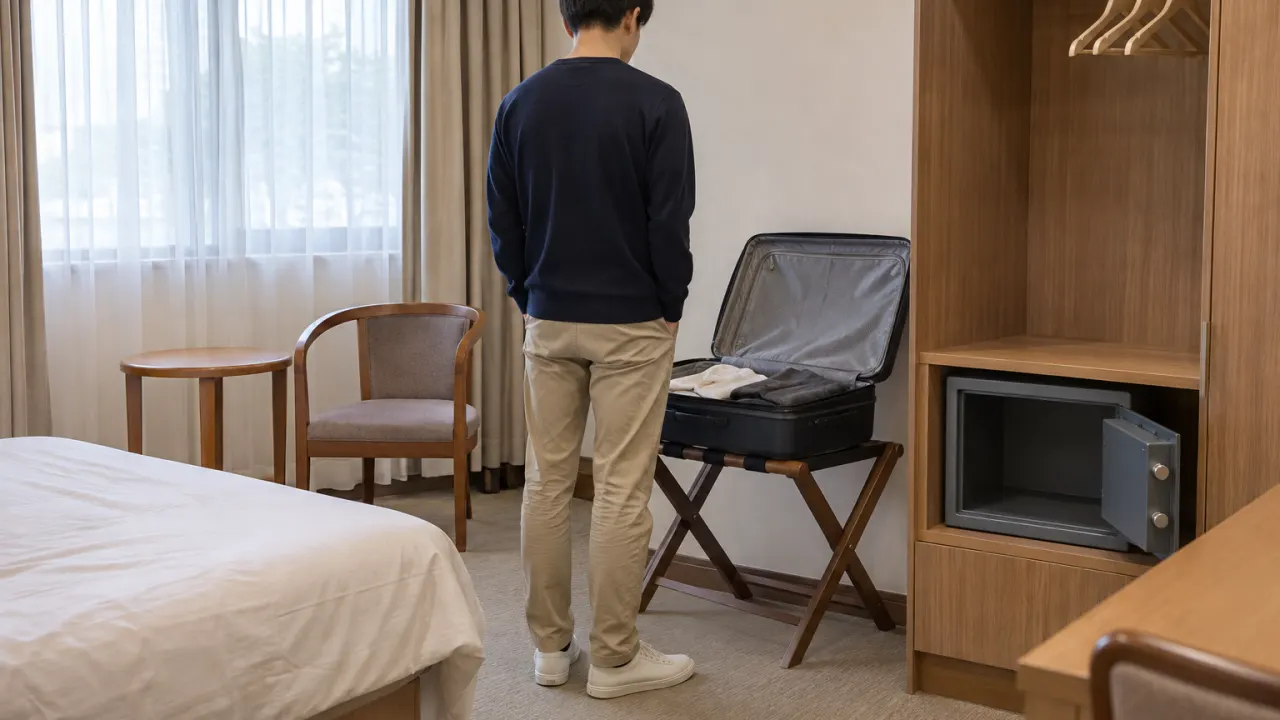
Six months from discovery: that is how long Taiwan's Civil Code (art. 611) gives a guest to claim against a hotel or guesthouse for belongings lost from a room. The claim also lapses six months after the guest leaves the premises (Civil Code art. 611).
A traveller staying two nights at a minsu (民宿, a licensed guesthouse) in Tainan returns from dinner to find the laptop and NT$20,000 in cash gone. Next morning, the traveller slips on a freshly mopped staircase and breaks a wrist (an invented example).
Belongings taken from the room
Art. 606 makes the keeper of an inn or any other place whose purpose is lodging guests liable for damage to or loss of the things guests bring in. Keeper fault is not a condition; the exceptions are three: force majeure, the nature of the item itself, and intent or negligence of the guest or the guest's companions, attendants or visitors. An invited visitor taking the laptop is one such defence.
Restaurant and bathhouse keepers answer only for "ordinary items" (art. 607).
Who proves what? The guest shows the item was brought in and vanished there; the keeper must argue an exception, such as an open window as guest negligence. A police report fixes when, where and what.
Items forgotten at checkout must be kept safe (Regulations for the Administration of Hotel Enterprises art. 25(1)(2)); tourist hotels log them and contact the owner or else the police (Regulations for Administration of Tourist Hotel Enterprises art. 21).
Cash and valuables: were they handed over?
Art. 608(1) treats money, securities, jewellery and other valuables separately. Unless the guest declared their nature and quantity and handed them over for safekeeping, the keeper is not liable. The NT$20,000 falls here.
Under paragraph 2, the keeper is liable if it refused safekeeping without good reason or if its own or staff's intent or negligence caused the loss.
Is a laptop an "other valuable", or an in-room safe a handover? The Code is silent. An itemised desk receipt is safest. Tourist hotels: art. 20 of their regulations requires safe custody of deposited valuables, a receipt on request, and compensation under the law for loss or damage.
Signs, signed terms and six months
A sign saying the hotel is not responsible for items in rooms has no effect: art. 609 voids posted notices limiting or excluding liability under arts. 606 to 608, though art. 608's valuables rule still applies.
Signed check-in terms fall outside art. 609. A standard term that breaches good faith and is clearly unfair to the consumer is void, with unfairness presumed where it breaches equality and reciprocity, contradicts the purpose of the default rule it excludes, or restricts the contract's principal rights or obligations so that its purpose is hard to achieve (Consumer Protection Act art. 12), and a pre-drafted term excusing or reducing one side's liability is void where clearly unfair (Civil Code art. 247-1(1)).
A guest who learns of a loss must notify the keeper immediately or lose the damages claim (art. 610). Then art. 611's six months apply to claims under arts. 606 to 608. Confirm by email: room, times, items, rough values.
If staff took the items, art. 188 may come into play. Where an employee is found to have unlawfully harmed another while performing duties, the employer is jointly liable unless it proves due care in selection and supervision, or that the harm would have occurred even with such care (art. 188(1)). A victim left uncompensated by that proviso may ask the court to order full or partial compensation in light of both sides' finances (art. 188(2)). Tort claims lapse two years after the victim knows of the damage and the liable party, and ten years after the act (art. 197(1)). The Code does not say how this interacts with arts. 610-611, so acting within six months is safer.
Injured on the premises
Injuries fall outside art. 606.
Tort: intentional or negligent unlawful harm creates liability (art. 184(1)). Harm caused by a building or other structure falls on its owner, unless the owner shows no defect in construction or upkeep, no causal link to a defect, or due care to prevent the harm (art. 191(1)). Where a guesthouse rents its building, owner and operator may differ; an owner who pays can recover from another responsible party (art. 191(2)).
Contract: incomplete performance attributable to the debtor that causes further harm is compensable (art. 227); where non-performance injures personality rights, arts. 192 to 195 and 197 apply (art. 227-1). Staff fault counts as the operator's own unless the parties agreed otherwise (art. 224); such an agreement is tested again under art. 247-1 and Consumer Protection Act art. 12.
Consumer law: Consumer Protection Act art. 7 requires service providers to meet the safety reasonably expected under contemporary professional standards and, where life or health is at risk, to post warnings and emergency instructions. Breach harming consumers or third parties, such as a family member sharing the room, creates liability, which a court may reduce if the business proves no fault. The business must prove it met that standard (art. 7-1(1)). In suits under the Act, punitive damages of up to one, three or five times the loss are available for negligence, gross negligence or intent (art. 51).
What can be recovered? Unless a law or the contract provides otherwise, damages are limited to losses suffered and profits lost (art. 216(1)), such as treatment costs, rebooked flights and lost earnings. Bodily injury also covers lost or reduced working capacity and increased living needs (art. 193(1)), plus a reasonable sum for non-pecuniary harm (art. 195(1)). A court may reduce or deny damages if the victim was also at fault (art. 217(1)). Was there a wet-floor sign? Photograph the spot, keep witness contacts and medical records, and request CCTV preservation in writing. See our gym injury claims article.
Mandatory insurance
Act for the Development of Tourism art. 31(1) requires tourist hotels, hotels and minsu operators to carry liability insurance. Uninsured operators face fines of NT$30,000 to NT$500,000, a deadline to insure, and possible revocation of their licence or registration (art. 57(3)).
| Minimum cover (NT$) | Hotel (art. 9) | Tourist hotel (art. 22) | Minsu (art. 24) |
|---|---|---|---|
| Injury or death, per person | 3 million | 3 million | 2 million |
| Injury or death, per accident | 15 million | 15 million | 10 million |
| Property damage, per accident | 2 million | 2 million | 2 million |
| Policy-period aggregate | 34 million a year | 34 million | 24 million |
For minsu insurance scope and minimums, more protective local rules prevail (art. 24(2)). Hotels file proof of cover annually with the local authority (art. 9(2)); minsu do so before each policy expires (art. 24(3)).
Claim the insurer directly? Art. 31(4)'s fault-independent direct claim covers accidents on travel-agency tours; at a lodging, the claim lies against the operator. Minsu must display their registration in the lobby (Regulations for the Management of Home Stay Facilities art. 27); photograph it to identify the operator.
Hotels must help a sick guest get medical care within 24 hours and, in a fire or other emergency endangering guests, alert the authorities, evacuate and help the injured, then report the cause and how it was handled to the local authority (Hotel art. 25(1)(3)-(4), (2)). Minsu operators must help guests in urgent illness or injury get care at once (Home Stay art. 29).
When talks stall
Complain to the business, a consumer group or a consumer service centre; the business must properly handle it within 15 days of the complaint. Next come the local consumer ombudsman and the consumer dispute mediation committee (Consumer Protection Act arts. 43 and 44). Consumer suits may be brought where the consumer relationship arose (art. 47), such as near the lodging. Claims of NT$100,000 or less go to the small-claims track.
Working with a lawyer in Taiwan
The deadlines keep running after you fly home. A Taiwan lawyer can send notices, seek preservation of key-card and CCTV records, identify the insurer, quantify losses and act in mediation or court by power of attorney. Consultations on civil claims are available at wei@hoveringlaw.com.tw. Hovering International Law Firm (昊鼎國際法律事務所), Taipei: 7F-2, No. 35, Sec. 1, Chengde Rd., Datong Dist., Taipei City 103. Taichung: 6F-1, No. 19, Guanqian Rd., North Dist., Taichung City 40453.
For the Tainan traveller: six months from discovery for a laptop claim under art. 606, and two years from knowing the harm and who is liable for a tort claim over the wrist. The undeposited NT$20,000 needs proof of refused safekeeping or keeper or staff fault (art. 608(2)).
Sources
Checked November 3, 2026. Taiwan law is quoted from the Chinese originals. As of that date, the national law database shows the hotel regulations as amended June 27, 2025, the tourist hotel regulations as amended January 3, 2025, the home stay regulations as amended December 19, 2024, and the Act for the Development of Tourism as amended November 28, 2025.
- Civil Code, art. 184
- Civil Code, art. 188
- Civil Code, art. 191
- Civil Code, art. 193
- Civil Code, art. 195
- Civil Code, art. 197
- Civil Code, art. 216
- Civil Code, art. 217
- Civil Code, art. 224
- Civil Code, art. 227
- Civil Code, art. 227-1
- Civil Code, art. 247-1
- Civil Code, art. 606
- Civil Code, art. 607
- Civil Code, art. 608
- Civil Code, art. 609
- Civil Code, art. 610
- Civil Code, art. 611
- Consumer Protection Act, art. 7
- Consumer Protection Act, art. 7-1
- Consumer Protection Act, art. 12
- Consumer Protection Act, art. 43
- Consumer Protection Act, art. 44
- Consumer Protection Act, art. 47
- Consumer Protection Act, art. 51
- Act for the Development of Tourism (發展觀光條例), art. 31
- Act for the Development of Tourism, art. 57
- Regulations for the Administration of Hotel Enterprises (旅館業管理規則), art. 9
- Regulations for the Administration of Hotel Enterprises, art. 25
- Regulations for Administration of Tourist Hotel Enterprises (觀光旅館業管理規則), art. 20
- Regulations for Administration of Tourist Hotel Enterprises, art. 21
- Regulations for Administration of Tourist Hotel Enterprises, art. 22
- Regulations for the Management of Home Stay Facilities (民宿管理辦法), art. 24
- Regulations for the Management of Home Stay Facilities, art. 27
- Regulations for the Management of Home Stay Facilities, art. 29
Frequently Asked Questions
- The front desk had a sign saying the hotel is not responsible for lost valuables. Can I still claim?
- Civil Code art. 609 makes void any posted notice that limits or excludes the keeper's liability under arts. 606 to 608. Cash and valuables are different, though: under art. 608(1) the keeper is not liable unless you declared their nature and quantity and handed them over for safekeeping. The keeper is liable if it refused safekeeping without good reason, or if the loss was caused intentionally or negligently by the keeper or its staff (art. 608(2)).
- I noticed something was missing only after I had checked out and flown home. How long do I have?
- Claims under arts. 606 to 608 lapse if not exercised within six months of discovering the loss or damage, and also six months after the guest leaves the premises (Civil Code art. 611). You must notify the keeper immediately once you know of the loss; failing to do so forfeits the damages claim (art. 610).
- I was hurt on a minsu staircase. Can I claim directly from the minsu's liability insurer?
- Art. 31 of the Act for the Development of Tourism requires hotels and minsu operators to carry liability insurance. The direct, fault-independent claim against the insurer in paragraph 4 of that article is written for accidents during tours run by travel agencies. For an injury at the lodging, the claim is first against the operator, based on Civil Code arts. 184 and 227-1 and Consumer Protection Act art. 7.
This article provides general information and is not legal advice on any individual matter.


