
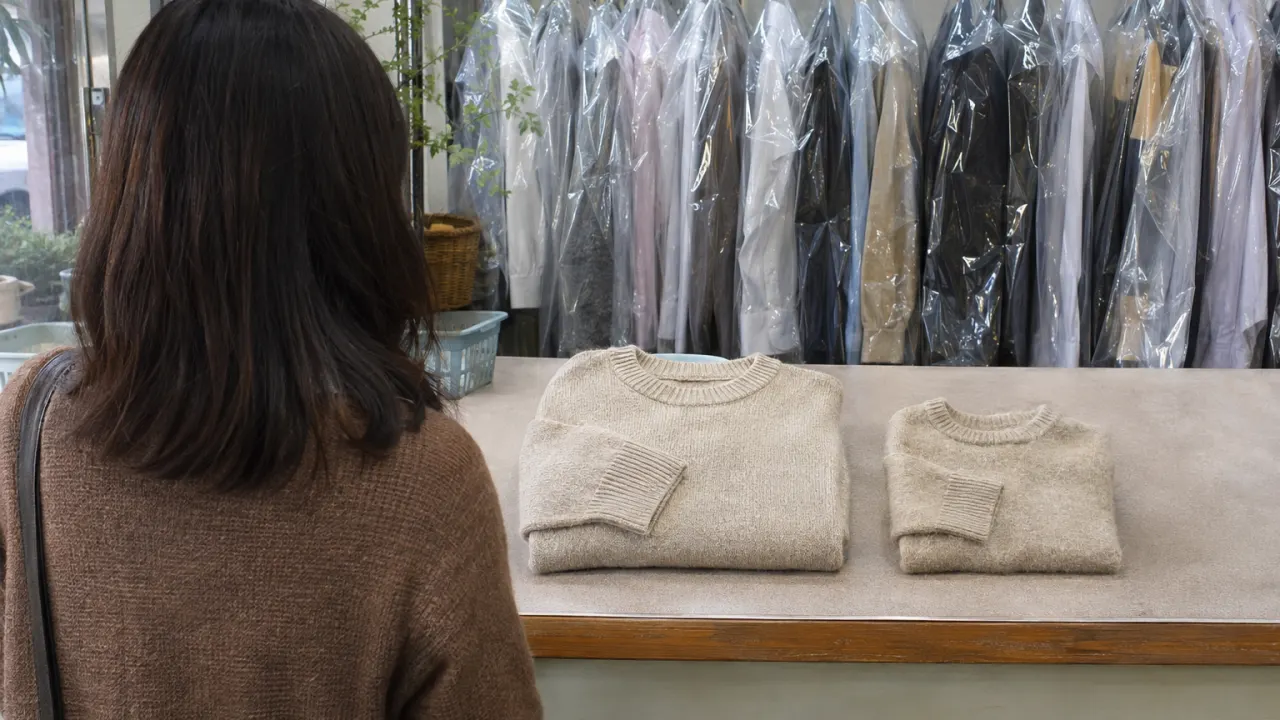
At the counter of a neighborhood cleaner in Taipei, a British engineer peels the plastic off a cashmere coat and finds the sleeves now stop above the wrist (an invented example). The dry-cleaning fee was NT$400. Fine print on the back of the ticket says the shop is not responsible for damage to expensive garments. The owner offers to refund the fee.
Is a refund all the customer gets? The Ministry of Economic Affairs issued Mandatory and Prohibited Terms for Standard-Form Laundry Contracts (洗衣定型化契約應記載及不得記載事項) in 2001; the current version, amended by announcement Jing-Shang No. 10302409170 on June 30, 2014, took effect on January 1, 2015. The text is on the Executive Yuan website and in the Executive Yuan Gazette of June 30, 2014.
That disclaimer on the ticket
It does not hold. Consumer Protection Act art. 17 lets the central authority announce, industry by industry, what standard-form contracts must and must not contain. A standard-form clause that breaches the announcement is void (para. 4), and the mandatory terms become part of the contract even when the document omits them (para. 5).
Ten clauses are prohibited, among them that the shop bears no responsibility when clothes are lost, stolen, burned or otherwise destroyed or damaged (item 4); that once clothes are collected the shop is not liable even for laundering damage (item 7); and that compensated clothes become the shop's property (item 6). Ambiguous wording is read in the consumer's favor (art. 11(2)).
In March 2024 the Executive Yuan's Department of Consumer Protection checked 24 self-service laundromats in six localities; 23 had non-compliant laundry contracts, and 22 breached item 4 (press release, July 12, 2024).
Damaged, or treated as lost?
Point 14 treats severe damage as loss under point 11: shrinkage or deformation leaving the item unfit to wear, damage defeating its designed function, color transfer or fading that leaves the consumer unwilling to wear it, or other severe damage. Sleeves ending above the wrist look like the first kind.
With a purchase receipt, and without one
Point 11 covers items the shop, being at fault, cannot return after loss, theft, fire or destruction. Money replaces the garment. Where either side can prove the item's value with a receipt or similar document, the amount is calculated with depreciation in mind. No multiple applies.
Without such proof, and without a special agreement under point 13, a formula applies:
| When the loss occurred | Compensation |
|---|---|
| Within the storage period in point 9 | 20 times the cleaning fee, up to NT$15,000 |
| After the storage period | 10 times the cleaning fee, up to NT$10,000 |
Discounted fees count at full price. For the NT$400 coat, that means NT$8,000 inside the period. Point 10, though, calls that period the free storage month in point 9(3); the text does not say whether damage done in cleaning and found at pickup falls inside it. A receipt changes the method; with no depreciation rate set, a worn NT$30,000 coat's value is left to negotiation or a court.
Lighter damage: 10 or 15 times the fee
A cracked button or faded patch on a wearable garment falls under point 12. The shop pays the loss in value, set first by agreement. Otherwise the cap depends on the cause. Knowing the care label was wrong, or that the customer's instructions were unsuitable, and saying nothing: up to 15 times the fee. Negligently failing to notice a wrong label: up to 10 times. Not following the label or the agreed method: up to 15 times. Mishandling an unlabeled item or other negligence: up to 10 times. None may exceed the replacement price.
After paying for damage under points 12 and 13, the shop must still return the garment (point 15). The terms say nothing on who keeps an item treated as lost under point 14. A settlement letter can.
Who reads the care label
The shop does. Under point 5 it checks the label on intake and follows it unless agreed otherwise. With no label, several labels, or one the shop thinks wrong, it must tell the customer and agree a method. Breaking these rules makes the shop liable for resulting damage or loss. Photograph the label.
What the customer must do
A customer who knows of special stains, tears, loose buttons or similar risks must mention them at drop-off; silence that causes or worsens damage can reduce or remove the shop's liability (point 3(1)). The shop must inspect promptly, tell the customer what it finds and note it on the ticket; if its failure to tell causes damage, it pays (point 3(2)).
Pickup matters more. Point 4(3) requires a prompt inspection on collection and immediate notice of anything the shop is liable for. A customer who fails to give notice may not claim. Photos shown to staff at the counter meet that duty.
For valuable items, point 13 lets the parties agree the fee and compensation in advance. Where unusual materials, fittings or stains make damage likely, the shop must warn the customer and agree a special handling fee first; damage beyond the warning escapes the point 11 and 12 caps, with a floor of twice the two fees combined.
Delays and uncollected clothes
Without an agreed date, cleaning must be finished within 15 days of intake (point 9). Five days late halves the fee. Thirty days late makes it free. After the period ends the shop must store the clothes free for one month with a good administrator's care; then it may charge up to 1% of the cleaning fee per item per day, capped at six months' storage (point 10(2)). Taking costs out of the clothes requires at least six months' notice to collect, then a further demand warning the clothes will cover the debt (point 10(3)).
Where prepayments exceed NT$1,000 per customer, the excess must be backed by a guarantee such as a bank guarantee or trust account, noted on the receipt (point 7). Customers may end the arrangement at any time and recover the unused balance, priced without discounts, interest-free, fee-free and on the spot (point 8).
Self-service laundromats and two 2026 drafts
At a coin laundry the customer runs the machine, so the first question is whether the machine or its use caused the damage. Separate draft terms for self-service laundries, pre-announced on February 3, 2026, make the operator liable for damage attributable to it and the customer liable for misuse, and bar clauses disclaiming all liability for damaged clothes or excluding or limiting liability for damage attributable to the machines (Gazette, Feb. 4, 2026).
Amendments to the existing terms, pre-announced on May 4, 2026, would raise the membership fee cap from NT$200 to NT$300 and the prepayment guarantee threshold from NT$1,000 to NT$2,000 (Gazette, May 5, 2026). Point 11 would lose receipt-based valuation. Neither draft had been finalized in the Gazette as of the check date; the 2015 version still applies.
When the shop will not pay
Complain to the shop in writing first; it must deal with the complaint within 15 days (art. 43(1)–(2)). Then come the local consumer protection officer (art. 43(3)) and the mediation committee (art. 44). Claims of NT$100,000 or less go through small claims procedure (Code of Civil Procedure art. 436-8(1)), and the court where the shop operates has jurisdiction (Consumer Protection Act art. 47). Costs and steps are covered in our small claims article.
Cleaning resembles a contract for work under Civil Code art. 490; where the contractor is at fault, the customer may claim damages on top of repair, rescission or a reduced fee (art. 495(1)). Those rights lapse one year after the defect is discovered (art. 514(1)). A tort claim runs two years from knowing of the damage and who is liable (art. 197(1)). One year is the safer guide.
Can a customer recover more than the formula under the Civil Code? The text does not settle it. Without a point 13 agreement, the formula is where negotiation starts.
Working with a lawyer in Taiwan
A Taiwan lawyer can check the ticket against the mandatory terms, frame the claim under point 12 or 14, and handle the certified letter, complaint, mediation or small claims. Consultations on civil disputes are available at wei@hoveringlaw.com.tw. Hovering International Law Firm (昊鼎國際法律事務所), Taipei: 7F-2, No. 35, Sec. 1, Chengde Rd., Datong Dist., Taipei City 103. Taichung: 6F-1, No. 19, Guanqian Rd., North Dist., Taichung City 40453.
If the coat counts as severely damaged under point 14 and no receipt turns up, point 11 applies: 20 times the fee, up to NT$15,000, inside the storage period; 10 times, up to NT$10,000, after it. The text leaves open whether damage from cleaning found at pickup falls inside that period. The engineer discovered the shrinkage the day the plastic came off, and the one-year period under art. 514 started that day.
Sources
Checked November 3, 2026. Taiwan rules are quoted from the Chinese originals.
- Ministry of Economic Affairs, Mandatory and Prohibited Terms for Standard-Form Laundry Contracts (洗衣定型化契約應記載及不得記載事項), amended by announcement Jing-Shang No. 10302409170 on June 30, 2014, in force Jan. 1, 2015 — Executive Yuan website
- Ministry of Economic Affairs announcement amending the laundry terms, in force Jan. 1, 2015 — Executive Yuan Gazette vol. 20 no. 121 (June 30, 2014)
- Executive Yuan press release on joint inspection of self-service laundromats (自助洗衣店聯合查核結果), July 12, 2024
- Ministry of Economic Affairs announcement Jing-Shang No. 11568000600, pre-announcing draft terms for self-service laundry contracts, Feb. 3, 2026 — Executive Yuan Gazette vol. 32 no. 24
- Ministry of Economic Affairs announcement Jing-Shang No. 11568000830, pre-announcing partial amendments to the laundry terms, May 4, 2026 — Executive Yuan Gazette vol. 32 no. 79
- Consumer Protection Act, art. 11
- Consumer Protection Act, art. 17
- Consumer Protection Act, art. 43
- Consumer Protection Act, art. 44
- Consumer Protection Act, art. 47
- Civil Code, art. 490
- Civil Code, art. 495
- Civil Code, art. 197
- Civil Code, art. 514
- Code of Civil Procedure, art. 436-8
Frequently Asked Questions
- The back of my laundry ticket says the shop is not responsible for damage. Does that hold?
- No. The prohibited terms for laundry contracts bar any clause saying the shop bears no responsibility when clothes are lost, stolen, burned or otherwise destroyed or damaged (item 4), and any clause saying the shop is not liable for laundering damage once the clothes are collected (item 7). A standard-form clause that breaches the announced terms is void (Consumer Protection Act art. 17(4)), and the mandatory terms form part of the contract even if the ticket leaves them out (art. 17(5)).
- I no longer have the receipt for the coat. What can I get?
- If the shop is at fault and cannot return the item, and you cannot prove its value with a receipt or other document and made no special agreement under point 13, point 11 sets the amount: 20 times the cleaning fee, capped at NT$15,000, if the loss happened within the storage period in point 9; 10 times the fee, capped at NT$10,000, after it. Discounted fees are counted at the undiscounted price. Under point 14, clothes shrunk, deformed or discolored so badly that they cannot be worn are treated as lost, so the same point applies.
- I noticed a stain a few days after I got home. Is it too late?
- Point 4 of the mandatory terms requires the customer to inspect promptly on collection and to tell the shop at once on finding a problem the shop is liable for; a customer who fails to do so may not claim compensation. Whether a few days counts as a failure depends on the facts, so photograph the damage and notify the shop in writing as soon as you find it. Under Civil Code art. 514(1), the customer's rights over defects in contracted work lapse if not exercised within one year of discovering the defect.
This article provides general information and is not legal advice on any individual matter.


