Written in response to a news report. Facts and law may have changed since the publication date.
Railway staff found the tent around noon on Saturday, pitched beside the Alishan Railway tracks near Erwanping Station in Chiayi County. A man in the family had set it up so his children could rest while they waited to check in at a nearby youth activity center, Focus Taiwan reported on November 2. Staff photographed the tent and asked the family to leave. Police said they had referred the case to the railway authority for a fine.
The railway office cited Articles 57 and 70 of the Railway Act, under which fines start at NT$10,000. For visitors drawn to Taiwan's mountain and branch lines, often with a camera, the same two articles apply.
What Article 57 forbids
Article 57(2) of the Railway Act bars pedestrians and vehicles from entering railway lines, and areas within yards and stations that are not open to the public. Article 57 was among the provisions amended in January 2026, and the current text carries an exception. In non-electrified sections, a railway organization may announce ranges that people may use for public passage, crowd dispersal, tourism or other special needs. Before announcing or changing such a range, it must send the reasons, area, hours and management measures to the Ministry of Transportation and Communications and obtain its agreement (Article 57(5)).
Crossing is a separate rule. A pedestrian who must cross a line has to stop, look and listen, and cross only when no train is coming from either direction. On electrified sections, crossing is allowed only by footbridge, underpass or level crossing (Article 57(3)).
So is every track in a tourist area off limits? Not necessarily. The answer depends on whether that section is non-electrified and whether an announced range covers the spot and the time. A popular photo location does not by itself mean an announcement exists.
The fines
Article 70(1) sets a fine of NT$10,000 to NT$50,000 for pedestrians, drivers or livestock keepers who breach Article 57(2) to (4). Where railway safety is affected and the case is serious, the range is NT$50,000 to NT$100,000. It rises to NT$100,000 to NT$300,000 if someone is seriously injured, and NT$100,000 to NT$500,000 if someone dies (Article 70(2)). These are administrative fines.
Fines under Article 57 are not hypothetical. In May 2024 the Railway Bureau fined a hiking influencer NT$10,000 under Article 57 for walking a maintenance path beside a railway bridge at Sanzhiling, on the Pingxi Line, in March 2023, CNA reported. The report noted there was no other road nearby. It also said a group of lawmakers had proposed an amendment to allow access where a railway route is the only way through for residents.
Where this leaves the Alishan family
As of the November 2 report, the case had been referred and no fine had been announced. The report did not say whether the spot near Erwanping Station fell within any announced range. It quoted the warning that a tent beside the tracks threatens both the people involved and railway operations, and that this one was discovered in time to prevent a possible accident.
For anyone else heading up the mountain, a scenic spot beside the tracks is not necessarily open to visitors. An announced exception has to concern a non-electrified section and cover that particular place and time. The family in this case had only wanted somewhere to rest before check-in.
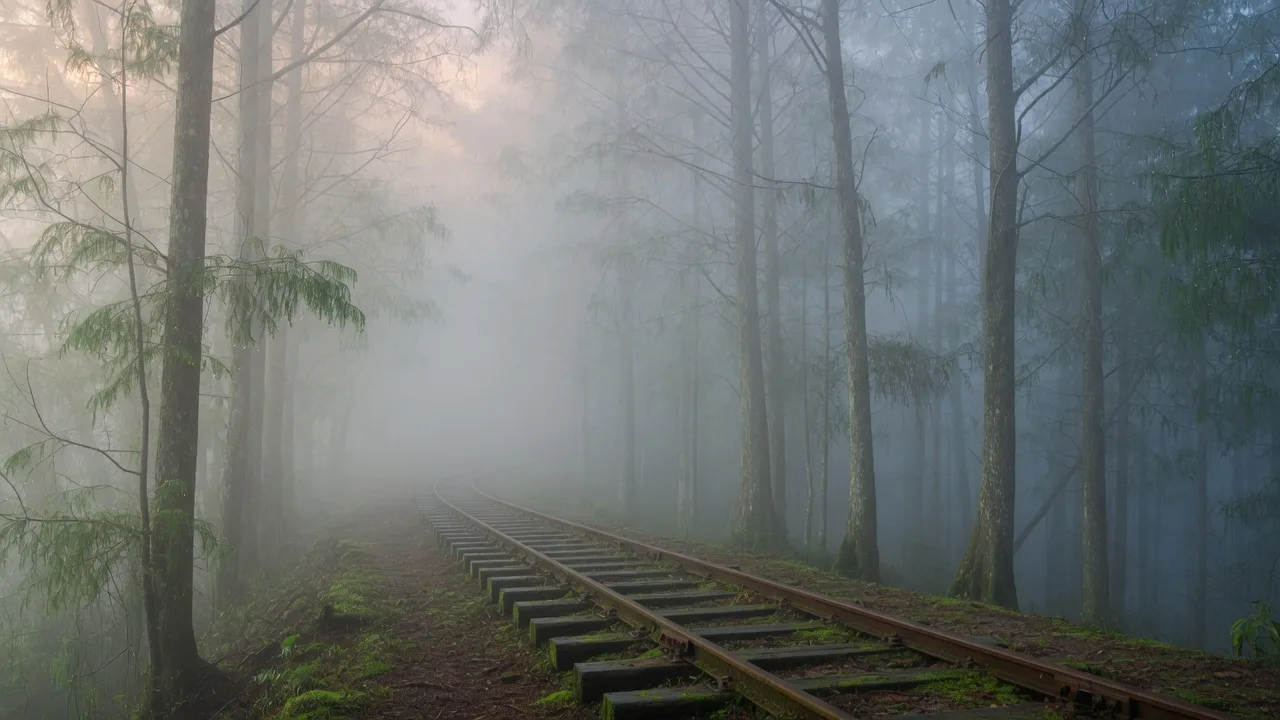
Fictional scene: the image above does not depict the reported incident.
Sources
- Focus Taiwan, November 2, 2026: Tourists who pitched tent along Alishan Railway tracks to be fined
- CNA, June 7, 2024: hiker fined for walking on the Pingxi Line, legislators propose amending the Railway Act
- Railway Act: Article 57, Article 70 and amendment history
Statutes checked against the official database on November 3, 2026.
Frequently Asked Questions
- Can visitors walk on railway tracks in Taiwan for photos?
- Generally not. Article 57(2) of the Railway Act bars pedestrians and vehicles from entering railway lines and areas of yards and stations not open to the public. The exception covers ranges that a railway organization has announced in non-electrified sections, for public passage, crowd dispersal, tourism or other special needs, after the Ministry of Transportation and Communications has agreed.
- How large is the fine?
- Article 70(1) sets NT$10,000 to NT$50,000. If railway safety is affected and the case is serious, the range rises to NT$50,000 to NT$100,000, and it goes higher still where someone is seriously injured or killed (Article 70(2)).
- Has the family in the Alishan case already been fined?
- Not according to the November 2 report. Police said they had referred the case to the railway authority for a fine. The amount, if any, had not been reported.
This article provides general information and is not legal advice on any individual matter.