Written in response to a news report. Facts and law may have changed since the publication date.
NT$500,000 in claimed depreciation was disallowed in the tax audit described by the National Taxation Bureau of Taipei on November 9. The company had bought paintings and sculptures and treated them as depreciable fixed assets. It had booked NT$2 million for the works and used a four-year depreciation schedule. The bureau's release says the works had collectible value and did not qualify. Additional tax followed.
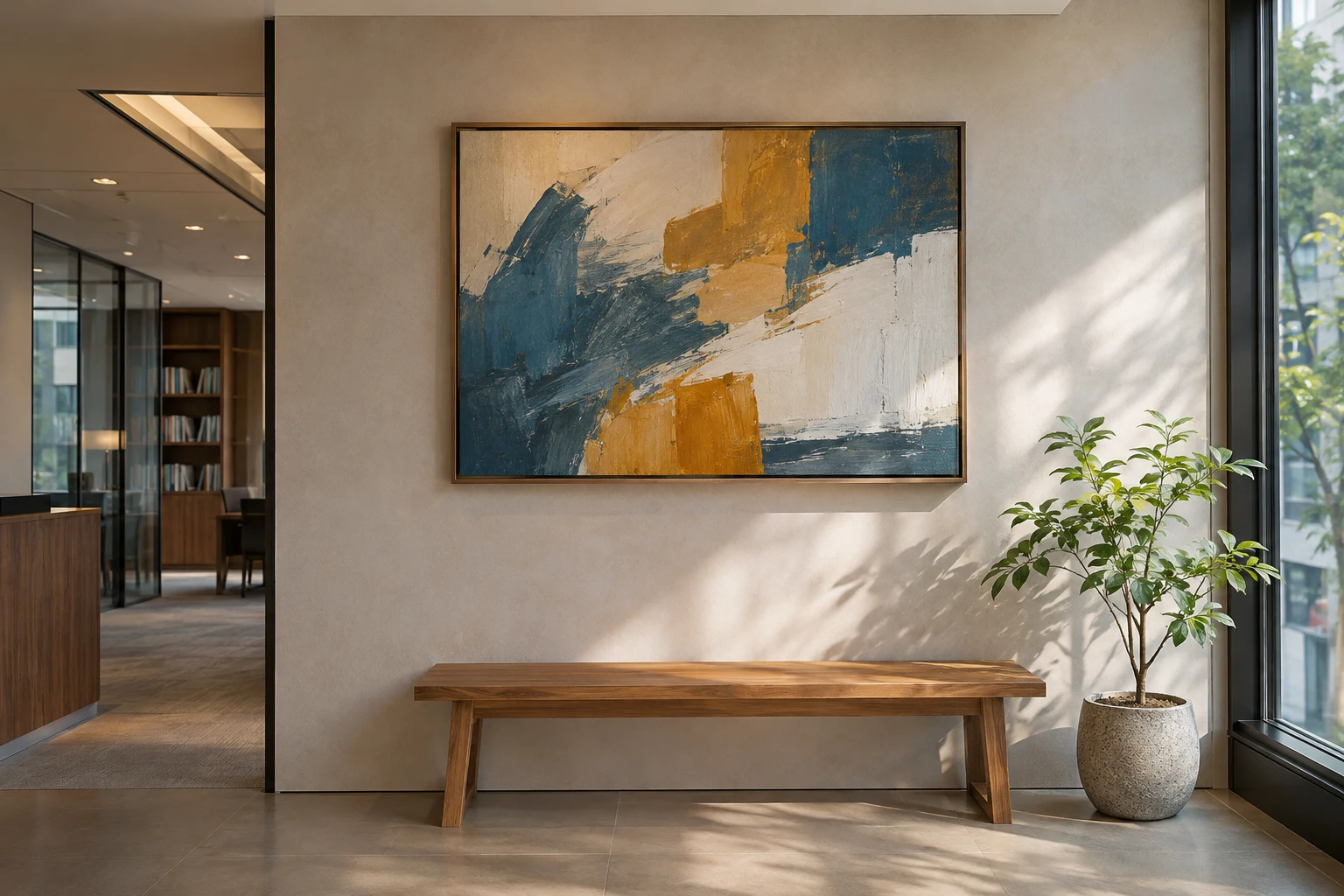
For a foreign-owned business furnishing a Taiwan office, the issue begins with the asset's nature. The bureau's explanation covers antiques and artwork displayed as decoration in offices or business premises. It says their value does not necessarily decline with use or time and may increase. An office location does not resolve the tax classification.
Eligibility comes before the depreciation schedule
Article 54 of the Income Tax Act requires annual depreciation for depreciable fixed assets and an accumulated-depreciation account deducted from the corresponding asset. It also requires estimated residual value to be excluded from the amount used to calculate depreciation. These rules concern assets that qualify as depreciable in the first place.
The bureau applies that distinction to collectible art. Business use alone did not make the collectible artworks in the reported audit depreciable. A company may have paid for an item, recorded it in its asset register and displayed it for clients, yet still face the classification question identified in the release.
Would spreading the cost over a different number of years solve the problem? No change of schedule answers the underlying issue. In the reported audit, the bureau rejected depreciation because the artworks lacked the required depreciable character.
The purchase cost answers a different question
Cost still has a defined meaning. Under Article 45, an asset acquired for a price has an actual cost that includes the purchase price and necessary expenditure incurred to acquire it and make it suitable for business use. Establishing that amount does not itself establish a right to depreciate the asset.
An invoice supports the purchase and price. Its description identifies the asset. A broad description such as office furnishings may give headquarters too little information to distinguish a collectible painting from other purchases included in the same budget. Keeping the underlying descriptions visible lets the Taiwan tax analysis address each item's nature.
The bureau also cites Article 59, which governs depletion of wasting assets. That provision contains methods tied to extraction or revenue from the resource. It is not an alternative annual deduction for paintings. The bureau's release expressly rejects depletion and amortization for the collectible antiques and artwork it describes.
What the reported adjustment shows
In its audit of the company's 2023 return, the bureau disallowed the depreciation and assessed NT$100,000 in additional tax. This was a tax adjustment. The release does not describe that amount as a fine, and the example does not set a fixed charge for other businesses buying art.
For an international group's Taiwan office, the purchase record and asset register can therefore tell only part of the tax story. The particular work's description, the reason it is held and the proposed tax treatment need to remain visible in the local review. A finished depreciation spreadsheet cannot supply a missing basis for classifying a collectible work as depreciable.
Sources
- National Taxation Bureau of Taipei, antiques and artwork in business premises, November 9, 2026
- Ministry of Finance publication of the same release, November 9, 2026
- Income Tax Act: Article 45, Article 54, Article 59 and legislative history
Taiwan enterprise-tax information checked November 11, 2026. This discussion concerns collectible artwork displayed by a business, not an assessment of any particular company's return.
Frequently Asked Questions
- Does displaying collectible art in a Taiwan office allow tax depreciation?
- The National Taxation Bureau of Taipei's November 9 release says antiques and collectible artworks displayed as decoration in offices or business premises do not qualify for depreciation, depletion or amortization. Their value does not necessarily fall as they age.
- Would a shorter useful life make the depreciation deductible?
- Changing the period does not answer whether the asset is depreciable. Article 54 governs annual depreciation of depreciable fixed assets; the bureau's reported adjustment concerned artwork that did not meet that underlying classification.
- Was the additional NT$100,000 in the bureau's example a fine?
- The release describes additional tax after NT$500,000 of depreciation was disallowed in an audit of a company's 2023 return. It does not describe the NT$100,000 as a penalty or a universal amount for every artwork purchase.
This article provides general information and is not legal advice on any individual matter.