Written in response to a news report. Facts and law may have changed since the publication date.
Can a visiting supplier fly a customer demonstration using its overseas drone credentials? CNA’s October 27 report covered the Trusted Technology Forum for Democracies in Taipei, co-organized by Taiwan’s Ministry of Foreign Affairs and the Formosa Club. John Hemmings of the Henry Jackson Society proposed a certified supplier list and a drone supply-chain office to draft reciprocal testing and evaluation protocols. Those were proposals, not an announced flight-approval scheme.
For an overseas team planning a civil drone demonstration in Taiwan, the aircraft’s documents, the pilot’s qualifications and the proposed operation raise different legal questions. A supplier’s invitation to an industry event answers none of them by itself.
Recognition of foreign credentials
Civil Aviation Act Article 99-12 provides a route for foreign nationals holding drone registration, operation and inspection documents issued by a foreign government. Once Taiwan’s Civil Aviation Administration (CAA) has recognized those documents, they may conduct flights in accordance with the act’s drone chapter.
For this route, Article 38 of the Regulations of Drone specifies the application, passport copy and foreign documentary proof required. Documents in a foreign language other than English need a Chinese translation. Recognition lasts no more than six months from issuance. It is not automatic.
The provision also allows foreign nationals with permission to stay or reside for six months or longer to apply for local operator certificates under the regulations’ Chapter 4. That is a separate route. For a short visit relying on overseas credentials, the recognition document and its validity dates are the relevant starting point.
Location and flight behavior remain regulated
Recognition does not open every field or industrial site. Under Article 99-13, drone flights are barred in prohibited areas and restricted areas and within designated distances of airports or airfields, subject to the article’s approval provisions. Outside those areas, local governments announce areas, times and other management conditions for drone activity no higher than 400 feet above the surface.
Ordinary operating restrictions appear in Article 99-14. They include a 400-foot height limit above land or water, a ban on flights between sunset and sunrise, and a ban on flying over crowds or outdoor assemblies. Visual-line-of-sight requirements also apply. These are examples, not the full set of restrictions.
An indoor sales presentation and a planned outdoor flight therefore call for different preparation. For the flight, the exact site, time, height and proximity to people determine which restrictions the proposal encounters. Agreement from a customer or venue owner does not answer the aviation questions.
The overseas company and its Taiwan partner
Article 99-14 permits qualifying government agencies, schools and legal persons to seek approval to depart from specified operating limits, followed by permission for the approved activity. But a foreign company cannot use the corresponding organizational procedure in its own name.
Article 38 expressly says that Chapter 5, Section 2 does not apply to foreign government agencies, schools or legal persons conducting drone flights in the Taipei Flight Information Region. That section sets out flight-permit procedures for those categories of organizations. The operator’s legal identity matters.
A proposed demonstration involving a Taiwan partner consequently needs more detail than the partner’s name on an invitation. Who will operate the equipment, which aircraft and pilot the documents cover, and whether the intended flight fits the applicable permissions are questions tied to the actual plan. The forum’s proposed supplier and testing arrangements may support future business relationships; the demonstration date still depends on the permissions for that flight.
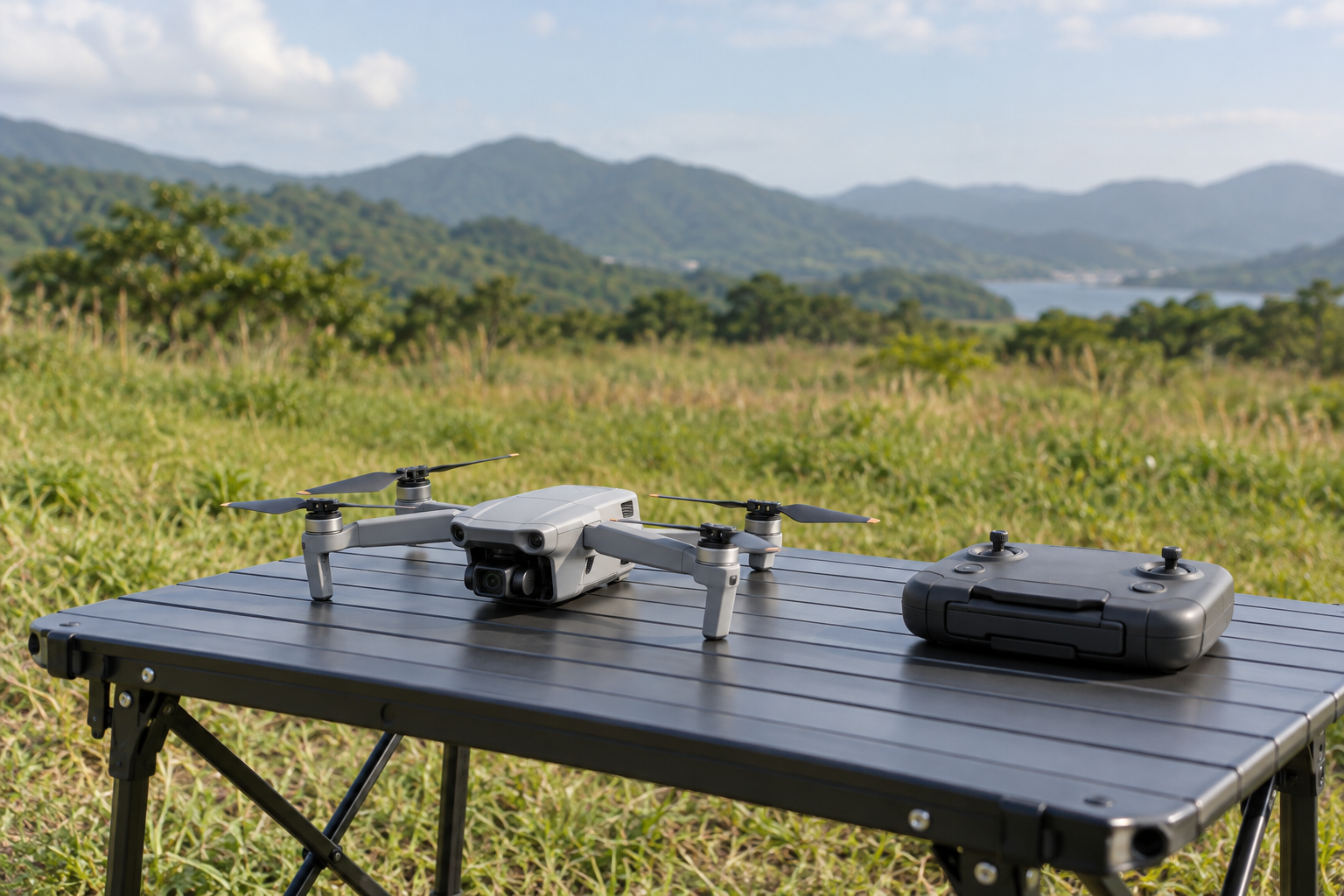
Fictional drone demonstration scene for illustration; it does not depict the forum or an approved flight site.
Sources
- Focus Taiwan/CNA, October 27: Europe–Taiwan AI and drone cooperation proposals
- Civil Aviation Act, Article 99-12
- Civil Aviation Act, Article 99-13
- Civil Aviation Act, Article 99-14
- Regulations of Drone, Article 38
- Regulations of Drone, Chapter 5, Section 2, official English text
General information on Taiwan civil drone operations, checked October 28, 2026.
Frequently Asked Questions
- Did the October 27 forum establish reciprocal drone flight approval?
- The cited CNA report describes proposals for supplier certification and reciprocal testing and evaluation protocols. It does not report an adopted mutual-recognition regime or approval for a particular flight.
- How long can Taiwan’s recognition of foreign drone credentials last?
- Regulations of Drone Article 38 sets a maximum of six months from issuance for recognition of the foreign registration, inspection and operator documents covered by that route. Recognition is not a general exemption from flight-area or operating restrictions.
- Can an overseas company use the same organizational permit procedure as a Taiwan company?
- Article 38 says Chapter 5, Section 2 does not apply to foreign government agencies, schools or legal persons conducting drone flights in the Taipei Flight Information Region. An overseas company therefore cannot use that procedure in its own name. The actual operator, aircraft and flight plan require separate examination.
This article provides general information and is not legal advice on any individual matter.